The Ancients Among Us
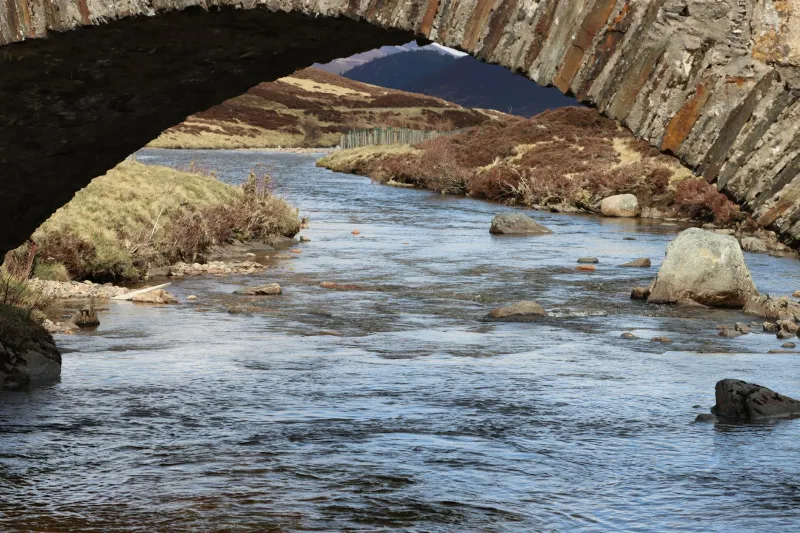
In the crystal-clear waters of the River Spey, beneath granite boulders worn smooth by millennia of Highland floods, lives one of Britain's most remarkable survivors. The freshwater pearl mussel (Margaritifera margaritifera) has occupied these Scottish rivers for over 10,000 years, individual specimens witnessing the rise and fall of clan warfare, the clearances, and the industrial revolution. Some of the mussels resting on the riverbed today began their lives during the reign of Queen Victoria.
Yet this extraordinary longevity—individuals can live for 150 years or more—masks a species in catastrophic decline. Across Britain, freshwater pearl mussel populations have collapsed by over 95% since the 1970s. What was once a common sight in upland rivers from the Scottish Highlands to Welsh valleys has become so rare that finding a living specimen feels like discovering buried treasure.
The Web of Dependencies
The freshwater pearl mussel's decline cannot be understood in isolation—it reflects the unravelling of one of freshwater ecology's most intricate relationships. These ancient bivalves depend entirely on wild Atlantic salmon and brown trout for reproduction, their microscopic larvae parasitising the gills of juvenile fish for the first crucial months of life.
This dependency creates a conservation paradox of extraordinary complexity. Young mussels, called glochidia, must attach to specific host fish within hours of release or perish. The infected fish then carry the developing mussels upstream, often for hundreds of kilometres, before the juveniles drop off to begin their sedentary adult life. Without healthy salmon populations, pearl mussel reproduction simply cannot occur.
"It's like trying to maintain a library when the delivery trucks have stopped running," explains Dr Kerry Woodrow, a freshwater ecologist at Scottish Natural Heritage. "Even if we protect every existing mussel bed perfectly, they'll still die out without the fish to transport the next generation."
The numbers tell a sobering story. Scotland's River Tay system, once supporting an estimated 10 million pearl mussels, now hosts fewer than 50,000 individuals. Most surviving populations show catastrophic age structures—ancient adults with no recent recruitment, demographic time bombs counting down to extinction.
Chemical Assault
Agricultural intensification has transformed the chemical composition of Britain's rivers in ways that prove lethal to pearl mussels. These filter-feeders require exceptional water quality, thriving only in conditions that would satisfy the most demanding salmon. Nitrogen and phosphorus pollution from fertiliser runoff triggers algal blooms that clog their feeding apparatus, whilst fine sediment eroded from cultivated land smothers their spawning gravels.
Recent research by the Centre for Ecology and Hydrology reveals the insidious nature of this chemical assault. Pearl mussels can tolerate brief pollution events, but chronic low-level contamination proves devastating over their extended lifespans. Phosphate concentrations that barely register on standard water quality monitoring can accumulate in mussel tissues over decades, eventually causing reproductive failure and premature death.
The situation is compounded by climate change. Rising water temperatures stress both mussels and their salmon hosts, whilst altered precipitation patterns intensify both drought and flood events. Summer droughts concentrate pollutants and reduce oxygen levels, whilst winter floods scour away the stable gravel beds that mussels require.
The Poaching Legacy
Historical exploitation has left lasting scars on pearl mussel populations. For centuries, these molluscs were harvested for their occasional pearls—a practice that reached industrial scales during the Victorian era. River Tay pearls adorned the Crown Jewels, whilst Highland rivers were systematically ransacked by commercial pearl fishers.
Though pearl fishing was banned in 1998, illegal harvesting continues to plague surviving populations. A single night's poaching can destroy mussel beds that took centuries to develop. The slow growth and extreme longevity that once protected these animals from natural predation makes them catastrophically vulnerable to human exploitation.
"Finding a quality pearl might require opening 500 mussels," notes Dr Mark Young, who has studied pearl mussels for over three decades. "When you're dealing with animals that can live for 150 years and only reproduce successfully once or twice per decade, that level of mortality is simply unsustainable."
Radical Restoration
Conventional conservation approaches have proved inadequate for pearl mussel recovery. Site-based protection, whilst necessary, addresses only part of a problem that operates at catchment scales. Recent initiatives are taking more radical approaches, recognising that mussel conservation requires nothing less than river system restoration.
In the Scottish Highlands, the River Dee Trust is pioneering landscape-scale intervention. Their approach combines agricultural reform, forestry modification, and physical habitat restoration across entire watersheds. Farmers receive payments for reducing fertiliser inputs and maintaining buffer strips along watercourses. Forestry operations are timed to minimise sediment disturbance. Even road drainage is being redesigned to prevent runoff contamination.
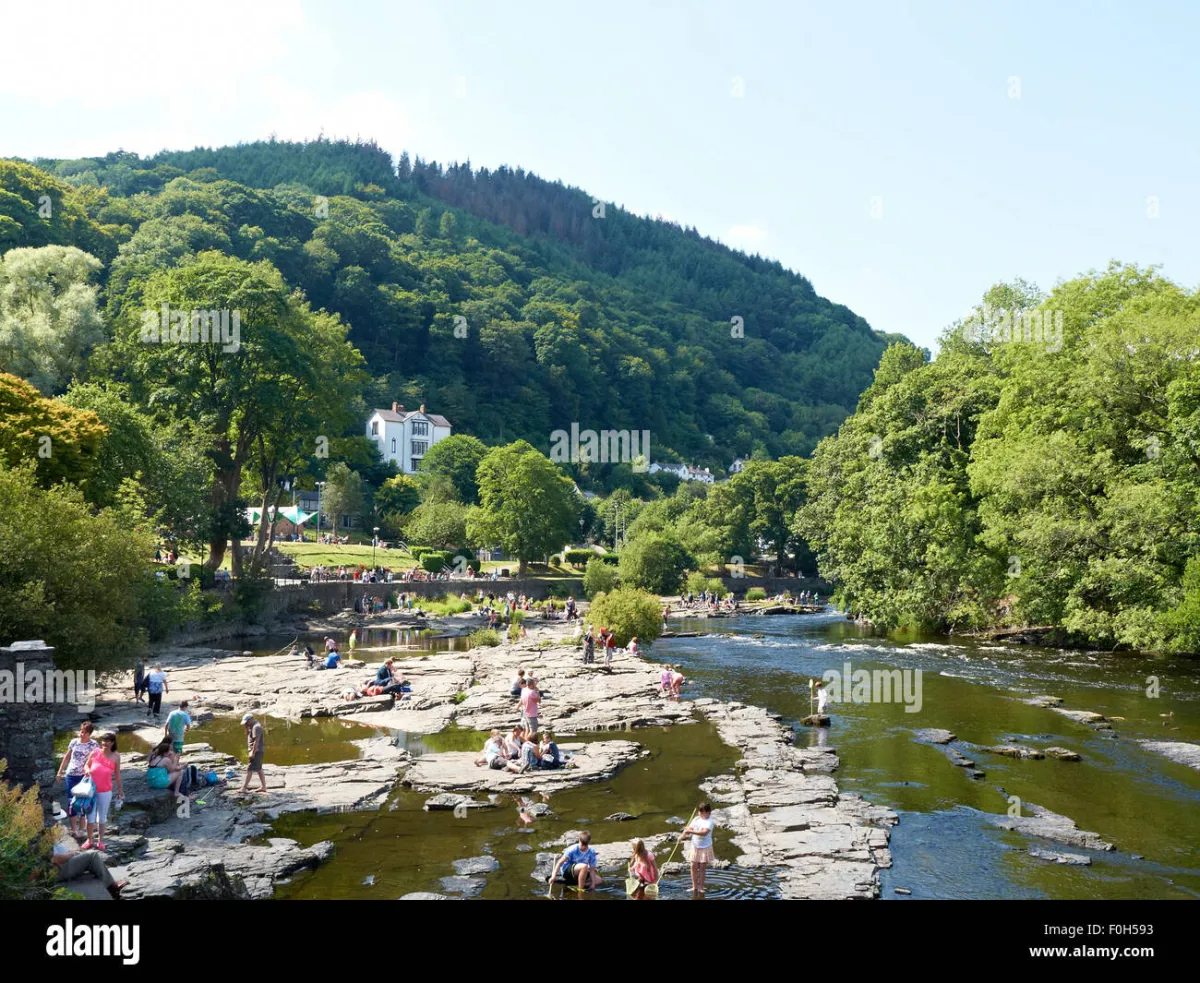 Photo: River Dee, via c8.alamy.com
"We're essentially trying to turn back the clock to pre-1950s water quality," explains project manager Dr Helen Reid. "That means working with every landowner in the catchment, not just protecting the bits where mussels still survive."
Early results are encouraging. Water clarity has improved measurably in treated sections, and salmon populations are showing tentative signs of recovery. Most critically, researchers have documented the first successful pearl mussel recruitment in the system for over a decade—microscopic juveniles that represent hope for a species on the edge of extinction.
The Welsh Experiment
In Wales, conservationists are taking an even more interventionist approach. The Conwy Valley Rivers Trust is experimenting with captive breeding programmes, collecting gravid females from wild populations and raising their offspring in controlled conditions before releasing them back to the wild.
The technical challenges are immense. Pearl mussel larvae must be artificially infected onto juvenile salmon, a process requiring precise timing and sterile conditions. The young mussels are then raised in specially designed tanks that replicate natural river conditions, fed on cultures of specific algae and bacteria.
"We're essentially running an intensive care unit for baby mussels," describes project scientist Dr Sarah Jones. "Every parameter—temperature, flow rate, water chemistry—has to be perfect. These animals evolved in some of the cleanest water on Earth, and they're extraordinarily sensitive to any deviation from those conditions."
After five years of development, the programme has successfully raised over 10,000 juvenile mussels to release size. The first experimental releases are now underway in restored sections of the River Conwy, though it will be decades before their success can be properly evaluated.
Political Watersheds
Pearl mussel conservation is increasingly becoming a political issue, highlighting fundamental tensions in how Britain manages its rural landscapes. Effective restoration requires agricultural reforms that many farmers resist, whilst the economic costs of catchment-scale intervention often exceed the budgets of conservation organisations.
Recent changes to agricultural subsidy systems offer new opportunities. The Environmental Land Management scheme specifically rewards farmers for improving water quality, potentially creating financial incentives for pearl mussel-friendly farming practices. However, the scheme's effectiveness remains unproven, and many conservationists worry that voluntary approaches will prove insufficient.
"We need regulatory change, not just financial incentives," argues Dr Woodrow. "Pearl mussels require water quality standards that are legally enforceable and rigorously monitored. Voluntary measures have had thirty years to work, and they've failed."
The Canary in the River
The freshwater pearl mussel's plight extends far beyond a single species' conservation status. These ancient filter-feeders serve as indicators of river ecosystem health, their presence signalling water quality that supports diverse aquatic communities. Their decline reflects broader degradation affecting everything from mayflies to otters.
Recent research suggests that rivers supporting viable pearl mussel populations harbour significantly higher biodiversity than comparable systems where mussels have been lost. The mussels' filter-feeding activity maintains water clarity, their shells provide habitat for smaller invertebrates, and their long lifespans create temporal continuity that benefits entire ecological communities.
"Saving pearl mussels means saving river ecosystems," reflects Dr Young. "They're not just beautiful animals with an extraordinary life history—they're keystone species whose presence indicates functioning freshwater environments."
Time's Cruel Mathematics
As restoration efforts continue, time remains the critical factor. With most surviving populations dominated by elderly individuals, demographic collapse could occur within decades even if water quality improves dramatically. The lag time between environmental restoration and successful reproduction means that today's conservation decisions will determine whether future generations inherit rivers graced by these ancient survivors or sterile waterways where only memory preserves their presence.
The freshwater pearl mussel's crisis embodies the complexity of modern conservation challenges—species whose survival depends not on single-site protection but on transforming entire landscapes. Their future hangs in the balance between human ambition and natural limits, a test of whether Britain can reconcile agricultural productivity with the ecological integrity that once defined our rivers.