Cities on the Edge
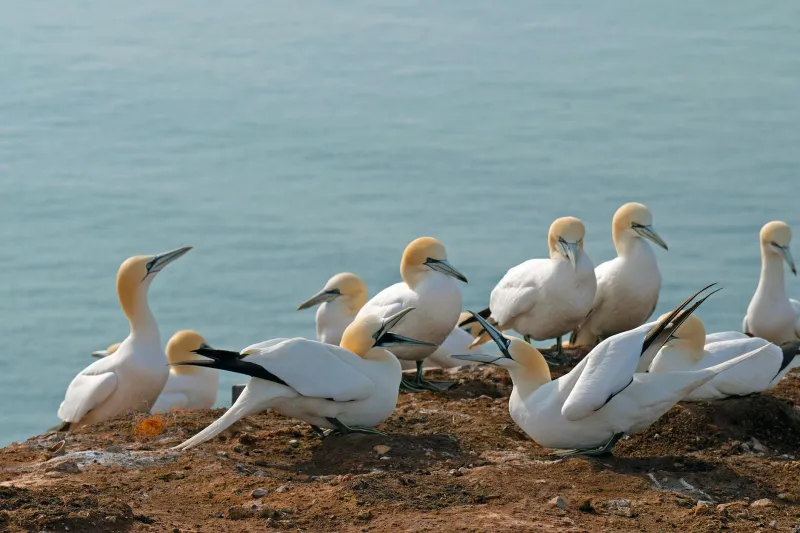
The Bass Rock rises from the North Sea like a living monument, its white cliffs transformed each summer into Britain's largest gannet colony. For over 150,000 breeding pairs, this volcanic plug has provided sanctuary for generations beyond counting. Yet in 2023, ornithologist Dr Rachel Morrison witnessed something that chilled her more than the North Sea wind: vast sections of the colony sitting empty, adult birds returning from foraging trips with empty beaks.
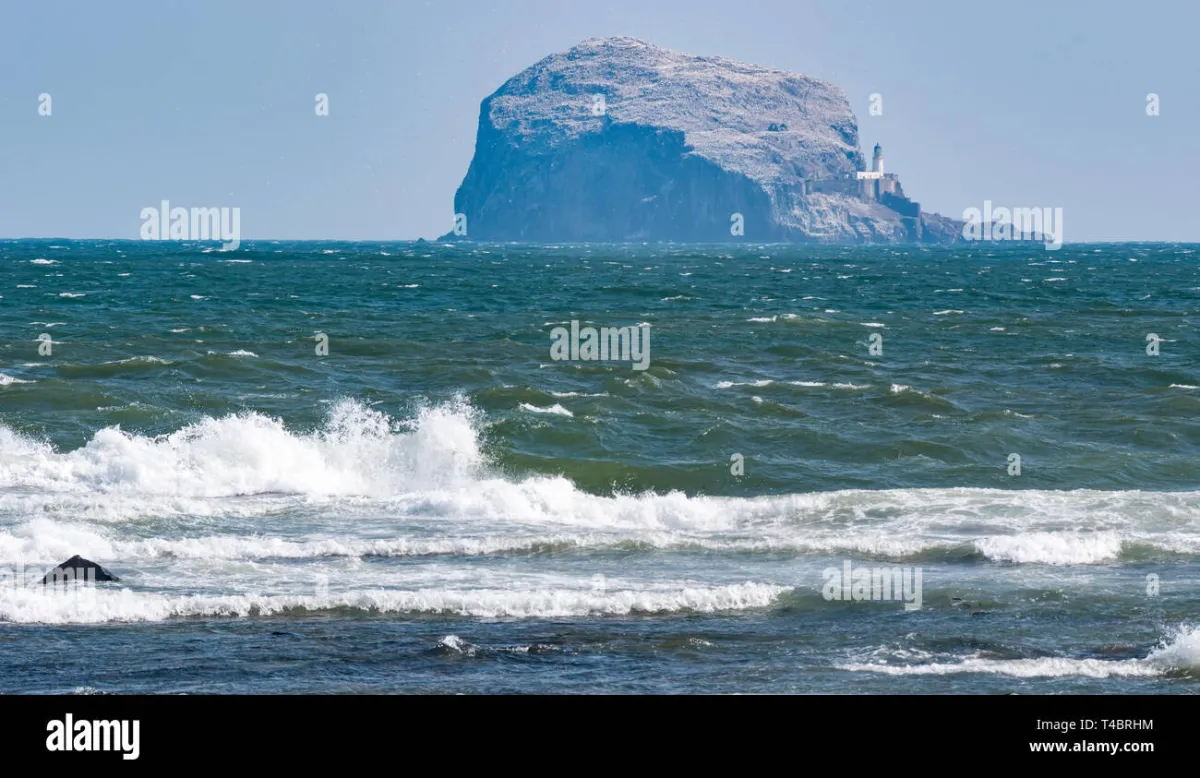 Photo: Bass Rock, via c8.alamy.com
"It was like watching a city die," Morrison recalls. "The infrastructure was there—thousands of carefully constructed nests—but the residents were starving. The sea had simply stopped providing."
This scene is repeating across Britain's coastline, from the puffin colonies of Skomer Island to the kittiwake cities of the Farne Islands. Our seabird populations, which represent some of Europe's most significant concentrations, are experiencing a collapse unprecedented in recorded history.
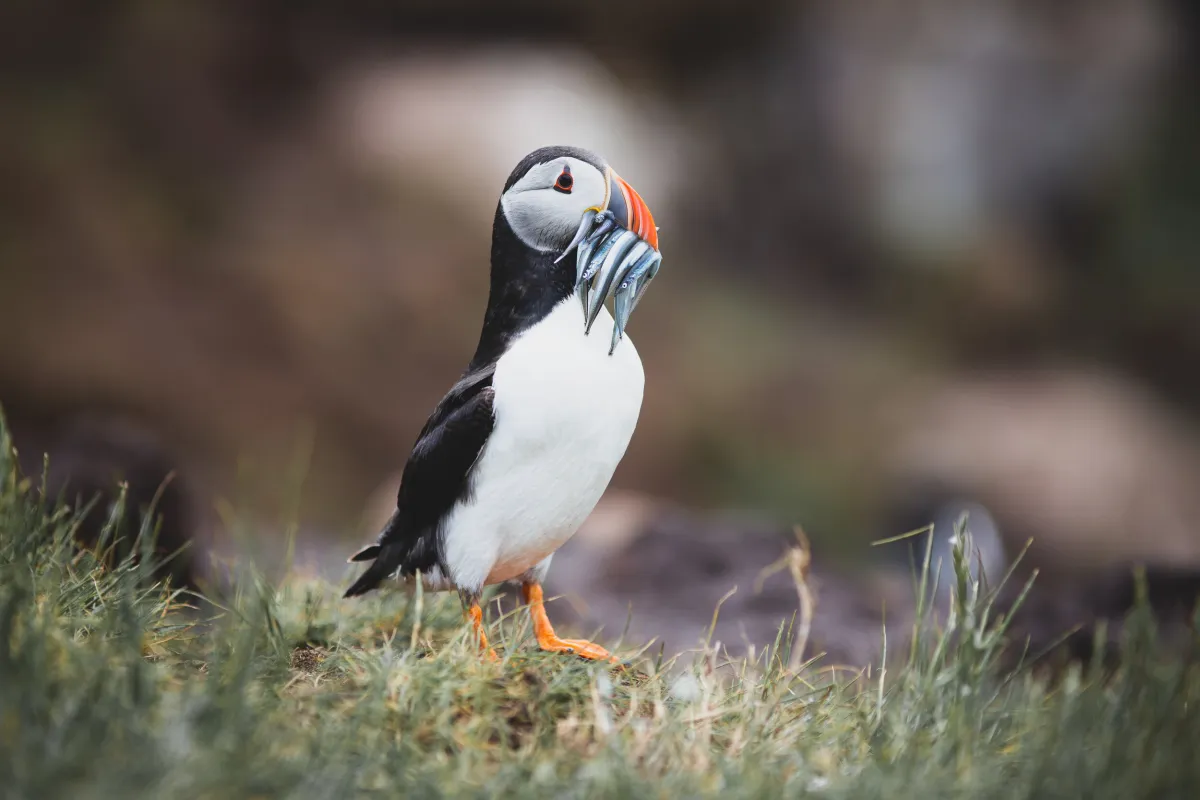 Photo: Farne Islands, via images.squarespace-cdn.com
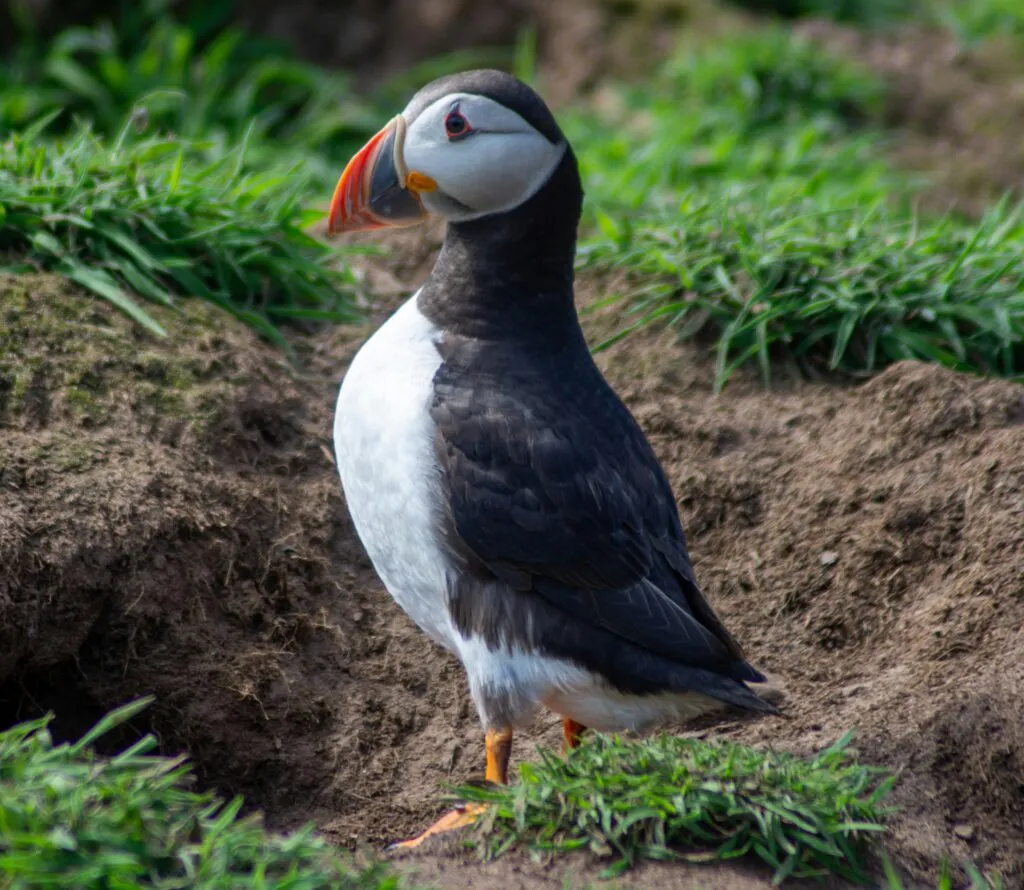 Photo: Skomer Island, via trehillfarm.co.uk
The Sandeel Exodus
At the heart of this crisis lies a fish no longer than a pencil: the lesser sandeel. These slender, silver fish form the foundation of North Sea food webs, supporting everything from harbour seals to Arctic terns. For seabirds, sandeels represent the perfect package—energy-rich, abundant, and perfectly sized for feeding to chicks.
But warming seas are rewriting the sandeel's story. Dr James Mitchell from the Centre for Environment, Fisheries and Aquaculture Science explains the cascade: "Sandeels feed on copepods, tiny crustaceans that thrive in cold water. As sea temperatures rise, these copepod populations are shifting northward. The sandeels are following their food source, leaving British seabirds with increasingly barren hunting grounds."
The numbers tell a stark story. Around Shetland, where seabird colonies have monitored sandeel availability for decades, the fish's abundance has declined by 70% since the 1990s. Surface water temperatures in the North Sea have risen by 1.67°C over the same period—seemingly modest, but catastrophic for cold-adapted marine ecosystems.
The Puffin Predicament
On Skomer Island off the Pembrokeshire coast, puffin researcher Dr Sarah Bennett has documented the species' increasingly desperate attempts to adapt. "Puffins are designed to carry multiple sandeels crosswise in their bills," she explains, watching through binoculars as an adult bird struggles with a single, oversized fish. "But with sandeels scarce, they're attempting to feed their chicks with species they're simply not equipped to handle."
The consequences are visible in the burrows. Puffin chicks, adapted to grow rapidly on a diet of energy-rich sandeels, are failing to develop properly on alternative prey. Many are abandoning their burrows prematurely, too weak to survive their first winter at sea.
Skomer's puffin population has declined from 6,000 breeding pairs in the 1990s to fewer than 3,000 today. Similar collapses are occurring across the species' range, from the Shetlands to the Scilly Isles.
Kittiwake Crisis
The elegant kittiwake, Britain's most maritime gull, faces perhaps the gravest threat. These cliff-nesters have evolved an extraordinary degree of specialisation, spending most of their lives on the open ocean and returning to land only to breed. Their streamlined bodies and narrow wings make them supremely efficient at diving for small fish—but only specific species in specific size ranges.
On the Farne Islands, kittiwake numbers have plummeted from 6,000 pairs in the 1980s to fewer than 1,000 today. Warden David Steel describes the colony's transformation: "Twenty years ago, the cliffs were white with kittiwakes. The sound was deafening—thousands of birds calling, chicks begging for food. Now, you can hear individual conversations. It's profoundly unsettling."
The kittiwake's plight illustrates the vulnerability of specialist species in rapidly changing environments. Unlike more adaptable gulls, kittiwakes cannot simply switch to scavenging or alternative food sources. They are locked into an evolutionary contract with the marine ecosystem—a contract that climate change is systematically breaking.
The Avian Flu Accelerant
As if warming seas weren't devastating enough, highly pathogenic avian influenza has emerged as an accelerant of seabird decline. The H5N1 strain, which arrived in Britain in 2021, has proven particularly lethal to colonial seabirds already weakened by food stress.
On Grassholm, home to Britain's second-largest gannet colony, avian flu killed an estimated 25,000 birds in 2022—roughly half the population. Dr Rob Hughes from the RSPB describes the scene: "It was apocalyptic. The smell was overwhelming, and the silence where there should have been 50,000 calling birds was profound. We're seeing mortality rates that would have been unimaginable just a few years ago."
The virus spreads rapidly through dense colonies, where birds nest within pecking distance of each other. Stressed, malnourished birds appear particularly susceptible, creating a feedback loop where climate impacts and disease amplify each other's effects.
Erosion of Ancient Foundations
Physical erosion compounds these biological pressures. Many of Britain's seabird colonies nest on soft sedimentary cliffs that are increasingly vulnerable to storm damage and sea-level rise. At Bempton Cliffs in Yorkshire, sections of the chalk cliff face are collapsing with increasing frequency, destroying nests and forcing birds to crowd into remaining suitable habitat.
Climate change is intensifying storm systems, bringing more frequent and severe weather events to coastal areas. Dr Lisa Thompson from the British Geological Survey explains: "Seabird colonies evolved on these cliffs because they provided stable nesting platforms over geological timescales. But the rate of change we're seeing now is unprecedented. Some colonies are literally losing ground beneath their feet."
The Fishing Fleet Dilemma
The decline of sandeels has created unexpected tensions with commercial fishing. As seabird populations crash, some conservationists advocate for closing sandeel fisheries entirely to preserve remaining stocks for wildlife. However, the industrial fishery argues that climate change, not fishing pressure, is the primary driver of sandeel decline.
Dr Mitchell acknowledges the complexity: "Sandeel fishing has historically been sustainable, but climate change has shifted the baseline. What was once a stable fishery operating within natural fluctuations may now represent unsustainable pressure on a system already pushed to its limits."
Emergency Interventions
Faced with colony collapse, conservationists are exploring increasingly desperate interventions. On some Scottish islands, researchers are supplementing natural prey with hand-fed fish, effectively turning wild seabirds into zoo animals. Artificial nest platforms are being constructed to replace eroded cliff faces.
These measures represent conservation triage—emergency interventions to prevent immediate extinction whilst hoping for longer-term solutions. As Dr Morrison reflects: "We're essentially putting seabird colonies on life support. It's not a sustainable solution, but it might buy us time to address the underlying causes."
The Point of No Return
Britain's seabird colonies represent evolutionary success stories millions of years in the making. Species like gannets and puffins have weathered ice ages, volcanic eruptions, and countless natural catastrophes. Yet the combined assault of warming seas, disease, and habitat loss may prove beyond their adaptive capacity.
The implications extend far beyond the birds themselves. Seabird colonies support entire coastal ecosystems, transferring nutrients from sea to land and supporting plant communities that depend on their guano. Their collapse represents the unravelling of ecological relationships that have persisted since the last glacial maximum.
As we watch these ancient cities crumble, we're witnessing the real-time consequences of a warming planet. The question is no longer whether Britain's seabird colonies will survive unchanged—it's whether they will survive at all.