The Blue Carbon Emergency
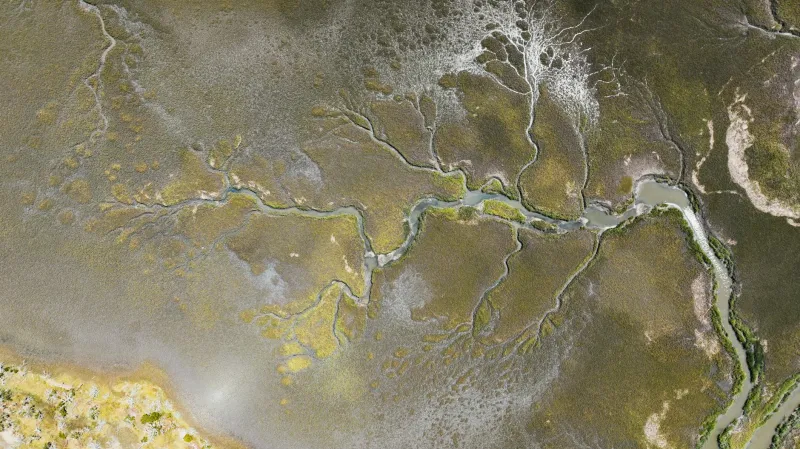
Along Britain's increasingly vulnerable coastline, an environmental catastrophe unfolds in plain sight, yet remains largely invisible to public consciousness. Salt marshes—those seemingly unremarkable expanses of grasses and sedges that fringe our estuaries—represent one of Earth's most efficient carbon storage systems. Acre for acre, they sequester carbon at rates that dwarf even tropical rainforests, locking away atmospheric CO2 in waterlogged soils for millennia.
Yet these natural climate solutions are vanishing at rates that should trigger national emergency responses. Britain has already lost over 85% of its historic salt marsh coverage, and the remaining fragments face unprecedented pressures from accelerating sea level rise, coastal development, and the legacy of centuries of land reclamation that leaves surviving marshes nowhere to retreat.
This represents more than biodiversity loss—it constitutes a climate catastrophe in slow motion, as one of our most powerful natural defences against climate breakdown disappears beneath rising waters.
Carbon Capture Champions
Salt marshes achieve their extraordinary carbon storage capacity through a combination of high productivity and anaerobic preservation. The twice-daily tidal cycle that defines these environments creates waterlogged conditions where decomposition proceeds slowly, allowing organic matter to accumulate in dense, carbon-rich sediments.
Research by Dr Hilary Ford at the University of Portsmouth reveals that British salt marshes store between 200-400 tonnes of carbon per hectare—concentrations that exceed even peat bogs. The Blackwater Estuary in Essex, one of Britain's largest remaining salt marsh systems, contains an estimated 2.3 million tonnes of stored carbon, equivalent to the annual emissions of 500,000 cars.
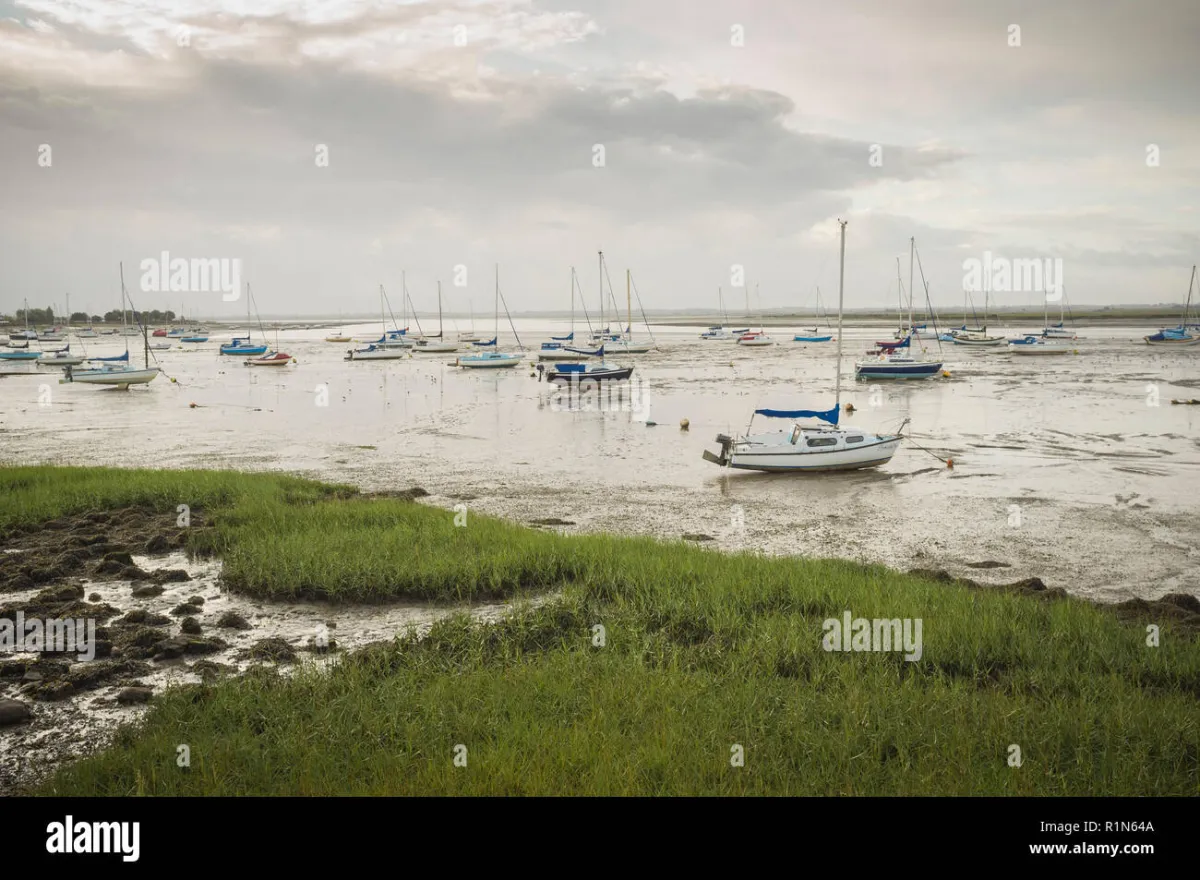 Photo: Blackwater Estuary, via c8.alamy.com
These figures represent only the carbon locked in existing sediments. Active salt marshes continue accumulating carbon at rates of 2-5 tonnes per hectare annually, making them among the most effective natural carbon capture technologies available. Unlike technological carbon capture systems that require massive energy inputs, salt marshes achieve this sequestration while providing numerous additional ecosystem services.
The carbon storage mechanism depends entirely on the unique hydrology salt marshes create. Regular tidal flooding brings nutrient-rich sediments that support high plant productivity, while anaerobic conditions in waterlogged soils prevent the decomposition that would release stored carbon back to the atmosphere. This delicate balance, refined over thousands of years, faces disruption from multiple directions.
Coastal Squeeze and Climatic Pressure
Sea level rise—accelerating around British coasts at 1.5mm annually—creates the phenomenon coastal scientists term "coastal squeeze." As waters rise, salt marshes face erosion from seaward margins while human infrastructure prevents their natural migration inland. Seawalls, roads, and development create hard boundaries that trap marshes in narrowing strips between rising seas and immovable barriers.
The Wash, Britain's largest estuarine system, exemplifies this crisis. Historical mapping reveals that salt marshes once extended several kilometres inland from current high tide marks. Today, these communities occupy narrow fringes behind sea defences, with some sections reduced to strips barely 50 metres wide. As sea levels continue rising, these remnant marshes face complete inundation within decades.
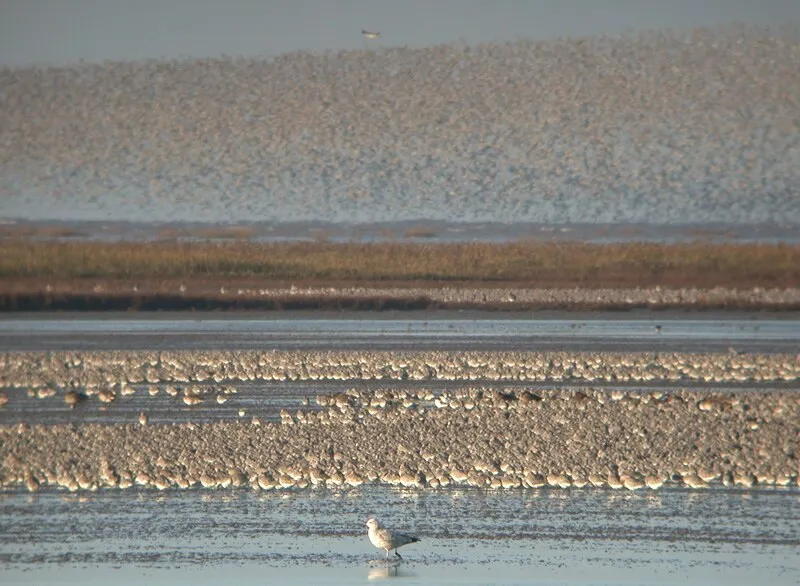 Photo of The Wash, via Wikidata/Wikimedia Commons
Climate change compounds these pressures through increased storm intensity and changing rainfall patterns. More frequent storm surges erode marsh edges faster than they can naturally rebuild, while altered precipitation affects the freshwater-saltwater balance that determines plant community composition. Species adapted to specific salinity ranges find their niches disappearing as hydrological conditions shift beyond historical parameters.
The Solway Firth, spanning the Scottish-English border, demonstrates how multiple pressures interact catastrophically. Rising seas erode seaward margins while increased rainfall from climate change alters salinity gradients. Meanwhile, agricultural intensification has eliminated potential retreat areas, leaving marshes trapped in an ever-narrowing zone between human infrastructure and rising waters.
The Carbon Bomb
When salt marshes disappear, their stored carbon doesn't simply vanish—it returns to the atmosphere as CO2, creating a positive feedback loop that accelerates climate change. Research published in Nature Climate Change estimates that global salt marsh loss releases 0.24 billion tonnes of CO2 annually, equivalent to the emissions of 52 million cars.
Britain's contribution to this carbon bomb appears disproportionately large given our extensive historical salt marsh losses. The East Anglian coast, where medieval land reclamation converted vast salt marshes to agricultural land, released an estimated 50 million tonnes of stored carbon—emissions that continue as drained organic soils oxidise in contact with air.
Contemporary marsh loss perpetuates this process. When the Thames Estuary lost 400 hectares of salt marsh between 2006 and 2016, the associated carbon release exceeded 80,000 tonnes of CO2—equivalent to removing 17,000 cars from roads for an entire year. Yet these emissions rarely feature in national carbon accounting, rendering salt marsh loss invisible to climate policy.
The speed of contemporary loss means Britain faces a choice between preserving remaining carbon stores or accepting massive additional emissions as marshes disappear. Current loss rates suggest remaining marshes could release over 10 million tonnes of CO2 by 2050—emissions that would undermine national climate targets regardless of reductions achieved in other sectors.
Managed Retreat or Managed Collapse
Conservation organisations and government agencies increasingly promote "managed realignment" as the solution to coastal squeeze—deliberately breaching sea defences to allow salt marshes to migrate inland onto previously protected land. The Environment Agency has implemented realignment schemes across England, creating new intertidal habitats while reducing flood risk for coastal communities.
The Medmerry Managed Realignment Scheme in West Sussex represents the largest such project in Europe, creating 183 hectares of new salt marsh by allowing controlled flooding of agricultural land. Initial results appear promising, with rapid colonisation by salt-tolerant plants and early signs of carbon accumulation in developing sediments.
 Photo: Medmerry Managed Realignment Scheme, via i.pinimg.com
However, the scale of realignment required to offset current losses dwarfs existing schemes. The Committee on Climate Change estimates that maintaining current salt marsh carbon storage would require creating 10,000 hectares of new habitat by 2050—fifty times larger than the Medmerry project.
Land acquisition costs alone would exceed £2 billion, while compensation for displaced agricultural production could double this figure. Political resistance from farming communities and coastal residents makes large-scale realignment increasingly difficult to implement, particularly in areas where property values and agricultural productivity are highest.
Natural Engineering Solutions
Emerging research suggests that salt marshes themselves could provide solutions to their survival challenges through careful management of their natural engineering capabilities. Salt marsh plants trap sediment and build elevation, potentially keeping pace with sea level rise if sediment supplies remain adequate and plant communities stay healthy.
The University of Cambridge's Dr Iris Möller leads research demonstrating how salt marshes can be "trained" to build elevation more rapidly through strategic management interventions. Carefully timed grazing, selective planting of fast-growing species, and sediment supplementation can enhance natural accretion processes.
These techniques show particular promise in areas where realignment isn't feasible. The Thames Estuary Partnership experiments with hybrid approaches that combine traditional sea defences with restored salt marsh buffers, creating systems that provide flood protection while maintaining carbon storage functions.
However, such interventions require sustained commitment and substantial investment. Natural England's current salt marsh management budget addresses less than 10% of sites requiring immediate intervention, highlighting the gap between scientific understanding and implementation capacity.
The Tipping Point
Britain's remaining salt marshes approach a critical threshold beyond which recovery becomes impossible regardless of intervention. Once marsh elevation falls too far behind sea level rise, even the most aggressive management cannot prevent drowning. Climate projections suggest this tipping point could arrive within two decades for many sites.
The choice facing policymakers is stark: implement massive, immediate interventions to preserve these carbon stores and coastal defences, or accept their loss and the cascading consequences for climate targets and coastal resilience. The window for effective action narrows with each tide cycle, as rising waters claim more marsh edge and release more stored carbon.
Preserving Britain's salt marshes requires recognising them not as peripheral wetlands, but as critical infrastructure for climate stability and coastal protection. Their survival demands interventions at the scale of their importance—transforming how we approach coastal management and climate policy.
The marshes that have protected Britain's coasts for millennia now need protection themselves. Whether they survive to continue their climate-stabilising work depends on decisions made in the next few years, as the tide of change reaches heights that will determine the fate of these irreplaceable ecosystems.