The Soundscape of Silence
Stand in a British hedgerow at midnight fifty years ago, and you would have been enveloped by a symphony of life. The liquid trill of nightingales weaving through the darkness, the haunting call of tawny owls echoing across fields, the mechanical churring of nightjars rising from heathland clearings. Today, that same hedgerow offers something far more sinister: silence.
Acoustic ecologist Dr Sarah Henderson has spent the last decade documenting Britain's vanishing night chorus, armed with sensitive recording equipment and an increasingly heavy heart. "We're witnessing an acoustic apocalypse," she explains, analysing spectrograms that reveal the stark reality of our emptying nights. "The frequency ranges that were once filled with bird calls, bat echolocation, and insect communication are simply... gone."
 Photo: Dr Sarah Henderson, via bclung.ca
The Nightingale's Last Song
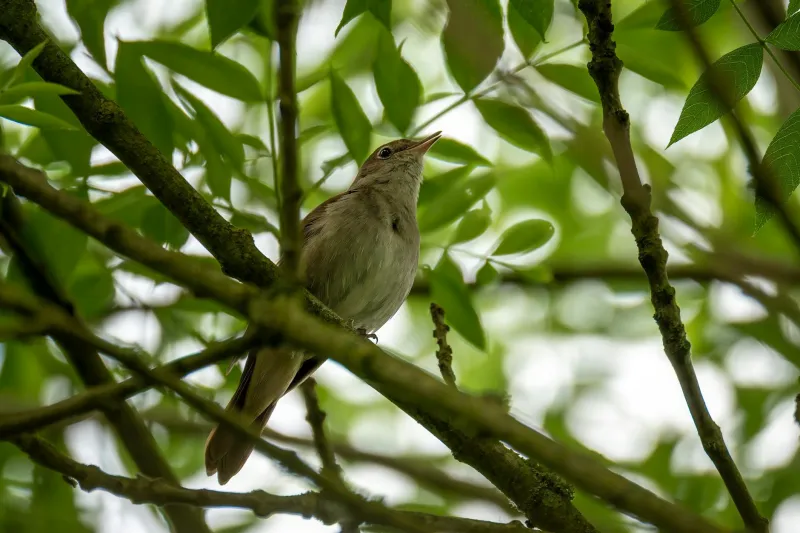
Perhaps no species embodies this crisis more poignantly than the nightingale. Once so common that Shakespeare could rely on every audience member recognising its song, nightingale populations have crashed by 93% since 1967. The remaining 5,500 breeding pairs cling to existence in scattered fragments of suitable habitat, primarily in Kent and the Southeast.
The nightingale's decline reveals the interconnected nature of our ecological unravelling. These birds require dense, low scrubland for nesting—precisely the habitat type that modern farming practices have systematically eliminated. Hedge removal, intensive grazing, and the tidying up of "messy" field margins have stripped away the thorny thickets where nightingales once thrived.
But habitat loss tells only part of the story. Climate change has disrupted the delicate timing between nightingale arrival and peak insect abundance. Dr James Walsh from the British Trust for Ornithology explains: "Nightingales time their migration to coincide with the emergence of beetles, caterpillars, and other invertebrates. But warming springs are causing insect emergence to shift earlier, whilst migration timing remains relatively fixed. The birds are arriving to find the dinner table already cleared."
The Silent Hunt
Barn owls face a different but equally devastating challenge. These iconic predators have adapted their hunting behaviour over millennia to exploit the acoustic landscape of small mammals moving through grassland. Their asymmetrically positioned ears can pinpoint the location of a vole in complete darkness, whilst their silent flight feathers allow them to approach undetected.
Yet this finely-tuned hunting machine is being undermined by the very silence it depends upon. Intensive agriculture has reduced prey populations by eliminating the rough grassland and field margins where voles and shrews flourish. Simultaneously, the widespread use of rodenticides has created a secondary poisoning crisis, with barn owl populations in some areas showing alarming levels of contamination.
"We're seeing barn owls adapting by hunting closer to roads and urban areas, where prey remains more abundant," notes Dr Caroline Williams from the Barn Owl Trust. "But this brings them into contact with traffic, power lines, and other anthropogenic hazards. It's a desperate strategy that often proves fatal."
The Nightjar's Vanishing Stage
Nightjars present perhaps the most complex conservation challenge of all. These cryptic birds require a mosaic of bare ground for nesting and insect-rich airspace for feeding. Traditionally, they thrived in the dynamic landscapes created by traditional woodland management—the clearings, edges, and succession habitats that emerged from coppicing, grazing, and small-scale disturbance.
Modern forestry practices have largely eliminated this habitat diversity. Even on heathland, nightjars struggle as succession transforms open areas into dense scrubland without the grazing pressure that once maintained habitat mosaics. Climate change compounds these pressures by altering the timing and abundance of flying insects upon which nightjars depend.
Dr Mark Eaton from the RSPB describes the nightjar's predicament: "These birds evolved in landscapes shaped by large herbivores and natural disturbance regimes. Our sanitised countryside simply doesn't provide the conditions they need. We're having to artificially recreate the disturbance patterns that were once natural processes."
The Chemical Curtain
Underlying all these declines is the pervasive impact of agricultural chemicals. Neonicotinoid pesticides, whilst partially restricted, continue to devastate insect populations that form the foundation of nocturnal food webs. Even sub-lethal exposure can impair insect navigation and reproduction, creating cascading effects throughout the ecosystem.
Dr Henderson's acoustic analysis reveals the scale of this chemical curtain: "In areas of intensive agriculture, we're recording 60-80% fewer insect sounds compared to organic farmland. The night soundscape is dominated by mechanical noise rather than biological activity."
Fragments of Hope
Yet within this acoustic apocalypse, fragments of hope persist. Rewilding projects across Britain are beginning to restore the dynamic landscapes that nocturnal species require. The Knepp Estate in West Sussex has seen nightingale populations increase tenfold following the introduction of extensive grazing systems that create the scrubland mosaics these birds need.
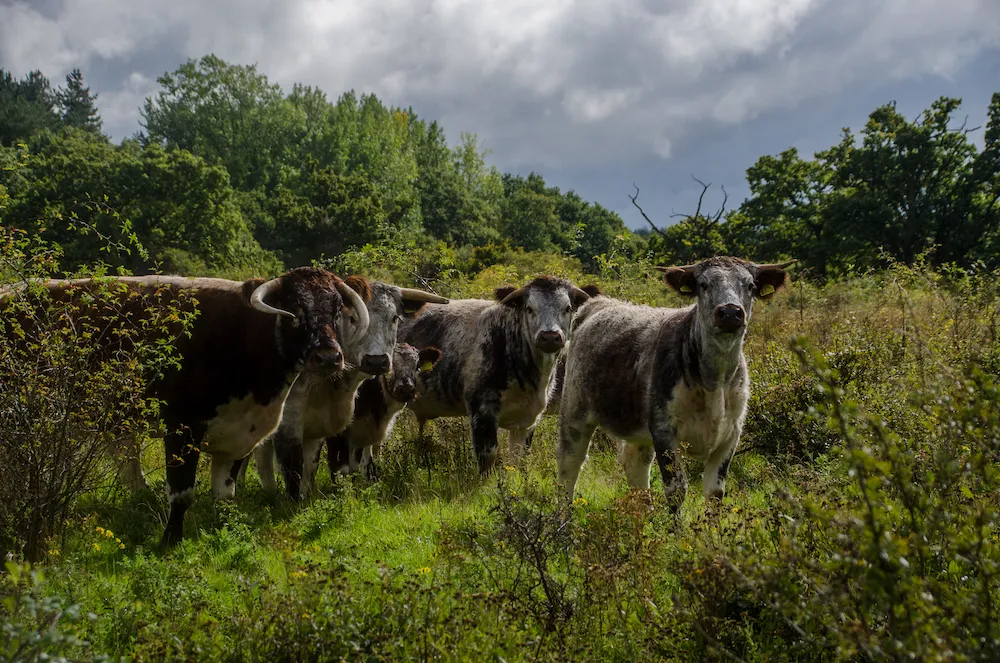 Photo: Knepp Estate, via www.thiswaynext.com
Urban areas, surprisingly, are becoming refugia for some species. City parks and gardens often support higher barn owl densities than surrounding farmland, whilst urban lighting creates hunting opportunities for species like pipistrelle bats.
Listening to the Future
The loss of Britain's night chorus represents more than aesthetic impoverishment—it signals the breakdown of ecological processes that have sustained our countryside for millennia. Each silent hedgerow is a testament to our failure to maintain the complex web of relationships between plants, insects, and the animals that depend upon them.
As Dr Henderson concludes: "Sound is the heartbeat of a healthy ecosystem. When the night falls silent, we know that the patient is in critical condition. The question is whether we can restore the symphony before it's lost forever."