The Beauty in Dereliction
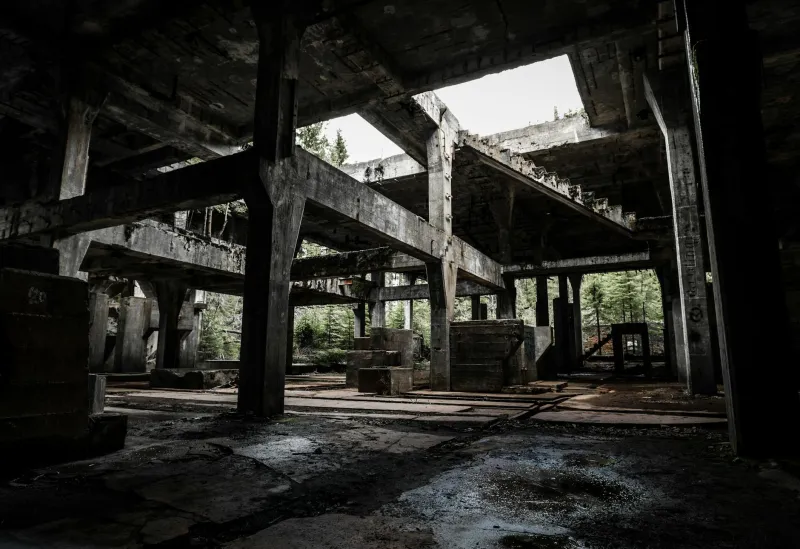
The Canvey Wick nature reserve in Essex doesn't look like a conservation success story. Scattered across 200 hectares of scrubland are the rusting remnants of an oil refinery—concrete foundations slowly being reclaimed by brambles, abandoned railway sidings disappearing beneath spreading birch woodland, and pools of rainwater collecting in industrial depressions. Yet this apparent wasteland supports more rare invertebrate species than any comparable site in Britain.
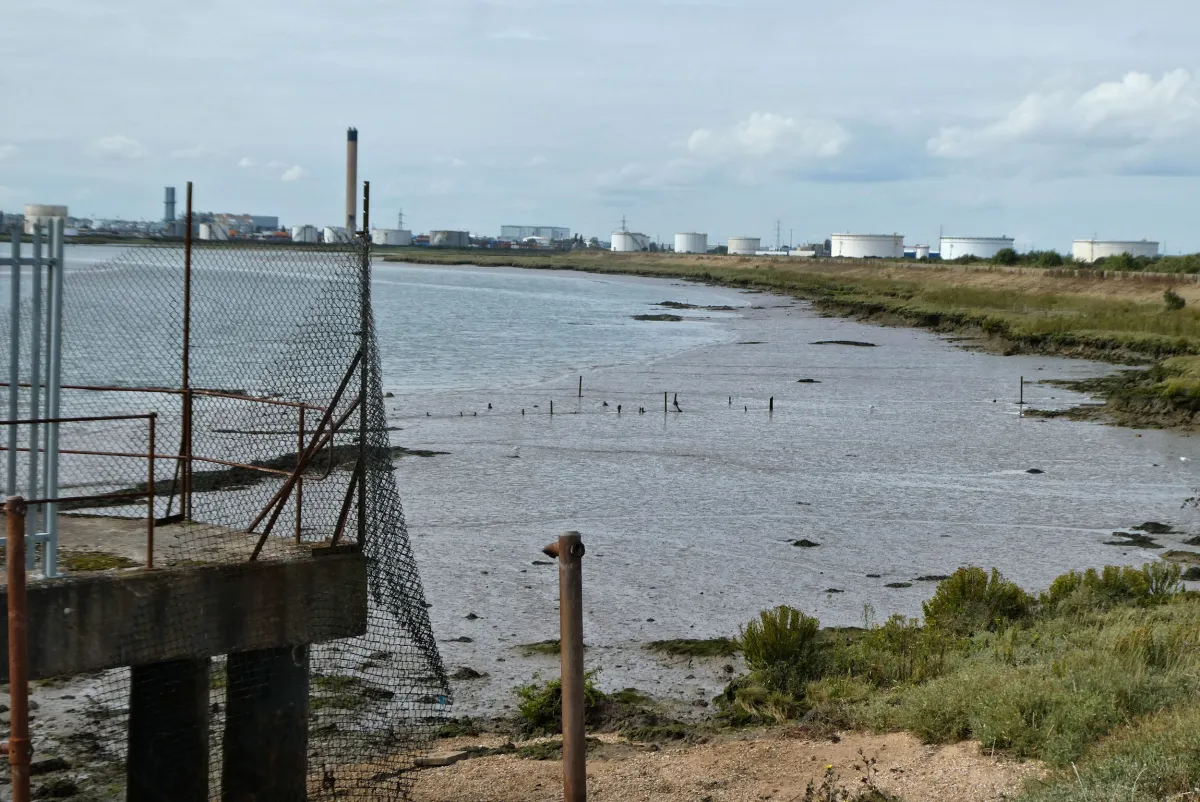 Photo: Canvey Wick, via dcxne7jg10j3s.cloudfront.net
Dr Helen Carter, who has spent fifteen years studying Canvey Wick's ecology, describes it as "an accidental masterpiece of conservation design." The site hosts 1,500 species of invertebrates, including 23 that are nationally scarce and several found nowhere else in Essex. "What we're seeing here challenges every assumption about what constitutes valuable habitat," she explains, gesturing toward a patch of bare concrete where rare mining bees have established their largest known colony.
The Brownfield Revolution
Across Britain, similar stories are emerging from the most unlikely places. Former collieries in South Wales support populations of great crested newts that dwarf those in ancient woodland ponds. Abandoned airfields provide crucial breeding habitat for ground-nesting birds that have vanished from intensively managed farmland. Decommissioned gasworks host rare orchid species that haven't been seen in the surrounding countryside for decades.
This phenomenon represents a fundamental shift in conservation thinking. For generations, the focus has been on protecting pristine habitats—ancient forests, chalk downs, and species-rich meadows that represent Britain's ecological heritage. But as Dr Marcus Webb from the University of Sheffield argues, "We've been looking backward whilst biodiversity has been adapting to look forward. These industrial sites are creating the novel ecosystems of the 21st century."
The Disturbance Paradox
The secret to brownfield biodiversity lies in disturbance—the very factor that conventional conservation wisdom suggests we should minimise. Industrial activities create a mosaic of microhabitats: areas of bare ground, temporary water bodies, patches of different soil chemistry, and varying degrees of vegetation cover. This heterogeneity supports species assemblages that uniform habitats simply cannot match.
At Rainham Marshes, where the RSPB has transformed a former military firing range into one of London's most important wildlife sites, warden Sarah Mitchell explains the paradox: "The military use created exactly the conditions that many rare species require—regular disturbance, bare patches, and a constantly changing landscape. When we first took over, conservationists wanted to 'restore' the site to pristine saltmarsh. Thankfully, we recognised that the disturbed habitat was actually more valuable than what came before."
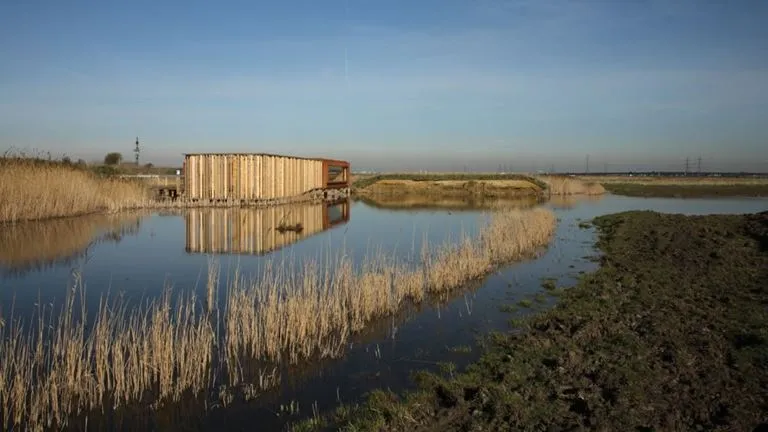 Photo: Rainham Marshes, via naturebreak.co.uk
The reserve now supports 1,400 species of invertebrates, including the critically endangered distinguished jumping spider, which depends on the sparse vegetation and bare ground that military vehicles inadvertently created.
Mining Bees and Concrete Jungles
Perhaps no group of species illustrates the brownfield paradox better than Britain's mining bees. These solitary insects require bare, well-drained soil for nesting—precisely the conditions that modern agriculture and suburban development have eliminated from much of the countryside. Yet on brownfield sites, where concrete and rubble create perfect drainage and vegetation remains sparse, mining bee populations are thriving.
Dr James Cross from the Bees, Wasps and Ants Recording Society has documented this phenomenon across hundreds of sites. "We're finding mining bee species that were thought to be declining or locally extinct establishing massive populations on brownfield sites," he reports. "The yellow-legged mining bee, for instance, has its largest British population on a former chemical works in Merseyside."
These discoveries are forcing entomologists to reconsider the habitat requirements of species they thought they understood. Many rare invertebrates, it turns out, are not woodland specialists or grassland specialists, but disturbance specialists—adapted to the dynamic landscapes that industrial activity inadvertently recreates.
The Orchid Pioneers
Brownfield sites are also proving crucial for Britain's most charismatic plant group: orchids. The bee orchid, pyramidal orchid, and common spotted orchid are all establishing populations on post-industrial sites where the disturbed soil and reduced competition allow them to flourish.
At Swanscombe Peninsula in Kent, where cement works operated for over a century, botanist Dr Emma Thompson has recorded 17 species of orchid—more than in any ancient chalk grassland in the region. "The lime-rich dust from cement production created ideal growing conditions," she explains. "Combined with the lack of intensive management, it's allowed orchid populations to establish and spread naturally."
The site also supports the critically endangered man orchid, which has just 20 known populations in Britain. Its presence on this industrial wasteland has forced conservationists to reconsider whether protecting ancient grasslands is sufficient for orchid conservation.
Early Successional Ecosystems
What makes brownfield sites so valuable is their position in ecological succession. Most protected habitats in Britain represent climax ecosystems—stable end-points of succession that require active management to prevent natural progression. Brownfield sites, by contrast, represent the early stages of succession, when bare ground gradually develops into scrubland and eventually woodland.
This early successional habitat was once common across Britain, created by natural processes like flooding, landslides, and grazing by large herbivores. But modern landscape management has largely eliminated these dynamic processes, leaving many species without suitable habitat.
Dr Webb describes the implications: "We've spent decades trying to freeze ecosystems in time, maintaining them at particular successional stages through management. But many species evolved to exploit temporary habitats created by disturbance. Brownfield sites are providing that temporal niche in landscapes where it's otherwise disappeared."
The Urban Biodiversity Paradox
This brownfield renaissance is part of a broader pattern: urban and post-industrial areas often support higher biodiversity than the surrounding countryside. London, for instance, supports more bird species than the entire county of Norfolk, whilst Manchester's urban core hosts more butterfly species per hectare than most rural areas.
The explanation lies in habitat diversity and reduced pesticide use. Urban areas create a fine-grained mosaic of different habitats—gardens, parks, brownfield sites, railway embankments, and green roofs—that supports a wide range of species with different requirements. Simultaneously, the absence of intensive agriculture means that urban areas often have lower pesticide loads than rural environments.
Development Pressures and Conservation Conflicts
Yet these accidental edens face an existential threat: development pressure. Brownfield sites are prioritised for housing and infrastructure precisely because they're perceived as degraded land with little ecological value. The result is a conservation paradox where some of Britain's most biodiverse habitats receive the least protection.
Planning consultant Dr Rachel Green, who specialises in brownfield ecology, describes the challenge: "We're losing irreplaceable brownfield habitats to development whilst simultaneously spending millions trying to recreate similar conditions through habitat creation schemes. It's ecological madness driven by a failure to recognise the value of what we already have."
The Thames Estuary provides a case study in this conflict. The region supports internationally important populations of rare invertebrates on brownfield sites, yet faces intense development pressure for housing and logistics facilities. Several sites that support nationally significant populations have been lost to development in the past decade.
A New Conservation Paradigm
The brownfield biodiversity boom is forcing conservationists to develop new approaches that embrace disturbance and change rather than seeking to prevent it. Some organisations are experimenting with "managed disturbance"—deliberately creating the conditions that industrial activity once provided.
At Dungeness, the RSPB uses heavy machinery to create bare patches and scrapes that mimic the disturbance patterns that historically maintained the site's unique shingle ecosystem. Similar approaches are being trialled across the country, from quarry restoration projects that maintain bare rock faces to urban green spaces designed around early successional habitats.
Dr Carter sees this as the future of conservation: "We need to stop thinking about conservation as preservation and start thinking about it as ecosystem management. These brownfield sites are showing us what's possible when we work with natural processes rather than against them."
The Lessons of Ruins
Britain's industrial wastelands are teaching us profound lessons about resilience, adaptation, and the unexpected forms that conservation success can take. They demonstrate that nature doesn't always need our help to recover—sometimes it just needs us to step back and let ecological processes unfold.
As development pressure mounts and climate change accelerates, these accidental edens may represent our best hope for maintaining biodiversity in an increasingly human-dominated landscape. They prove that conservation isn't just about protecting the past—it's about nurturing the ecosystems of the future, even when they emerge from the most unlikely places.
The challenge now is ensuring that planning policies and conservation strategies recognise the value of these overlooked habitats before they disappear beneath concrete and tarmac. In a world facing ecological crisis, we cannot afford to lose the lessons written in rust and rubble across Britain's post-industrial landscape.