The Uncomfortable Truth Behind the Headlines
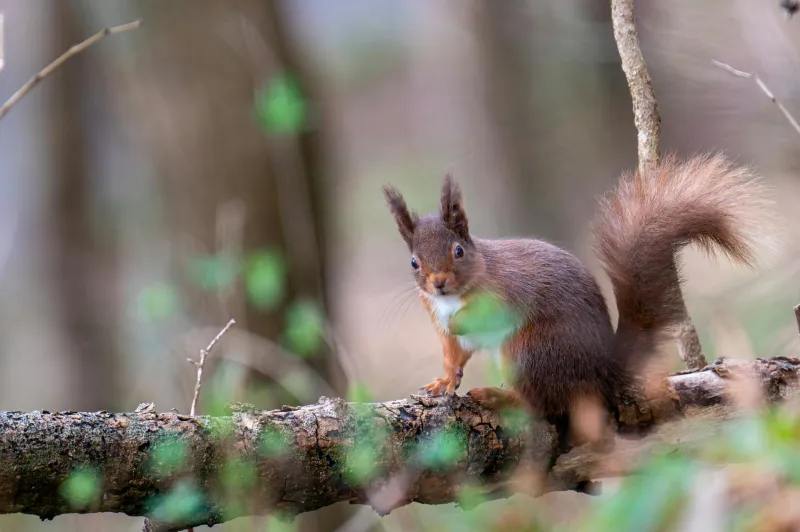
The press releases paint an optimistic picture. Red squirrel numbers are 'stabilising' in key strongholds. Grey squirrel control programmes are 'showing success'. Woodland management is 'creating suitable habitat'. Yet beneath the carefully crafted communications from Britain's leading wildlife charities lies a more troubling reality—one that challenges everything we thought we knew about red squirrel conservation.
Dr Rebecca Thornton's latest population modelling, published quietly in the Journal of Applied Ecology, tells a different story. Using advanced statistical techniques that account for detection bias and habitat fragmentation, her research suggests that viable red squirrel populations now exist in fewer than 20 locations across England and Wales. The rest—the small groups that feature in optimistic news stories—represent what ecologists term 'living dead' populations: genetically isolated communities destined for local extinction within two decades.
"We've been measuring the wrong things," Thornton explains from her office at Newcastle University. "Counting squirrels in our best remaining sites gives us a false sense of security. What matters is genetic diversity, population connectivity, and long-term viability. On those measures, we're losing this battle badly."
 Photo: Newcastle University, via c8.alamy.com
The Retreat to Fortress Scotland
The numbers are stark. In 1945, red squirrels could be found in every English county. Today, viable breeding populations south of the Scottish border exist only in Northumberland's border forests, a handful of Cumbrian valleys, and three offshore islands where grey squirrels cannot establish. Even the celebrated Lake District populations—once held up as conservation success stories—show signs of genetic bottlenecking that may prove terminal.
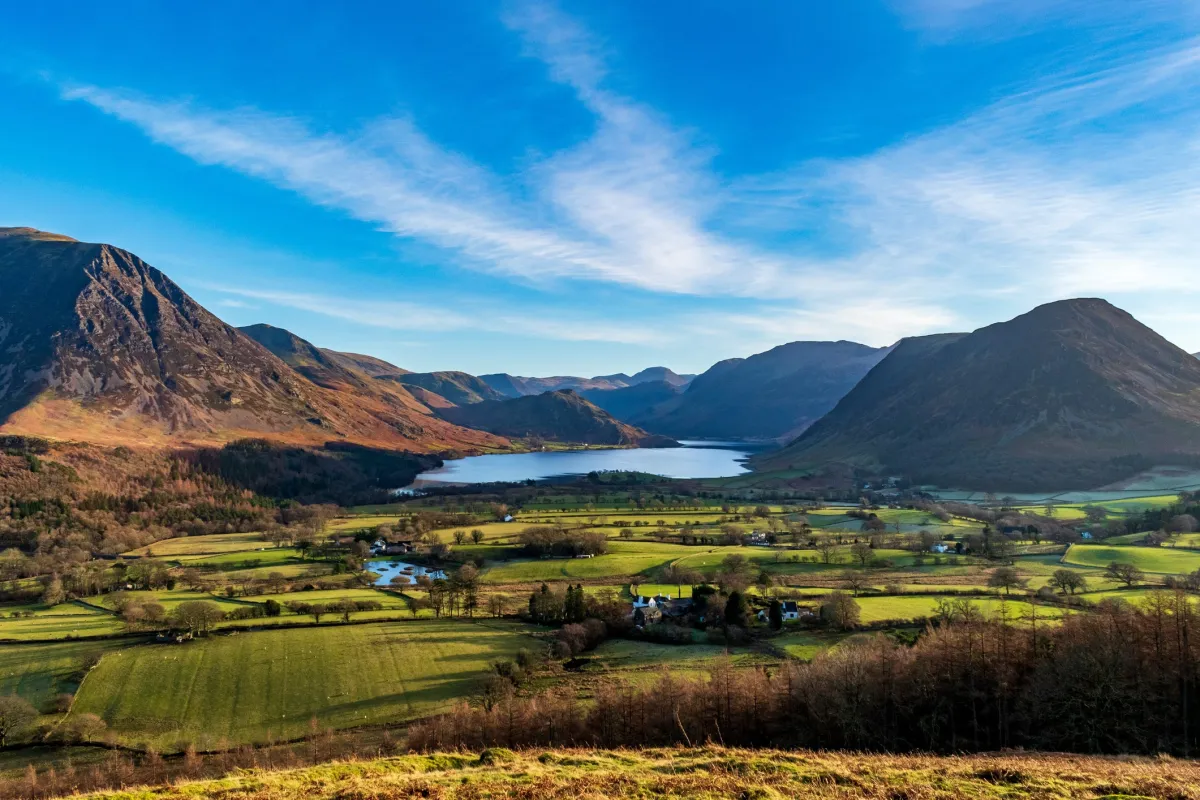 Photo: Lake District, via static.independent.co.uk
Scotland tells a different story, but not necessarily a more encouraging one. The Highlands support approximately 75% of Britain's remaining red squirrels, yet even these populations face mounting pressure. Climate change is shifting the competitive balance between native reds and invasive greys, allowing the larger, more adaptable American species to colonise previously unsuitable habitats.
Forest ecologist Dr James MacLeod has tracked this northward expansion for over a decade. His data shows grey squirrels establishing populations 50 kilometres further north than climate models predicted just five years ago. "The thermal barriers that protected Scottish red squirrels are disappearing," he warns. "We're watching the biological equivalent of a medieval siege, with the castle walls crumbling faster than we can repair them."
The £50 Million Question
Since 1990, British conservation organisations have invested an estimated £50 million in red squirrel protection programmes. The Squirrel Accord, launched with great fanfare in 2015, coordinates grey squirrel control across 36 priority areas. Forestry England has restructured thousands of hectares of woodland to favour red squirrels. Local volunteer groups trap grey squirrels with religious dedication.
Yet the decline continues. Independent analysis by the British Trust for Ornithology suggests that red squirrel range has contracted by 15% since 2010, despite unprecedented conservation investment. The uncomfortable question facing the conservation community is whether traditional approaches—habitat management and grey squirrel culling—can ever achieve more than slowing the inevitable.
Professor Angela Cassidy, who studies conservation policy at King's College London, argues that the red squirrel campaign has become a victim of its own success in capturing public imagination. "The emotional investment in this species is so enormous that admitting failure becomes politically impossible," she observes. "We've created a conservation narrative that prioritises hope over evidence."
The Gene Drive Gambit
Faced with conventional conservation's limitations, researchers are turning to technologies that would have been science fiction a decade ago. Gene drive systems—genetic modifications that spread rapidly through wild populations—offer theoretical solutions to the grey squirrel problem that traditional culling cannot achieve.
The concept is seductive in its simplicity. Engineer grey squirrels to carry genes that reduce fertility or survival, release them into wild populations, and watch the genetic modification spread like a biological virus. Within a few generations, grey squirrel numbers could collapse across entire regions, leaving ecological space for red squirrels to recolonise.
Dr Sarah Chen leads the UK's only research programme investigating gene drives for conservation applications. Working from a high-security laboratory at Oxford University, her team has successfully developed fertility-reducing gene drives in laboratory mouse populations—a proof of concept for similar systems in squirrels.
 Photo: Oxford University, via cdn.pixabay.com
"The technology exists," Chen confirms. "The question is whether society is prepared to accept genetic modification as a conservation tool. We're talking about deliberately releasing engineered organisms into the environment—something that goes against every instinct of traditional conservation."
Ethical Minefields and Unintended Consequences
The prospect of gene drives divides the conservation community like no issue in recent memory. Supporters argue that desperate times require desperate measures—that red squirrels face extinction without radical intervention. Critics warn of unintended consequences, ecological disruption, and the precedent of treating nature as a genetic engineering laboratory.
Dr Martin Palmer, former director of conservation at the Wildlife Trusts, represents the sceptical camp. "Once we start down this road, where does it end?" he asks. "Do we genetically modify every invasive species? Every pest? Every organism that inconveniences us? We risk turning conservation into a branch of biotechnology."
The regulatory hurdles alone could take decades to navigate. Gene drives would require approval from multiple government departments, extensive environmental impact assessments, and public consultation processes that might prove politically toxic. Meanwhile, red squirrel populations continue their inexorable decline.
Island Sanctuaries and Managed Extinction
Some conservationists advocate a more pragmatic approach—accepting that red squirrels cannot survive in mainland Britain whilst preserving genetically diverse populations on offshore islands. Anglesey, the Isle of Wight, and Brownsea Island already serve as grey-squirrel-free refuges, supporting healthy red squirrel populations in artificially maintained ecosystems.
This 'ark strategy' could be extended to other islands and fenced mainland reserves, creating a network of red squirrel sanctuaries that preserve the species whilst acknowledging ecological reality. Critics dismiss this as 'zoo conservation'—maintaining populations in artificial conditions that bear little resemblance to natural ecosystems.
Yet even this limited ambition faces challenges. Island populations require active management to prevent inbreeding, regular genetic supplementation from other populations, and constant vigilance against grey squirrel invasion. The costs are substantial, the ecological benefits questionable.
The Reckoning Approaches
Britain's red squirrel story reflects broader challenges facing conservation in the Anthropocene era. Traditional approaches—habitat protection, species management, public education—developed for a stable climate and relatively intact ecosystems. In a rapidly changing world, these tools may prove inadequate for the challenges ahead.
The red squirrel's decline is not simply about competition between native and invasive species. It reflects habitat fragmentation, climate change, disease pressure, and the cumulative impacts of human activity on natural systems. Addressing these root causes requires transformative changes to how we manage landscapes, not just targeted species interventions.
As Dr Thornton concludes in her latest paper: "We may need to accept that some conservation battles cannot be won with current tools. The question is whether we're prepared to watch beloved species disappear whilst we develop new approaches, or whether we're willing to embrace controversial technologies that might save them."
The red squirrel's future hangs in the balance—a living symbol of conservation's promises, limitations, and the difficult choices that lie ahead in an age of ecological crisis.