The Living Architecture
Across Britain's upland landscapes, an ecological crisis unfolds in slow motion, hidden within structures so familiar they've become invisible. Dry stone walls, those seemingly permanent fixtures of our countryside, are collapsing at unprecedented rates—and with them, entire ecosystems that have evolved over centuries within their limestone and granite foundations.
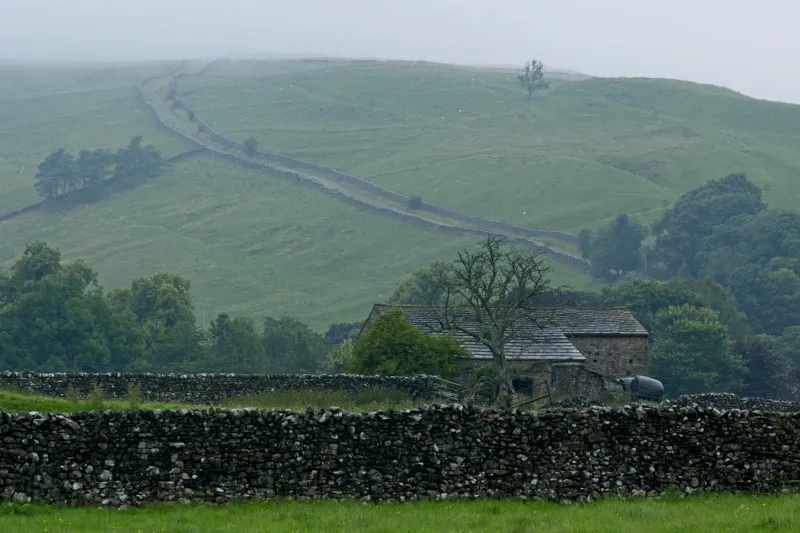
These aren't merely heritage features or agricultural boundaries. Britain's 100,000 miles of dry stone walls constitute one of our most extensive linear ecosystems, supporting biodiversity assemblages found nowhere else in the landscape. From the Yorkshire Dales to Dartmoor, from the Cotswolds to the Scottish Borders, these structures harbour specialised communities of plants, invertebrates, and small mammals whose survival depends entirely on the unique microhabitats walls provide.
 Photo: Yorkshire Dales, via www.yorkshiredales.org.uk
Yet across the uplands, walls are failing faster than they can be repaired. Agricultural abandonment, climate pressures, and the near-extinction of traditional walling skills have created a perfect storm that threatens to erase these living monuments within decades.
Vertical Ecosystems
Dry stone walls function as vertical ecosystems, creating microclimates and habitat niches unavailable in surrounding landscapes. Their construction—unmortared stones fitted together through skilled craftsmanship—creates countless crevices and chambers that provide refuge for specialised flora and fauna.
Lichens represent perhaps the most spectacular example of wall-dependent biodiversity. These symbiotic organisms, partnerships between fungi and algae, colonise stone surfaces in patterns determined by moisture gradients, aspect, and stone type. Limestone walls in the Peak District support over 200 lichen species, many found exclusively on man-made stone structures. The rare golden hair-lichen (Teloschistes chrysophthalmus) clings to existence on coastal walls in Cornwall and Wales, entirely dependent on the calcium-rich substrates traditional construction provides.
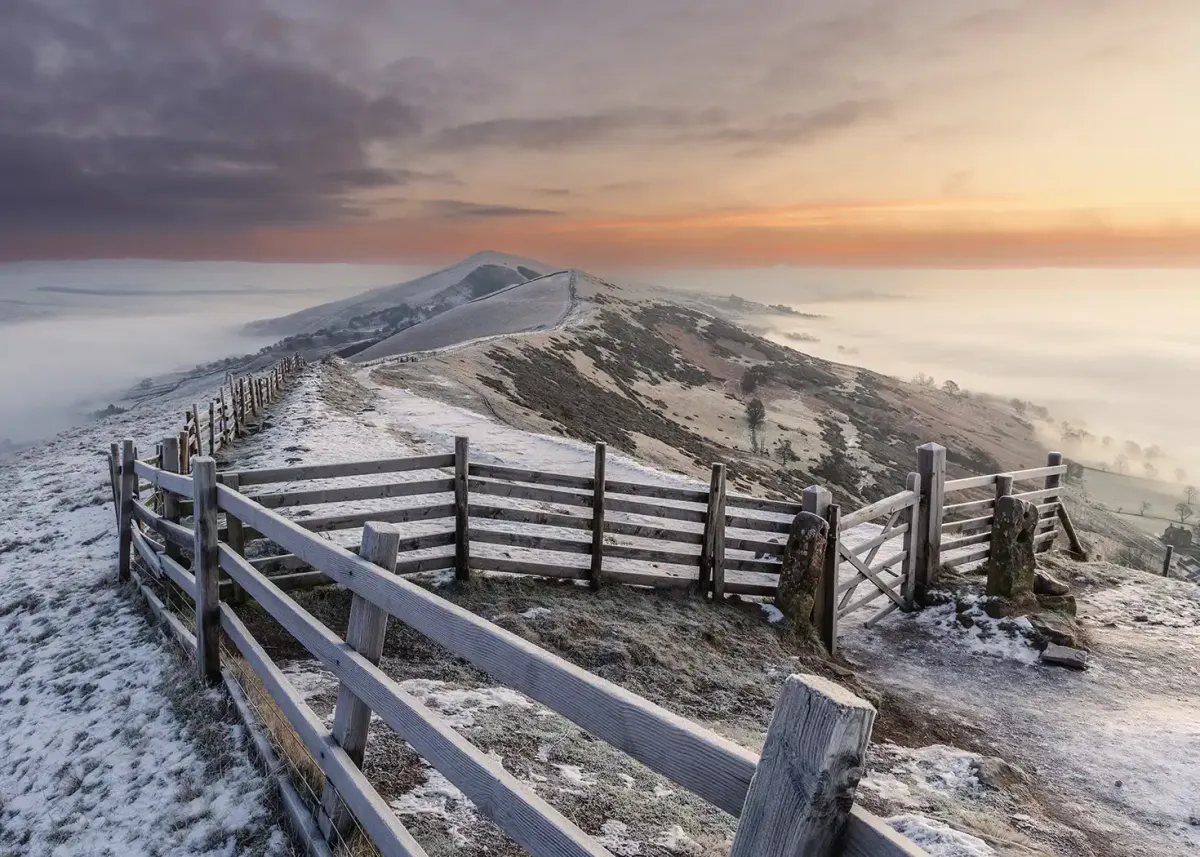 Photo: Peak District, via peakdistrictfocus.co.uk
Wall crevices shelter invertebrate communities that have evolved specifically for these environments. The wall mason bee (Osmia parietina) excavates nesting chambers in lime mortar joints, while various spider species hunt in the thermal refuges walls create. Research by Dr Sarah Dalrymple at Liverpool John Moores University identified over 40 invertebrate species living exclusively within wall structures, forming food webs that extend into surrounding habitats.
Small mammals utilise walls as movement corridors across otherwise hostile agricultural landscapes. Weasels, stoats, and voles navigate through wall bases, using the continuous habitat to access feeding areas and avoid predation. Bank voles show particular dependence on wall-associated vegetation, with population densities three times higher along intact walls compared to degraded structures.
The Collapse Cascade
Climate change accelerates wall deterioration through increasingly severe freeze-thaw cycles and extreme weather events. Traditional construction techniques, perfected over centuries for local climate conditions, struggle to cope with unprecedented temperature fluctuations and rainfall intensities.
Winter storms now regularly exceed the structural tolerances of walls built for gentler weather patterns. The 2015 floods in Cumbria destroyed hundreds of miles of dry stone walling, while subsequent severe winters have caused widespread frost damage across the Yorkshire Dales and Peak District.
Agricultural intensification compounds these pressures. Modern farming machinery, larger than traditional equipment, regularly damages walls during field operations. Simultaneously, agricultural abandonment in marginal upland areas removes the economic incentive for wall maintenance, leaving structures to deteriorate without intervention.
Perhaps most critically, the craft knowledge required for proper wall construction and repair faces extinction. The Dry Stone Walling Association estimates fewer than 500 skilled wallers operate professionally across Britain—insufficient to maintain even a fraction of existing structures. Traditional apprenticeship systems have largely collapsed, replaced by inadequate training courses that produce enthusiastic amateurs rather than master craftsmen.
Climate Connections
Wall collapse creates cascading effects that extend far beyond immediate habitat loss. Intact walls moderate local climate conditions, creating sheltered microclimates that support temperature-sensitive species. Their thermal mass moderates daily temperature fluctuations, while their structure channels airflow patterns that influence moisture distribution across upland landscapes.
When walls fail, these climate regulation services disappear. Exposed areas experience greater temperature extremes and wind exposure, making them unsuitable for many specialist species. The loss of thermal refuges proves particularly devastating for cold-sensitive invertebrates and early-flowering plants that depend on wall-moderated microclimates for survival.
Walls also function as carbon stores, both through the limestone they contain and the vegetation they support. Lichen communities on walls sequester atmospheric carbon, while associated plant communities contribute to soil carbon storage in adjacent areas. Wall collapse releases this stored carbon while eliminating future sequestration capacity.
Restoration Renaissance
Despite the challenges, innovative restoration initiatives demonstrate that wall ecosystems can recover when properly managed. The National Trust's "Walls and Wildlife" project combines traditional craft training with ecological monitoring, demonstrating how heritage conservation and biodiversity protection can reinforce each other.
In the Lake District, master waller Anthony Hodgson leads programmes that train young people in traditional techniques while emphasising ecological sensitivity. "Every wall is different," Hodgson explains, examining a collapsed section near Grasmere. "You need to understand not just the stone, but what lives in it. Rebuilding too quickly destroys decades of lichen growth."
 Photo: Anthony Hodgson, via cdn.sourceflow.co.uk
His approach emphasises gradual restoration that preserves existing biological communities while strengthening structural integrity. Sections are rebuilt in phases, allowing wildlife to recolonise new areas while maintaining refuges in adjacent intact sections.
Natural England's Environmental Stewardship schemes now provide specific funding for wall maintenance, recognising their ecological value alongside heritage significance. However, current funding levels address less than 5% of walls requiring immediate attention, highlighting the scale of intervention required.
Engineering Traditional Futures
The future of Britain's wall ecosystems depends on innovative approaches that combine traditional skills with contemporary ecological understanding. Training programmes must evolve beyond heritage craft courses to include ecological awareness and climate adaptation strategies.
Some regions experiment with hybrid construction techniques that maintain traditional aesthetics while incorporating climate-resilient features. Slightly wider bases and improved drainage systems help walls withstand extreme weather while preserving the crevice structures wildlife requires.
Urban demand for traditional walling skills offers unexpected hope. Garden walls, landscape features, and architectural projects in cities provide employment for skilled wallers, potentially sustaining the craft through economic diversification.
The Walls We Keep
Dry stone walls embody the principle that human infrastructure and natural systems need not exist in opposition. These structures demonstrate how traditional knowledge, applied sensitively, can create landscapes that serve both practical and ecological functions.
Their preservation requires recognising walls not as heritage curiosities, but as functioning ecosystems whose loss would impoverish Britain's upland biodiversity irreversibly. The choice facing these landscapes is stark: invest in maintaining these living boundaries, or accept their collapse and the extinction of the unique communities they shelter.
In an era of climate crisis and biodiversity loss, we cannot afford to lose these refuges of resilience scattered across our hills. The walls that have shaped Britain's uplands for centuries may prove essential for helping these landscapes adapt to an uncertain future.