The Vanishing Veil of Night
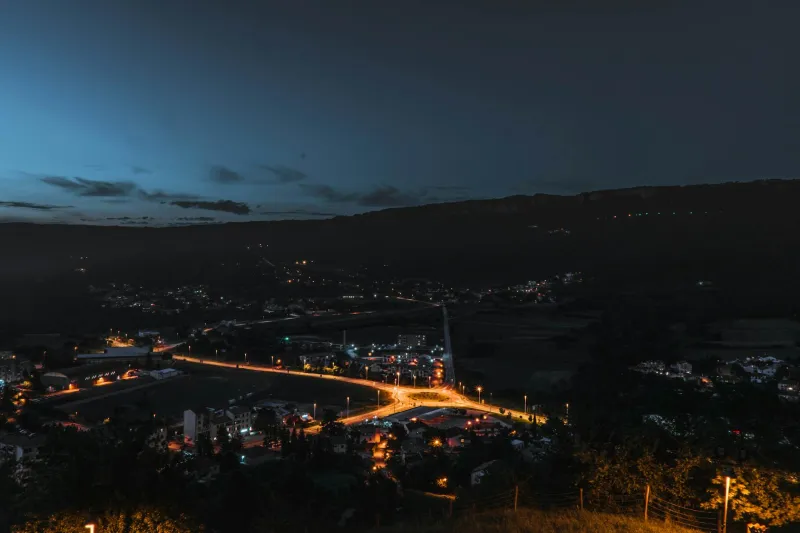
Stand anywhere in Britain today and look skyward after sunset. What should be a tapestry of stars has, for most of us, diminished to a handful of celestial points struggling to pierce through an orange-tinted haze. This phenomenon, known as light pollution, has fundamentally transformed our relationship with darkness—and more critically, it has disrupted the intricate ecological networks that depend upon the natural cycle of day and night.
Recent research conducted by British ecologists reveals that artificial light pollution has increased by over 70% in the UK since the 1990s, creating what scientists term "ecological light pollution"—a form of environmental contamination as significant as chemical pollutants in its impact on wildlife populations.
Nature's Night Shift Under Siege
The nocturnal world operates on rhythms honed over millions of years of evolution. Yet across Britain's countryside and urban centres, these ancient patterns are being systematically dismantled by our artificial illumination.
Moths, those often-overlooked pollinators crucial to Britain's flowering plants, have experienced catastrophic population declines partly attributed to light pollution. Research from Rothamsted Research demonstrates that moths become trapped in deadly spirals around artificial light sources, expending vital energy reserves and failing to complete their reproductive cycles. This disruption cascades through entire ecosystems, as declining moth populations affect the bats, birds, and spiders that depend upon them for sustenance.
Britain's hedgehog populations, already under severe pressure from habitat loss, face additional challenges from artificial lighting. These naturally crepuscular creatures have evolved to forage during twilight hours, yet urban lighting extends into their active periods, forcing them to alter fundamental behaviours. Studies indicate that hedgehogs in well-lit areas show reduced foraging efficiency and altered territorial patterns, contributing to the species' alarming 97% population decline since the 1950s.
Migration Routes Disrupted
Perhaps nowhere is the impact of light pollution more dramatically illustrated than in the disruption of migratory bird patterns. Each autumn, millions of birds traverse British skies following ancient flyways guided by celestial navigation. However, artificial lighting creates what ornithologists describe as "ecological traps"—areas where natural navigation systems fail catastrophically.
The British Trust for Ornithology has documented numerous instances of migrating birds becoming disoriented by urban lighting, particularly during overcast conditions when celestial cues are already compromised. Offshore wind farms and coastal developments have created new hazards for species such as Manx shearwaters and storm petrels, whose traditional routes now intersect with intensely illuminated industrial installations.
Sanctuaries in the Darkness
Amid this ecological disruption, Britain's designated Dark Sky reserves represent crucial refugia for nocturnal wildlife. Galloway Forest Park in Scotland, recognised as the UK's first Dark Sky Park, demonstrates the profound difference that darkness protection can make. Within its boundaries, researchers have documented thriving populations of species that have declined elsewhere, including several rare moth species and healthy bat colonies.
Exmoor National Park's International Dark Sky Reserve status has similarly created conditions where natural nocturnal behaviours can persist. The park's rigorous lighting management protocols have maintained astronomical darkness across vast areas, supporting diverse nocturnal ecosystems whilst demonstrating that human activities and darkness preservation can coexist.
Community Champions of Darkness
Across Britain, grassroots campaigns are emerging to challenge unnecessary illumination and advocate for wildlife-friendly lighting policies. The Campaign to Protect Rural England's "Night Blight" initiative has successfully lobbied numerous councils to adopt lighting ordinances that reduce ecological impact whilst maintaining public safety.
In Somerset, the village of Mells has become a model for community-led dark sky preservation, implementing motion-sensor lighting and amber-toned LED installations that minimise wildlife disruption. Similar initiatives in the Yorkshire Dales and Peak District demonstrate growing awareness of light pollution's environmental consequences.
Illuminating Solutions
Addressing Britain's light pollution crisis requires coordinated action across multiple scales. Local authorities can implement lighting policies that prioritise ecological considerations alongside public safety, utilising technologies such as adaptive lighting systems that dim automatically during low-activity periods.
Individual households can contribute significantly through conscious lighting choices. Installing motion-activated security lighting rather than continuous illumination, using warm-toned LED bulbs that emit less blue light, and ensuring outdoor lighting is properly shielded to direct illumination downward rather than skyward all reduce ecological impact.
The emerging field of "dark infrastructure" offers promising approaches to urban planning that incorporate darkness as a valuable resource rather than something to be eliminated. Cities such as Bristol are pioneering lighting strategies that create corridors of relative darkness, enabling wildlife movement through urban environments.
Reclaiming Our Natural Heritage
Britain's relationship with darkness extends beyond ecological considerations to encompass cultural and psychological well-being. The loss of our night sky represents a disconnection from natural rhythms that have shaped human societies for millennia.
As we confront the climate crisis and biodiversity loss, protecting darkness emerges as a surprisingly accessible conservation strategy. Unlike many environmental challenges that require complex technological solutions or significant financial investment, reducing light pollution often involves simply switching off unnecessary illumination.
The path forward requires recognising darkness not as something to be conquered, but as a precious resource deserving protection. In preserving Britain's remaining dark spaces and reducing unnecessary artificial illumination, we can restore the natural rhythms upon which our wildlife—and ultimately our own well-being—depends.
Every reduced streetlight, every shielded security lamp, every community that chooses darkness over unnecessary illumination contributes to a more sustainable future where human needs and ecological integrity can coexist under Britain's slowly recovering night sky.