The Disappearing Waterscape
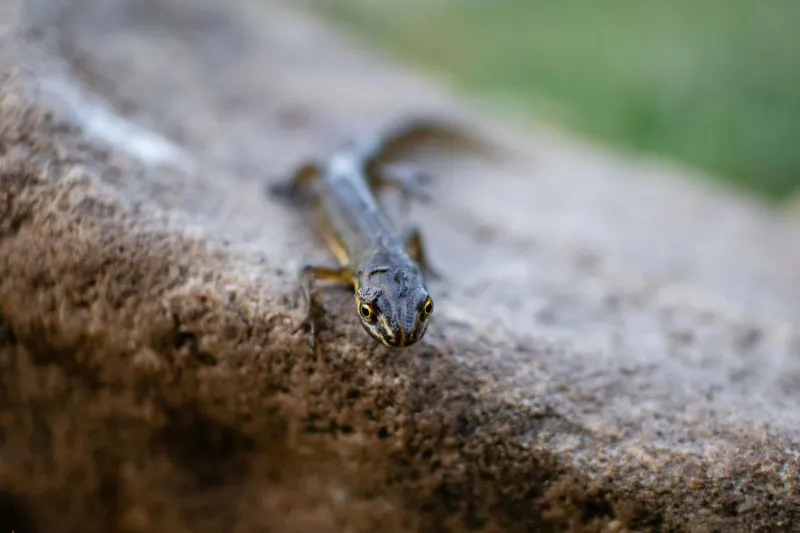
Across Britain's lowland landscapes, a silent catastrophe unfolds beneath the surface of our remaining farm ponds. The great crested newt (Triturus cristatus), our most magnificent amphibian and a species that has inhabited these islands since the last ice age, faces an unprecedented crisis. Once abundant across the English countryside, populations have crashed by an estimated 60% since the 1960s, with entire counties witnessing local extinctions.
This decline mirrors a broader ecological emergency: the systematic destruction of Britain's pond networks. Since 1900, we have lost approximately 75% of our countryside ponds—a staggering reduction from an estimated one million water bodies to fewer than 250,000 today. Each lost pond represents not merely a habitat, but an entire ecosystem supporting dozens of species from dragonflies to water voles.
Beyond the Amphibian: Ecosystem Sentinels
The great crested newt's predicament extends far beyond a single species' struggle for survival. These remarkable amphibians function as biological barometers, their presence indicating healthy freshwater ecosystems whilst their absence signals environmental degradation. Their complex life cycle demands both pristine aquatic breeding grounds and suitable terrestrial habitat within 500 metres—requirements that make them particularly vulnerable to landscape fragmentation.
During their aquatic phase, great crested newts require ponds free from fish predation, with abundant submerged vegetation and clean water. The males' elaborate courtship displays, featuring their distinctive jagged dorsal crests, depend on clear water conditions that allow visual communication. Their terrestrial needs are equally specific: rough grassland, hedgerows, and woodland edges providing shelter, hunting grounds, and hibernation sites.
The Agricultural Revolution's Hidden Cost
Post-war agricultural intensification transformed Britain's countryside, prioritising efficiency over ecological diversity. Traditional mixed farming systems, which naturally incorporated numerous small ponds for livestock watering, gave way to industrial-scale operations with centralised water systems. Thousands of 'redundant' ponds were filled in or allowed to silt up, whilst remaining water bodies suffered contamination from agricultural runoff.
Pesticide and fertiliser applications created hostile environments for amphibian reproduction. Nitrate pollution triggers algal blooms that deplete oxygen levels, whilst chemical residues accumulate in pond sediments. Even low-level contamination can disrupt newt development, affecting everything from egg viability to adult immune function.
Urban expansion compounds these pressures, fragmenting remaining habitat into isolated patches too small to sustain viable populations. Road networks create deadly barriers, with thousands of migrating amphibians killed annually during their spring journey to breeding ponds.
Conservation Innovation: From Crisis to Opportunity
Amidst this ecological emergency, pioneering conservation initiatives offer hope for recovery. The most innovative approach involves 'biodiversity offsetting'—a system requiring developers to compensate for habitat destruction by creating or restoring equivalent ecosystems elsewhere. District-level licensing schemes now enable large-scale habitat creation, moving beyond piecemeal mitigation towards landscape-scale conservation.
The Oxfordshire newt programme exemplifies this approach, creating extensive pond networks and grassland corridors across multiple sites. Rather than protecting isolated populations, these schemes establish connected habitat mosaics supporting genetic exchange between newt colonies. Early results suggest populations can recover remarkably quickly when suitable conditions are restored.
Community-led conservation provides another crucial dimension. The Million Ponds Project, coordinated by Freshwater Habitats Trust, engages landowners, schools, and local groups in pond creation and restoration. These initiatives recognise that effective conservation requires broad social participation, not merely top-down regulation.
The Restoration Science
Successful pond restoration demands sophisticated ecological understanding. Research reveals that newt populations respond most positively to clusters of interconnected water bodies rather than single large ponds. This 'metapopulation' approach provides resilience against local extinctions whilst supporting genetic diversity.
Timing proves critical: newly created ponds require several years to develop suitable ecological conditions. Pioneer species must colonise first, establishing food webs that can support amphibian reproduction. Water chemistry, vegetation structure, and invertebrate communities all influence newt breeding success.
Seasonal management maintains optimal conditions. Partial pond clearance prevents excessive vegetation growth whilst preserving refugia for overwintering species. Buffer zones around water bodies reduce agricultural impacts whilst providing essential terrestrial habitat.
A Network Approach to Recovery
Modern conservation thinking emphasises landscape connectivity over site protection. Great crested newts exemplify species requiring habitat networks rather than isolated reserves. Their recovery depends on creating 'stepping stones' of suitable habitat enabling population expansion and genetic exchange.
Climate change adds urgency to these efforts. Rising temperatures and altered precipitation patterns threaten existing pond ecosystems whilst shifting suitable habitat ranges northward. Conservation strategies must anticipate these changes, creating resilient networks capable of supporting species through environmental transitions.
The Broader Implications
The great crested newt's plight reflects wider challenges facing Britain's freshwater biodiversity. Pond ecosystems support disproportionate species richness relative to their size, harbouring rare plants, invertebrates, and amphibians found nowhere else. Their restoration offers opportunities for comprehensive ecosystem recovery extending far beyond single-species conservation.
Success stories demonstrate that determined conservation action can reverse even severe population declines. However, the window for action narrows with each passing breeding season. The choice facing Britain is stark: act decisively to restore our pond networks, or witness the final silencing of an ancient chorus that has enriched our countryside for millennia.
The great crested newt's survival ultimately depends on our willingness to reimagine agricultural landscapes as integrated ecosystems rather than simplified production systems. Their recovery would signal not merely species conservation success, but a fundamental shift towards sustainable land management that benefits both wildlife and human communities.