The Battle Lines of British Conservation
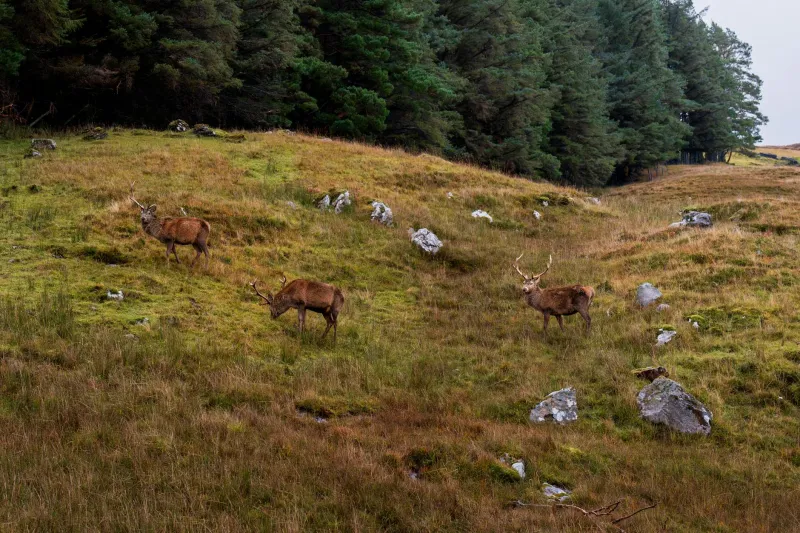
The red deer picks its way delicately through ancient Scots pine, its movements watched by hidden cameras documenting the Cairngorms Connect project's remarkable progress. Across 600 square kilometres of Highland Scotland, four neighbouring estates are collaborating to restore one of Europe's largest areas of montane forest. For conservationists, it represents the future of British landscape management. For many local residents, it symbolises their systematic exclusion from decisions about their homeland.
 Photo: Cairngorms Connect, via cairngormsconnect.org.uk
This tension—between ambitious ecological restoration and rural community concerns—has become the defining friction in British conservation. As the government commits to protecting 30% of land and sea by 2030, rewilding projects are scaling up dramatically. Yet their success increasingly depends on navigating complex human landscapes that prove far more challenging than any ecological restoration.
Voices from the Frontline
In the Borders, the Southern Uplands Partnership's proposal to rewild 200,000 hectares has triggered fierce debate in market towns from Hawick to Jedburgh. Local sheep farmer Malcolm Henderson, whose family has grazed these hills for six generations, views the project with deep suspicion.
"They talk about restoring natural processes, but they're really talking about ending a way of life," Henderson argues from his kitchen table, overlooking fields his grandfather cleared by hand. "We're not anti-environment, but we've shaped this landscape for centuries. Now outsiders with university degrees want to tell us it was wrong all along."
His concerns echo across rural Britain. In the Somerset Levels, the Avalon Marshes project has transformed 2,000 hectares of former peat extraction sites into thriving wetland habitat. While bitterns boom again across reedbeds that hadn't heard their calls for decades, some local residents feel excluded from decision-making about their ancestral landscape.
"The wildlife gains are undeniable," admits Sarah Phelps, a Glastonbury town councillor whose family has lived in the Levels for four generations. "But when conservationists arrived with their plans, they consulted scientists and landowners, not the people who actually live here. We've become tourists in our own backyard."
The Edinburgh Declaration Dilemma
These local tensions reflect broader challenges facing British conservation policy. The government's commitment to halt biodiversity decline by 2030 requires landscape-scale intervention that inevitably conflicts with existing land use patterns. Rewilding advocates argue that centuries of intensive management have created impoverished ecosystems that can only recover through radical intervention.
Dr Rebecca Harrison, rewilding coordinator for the John Muir Trust, defends the approach: "We're facing an ecological emergency that requires emergency responses. Half-measures and compromise solutions have failed for decades. If we're serious about restoring Britain's natural heritage, we need to be honest about the scale of change required."
Yet this urgency often steamrollers over community concerns. At Knepp Estate in West Sussex, where 1,400 hectares of former farmland now hosts free-roaming cattle, pigs, and ponies, the ecological results are spectacular. Turtle doves nest in scrubland, purple emperor butterflies dance through oak groves, and nightingale populations have increased 3,400% since rewilding began.
Local response remains mixed. While many celebrate the return of wildlife, others question whether such dramatic land use change can be sustained across wider landscapes without devastating rural employment and cultural heritage.
Economic Realities and Rural Livelihoods
The economics of rewilding present particular challenges for communities already struggling with agricultural decline and rural depopulation. Traditional hill farming employs thousands across Scotland's uplands, Wales' valleys, and northern England's fells. Rewilding projects often propose replacing this employment with eco-tourism and conservation management—transitions that many rural residents view as unrealistic.
James MacLeod, a crofter from Skye whose family has worked the same land for eight generations, articulates a common concern: "They promise jobs in tourism, but tourism is seasonal and low-paid. My son can't raise a family on guiding city folk around rewilded landscapes. We need year-round employment that values our knowledge and skills."
Some projects are attempting more inclusive approaches. The Affric Highlands scheme in the Scottish Highlands explicitly partners with local communities, ensuring that crofting rights are maintained even as deer populations are reduced and forest cover expands. Employment opportunities in habitat restoration, wildlife monitoring, and sustainable tourism are being developed with local input rather than imposed from outside.
Cultural Landscapes and Living Heritage
Perhaps the deepest challenge facing rewilding involves reconciling ecological restoration with cultural heritage. Britain's landscapes are profoundly anthropogenic—shaped by millennia of human activity that created distinctive regional identities. The dry stone walls of the Yorkshire Dales, the heather moorlands of Scotland, and the chalk downs of southern England represent cultural achievements as significant as any cathedral or castle.
Rewilding's emphasis on "natural processes" can appear to dismiss this heritage as ecological damage requiring correction. Dr Helen Morrison, an environmental historian at Edinburgh University, argues for a more nuanced approach: "We need rewilding strategies that recognise landscapes as both ecological and cultural systems. The goal shouldn't be erasing human influence, but finding sustainable ways to maintain both natural and cultural values."
Finding Common Ground
Successful rewilding projects are increasingly those that begin with community engagement rather than ecological targets. The Wild Ennerdale partnership in Cumbria brings together United Utilities, the Forestry Commission, and the National Trust with local farmers and residents to guide landscape restoration. Rather than imposing predetermined outcomes, the project allows natural processes to unfold while maintaining traditional access rights and grazing patterns.
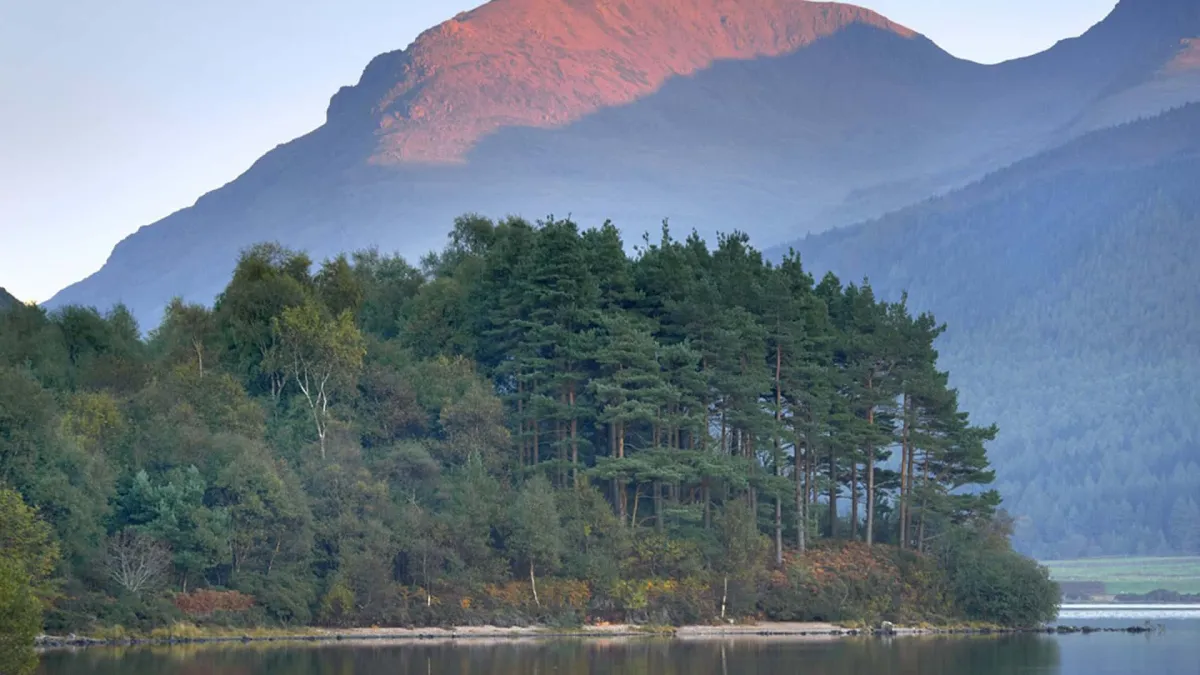 Photo: Wild Ennerdale, via ecosulis.co.uk
"It's messy and sometimes frustrating," admits project coordinator Mark Hughes, "but it's also more democratic and ultimately more sustainable. We're not creating museum landscapes—we're supporting living communities alongside recovering ecosystems."
The Future of British Conservation
As rewilding projects multiply across Britain, their long-term success will depend on bridging the gap between ecological ambition and social reality. The 30x30 targets cannot be achieved without rural community support, yet that support requires genuine partnership rather than consultation as an afterthought.
The stakes extend beyond individual projects. If rewilding becomes synonymous with rural dispossession, it risks triggering the same backlash that has undermined environmental policies across Europe and America. Britain's conservation future depends on proving that ecological restoration can enhance rather than replace rural livelihoods.
The red deer in the Cairngorms may not care about human politics, but their long-term survival depends on human communities that see rewilding as opportunity rather than threat. In that reconciliation lies both the greatest challenge and the greatest promise of British conservation's bold new chapter.