The North Sea's Green Revolution: Decoding the Colour Change That's Reshaping British Waters
Stand on any British beach today and the North Sea might appear unchanged—waves crash against familiar shores, seabirds wheel overhead, and fishing boats dot the horizon. Yet high above, sophisticated satellites are documenting a remarkable transformation invisible to casual observers: our seas are changing colour.
Over the past two decades, the North Sea has shifted from its characteristic deep blue to an increasingly verdant green hue. This isn't merely an aesthetic curiosity—it represents a fundamental restructuring of marine ecosystems that could profoundly impact British fishing communities, coastal wildlife, and our understanding of ocean health in a warming world.
Reading the Ocean's Palette
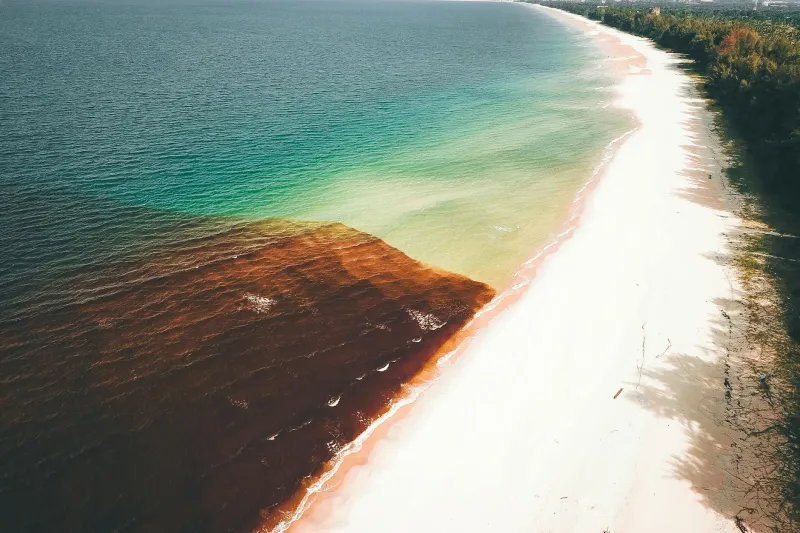
Ocean colour serves as nature's diagnostic tool, revealing the invisible microscopic life that forms the foundation of marine food webs. Blue waters typically indicate low biological productivity—clear seas where few nutrients support minimal phytoplankton populations. Green waters, conversely, signal abundant microscopic plant life, often driven by increased nutrient availability or changing environmental conditions.
The European Space Agency's Copernicus satellites, alongside NASA's ocean colour monitoring systems, have meticulously tracked this chromatic shift across British waters. Dr Emma Richardson from Plymouth Marine Laboratory explains: "We're witnessing the most significant change in North Sea colour composition since satellite monitoring began. The implications extend far beyond what meets the eye."
These orbital observers detect subtle variations in how seawater absorbs and reflects different wavelengths of sunlight. Chlorophyll-rich phytoplankton absorb blue and red light whilst reflecting green, creating the verdant tones now characterising much of our coastal waters. Advanced algorithms can distinguish between different phytoplankton species based on their unique optical signatures, providing unprecedented insights into changing marine communities.
Temperature-Driven Transformation
The primary driver behind this colour revolution lies in rising sea temperatures. The North Sea has warmed by approximately 1.67°C since 1969—nearly three times the global ocean average. This rapid warming creates ideal conditions for different phytoplankton communities, fundamentally altering the microscopic foundations of marine ecosystems.
Warmer waters hold less dissolved oxygen and nutrients, typically favouring smaller phytoplankton species over the larger diatoms that historically dominated North Sea waters. These smaller organisms, particularly cyanobacteria and certain dinoflagellate species, produce different pigment combinations that shift ocean colour towards the green spectrum.
Dr James Peterson from the Centre for Environment, Fisheries and Aquaculture Science (Cefas) notes: "We're observing a systematic replacement of cold-water species with warm-water alternatives. This isn't simply species substitution—it's ecosystem-level transformation with cascading effects throughout the food web."
The timing of phytoplankton blooms has also shifted dramatically. Traditional spring blooms now begin earlier and extend longer into autumn, whilst summer communities increasingly resemble those historically found in Mediterranean waters. These temporal changes disrupt the carefully synchronised relationships between marine plants and the animals that depend upon them.
Ripple Effects Through the Food Web
Phytoplankton form the crucial first link in marine food chains, supporting everything from microscopic zooplankton to commercial fish species and marine mammals. Changes in phytoplankton communities therefore reverberate throughout entire ecosystems, with potentially profound consequences for British marine life.
Zooplankton populations—the tiny animals that graze on phytoplankton—are already responding to these shifts. Copepod species that prefer warmer waters are expanding their ranges northward, whilst cold-water specialists retreat towards Scotland's northern coasts. These changes affect the timing and abundance of food available to fish larvae, seabirds, and marine mammals.
Commercial fish species face particular challenges. North Sea cod populations, already stressed by overfishing and habitat degradation, must now contend with altered food webs and changing water chemistry. Conversely, some southern species like sea bass and red mullet are expanding their ranges northward, potentially offering new opportunities for adaptive fishing communities.
Seabird colonies around Britain's coasts provide visible indicators of these underwater changes. Guillemots, puffins, and kittiwakes depend upon energy-rich fish species that may become less abundant as phytoplankton communities shift. Recent breeding failures at major seabird colonies from Shetland to Norfolk partly reflect these changing marine conditions.
Implications for Britain's Fishing Heritage
Britain's fishing communities, already grappling with post-Brexit quota arrangements and economic pressures, face additional uncertainty from these ecological shifts. Traditional fishing grounds may become less productive for familiar species, whilst new opportunities emerge for different catches.
Scottish herring fisheries exemplify these challenges. Herring depend upon specific zooplankton species that favour cooler waters and particular phytoplankton communities. As sea temperatures rise and phytoplankton assemblages change, herring distributions and spawning patterns may shift significantly, requiring adaptive management strategies.
Conversely, warming waters have already brought new species within reach of British fishing fleets. Anchovy populations, historically confined to southern European waters, now support small-scale fisheries off Cornwall and Devon. Such changes require flexible regulatory frameworks and adaptive fishing practices.
Local fishing communities are often the first to notice these changes. Cornish fisherman Mark Stevens observes: "We're catching species my grandfather never saw in these waters. The sea feels different—warmer, greener, more unpredictable. It's beautiful but concerning."
Coastal Consequences
The colour changes visible from space manifest in various ways along Britain's 11,000-mile coastline. Increased phytoplankton productivity can enhance coastal water clarity in some areas whilst creating problematic algal blooms in others. Some blooms produce toxins that threaten shellfish aquaculture and coastal recreation.
Harmful algal bloom events, once rare in British waters, are becoming increasingly common and severe. The 2021 mass die-off of crabs and lobsters along Yorkshire's coast may have resulted from such blooms, highlighting the potential economic and ecological consequences of changing marine conditions.
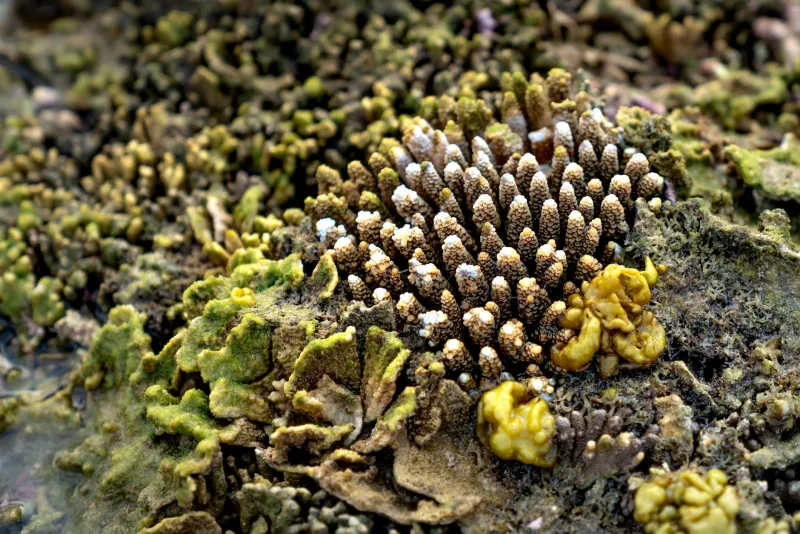
Rockpool ecosystems—beloved features of British seaside experiences—also reflect broader oceanic changes. Species compositions are shifting as southern marine organisms colonise previously unsuitable northern habitats, whilst traditional cold-water species retreat or decline.
Monitoring the Future
Understanding and predicting these changes requires unprecedented monitoring efforts combining satellite observations, autonomous underwater vehicles, and traditional ship-based sampling. The UK's Marine Climate Change Impacts Partnership coordinates research across multiple institutions, developing early warning systems for significant ecosystem shifts.
Advanced computer models now attempt to predict how continued warming might affect North Sea ecosystems over coming decades. These projections suggest further colour changes as Mediterranean phytoplankton species colonise British waters, potentially creating entirely novel marine communities without historical precedent.
The North Sea's green revolution represents just one facet of global ocean change, but its proximity to Britain makes it particularly relevant for understanding how climate change manifests in familiar environments. As we continue monitoring these chromatic shifts from space and sea, they serve as a vivid reminder that even our most familiar landscapes are transforming in response to planetary-scale environmental change.
Our blue seas turning green may seem subtle from shore, but this colour change signals one of the most significant ecological transformations in British waters since the last ice age. How we respond—through adaptive management, conservation efforts, and climate action—will determine whether these changes enhance or diminish the marine heritage we pass to future generations.