The Forgotten Forests
Along the meandering banks of the River Wye, where mist rises from dark pools at dawn, stands a remnant of what Britain once was. Here, towering black alders lean over the water, their roots forming a living web that has held these riverbanks steady for centuries. Yet this scene—once commonplace from the Cornish Tamar to the Highland burns—is becoming increasingly rare.
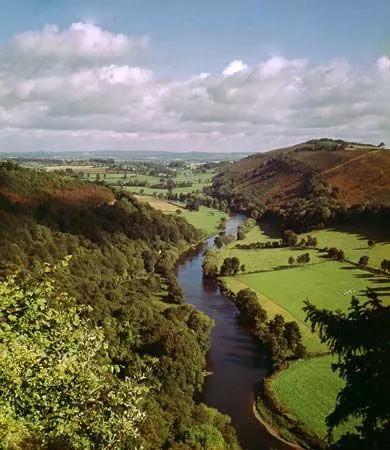 Photo: River Wye, via cdn.britannica.com
Britain has lost an estimated 95% of its riparian alder woodland since 1600, according to recent analysis by the Woodland Trust. These "carr" woodlands, as ecologists term them, once formed continuous green corridors along virtually every British watercourse. Today, they persist only in fragments, overlooked and undervalued whilst higher-profile conservation initiatives capture public imagination and funding.
Nature's Engineering Marvel
The ecological sophistication of alder woodland becomes apparent only when one examines its intricate relationship with water. Unlike the shallow root systems of agricultural grasses or even oak trees, alders develop extensive lateral root networks that can extend 30 metres from the trunk. These roots, in partnership with nitrogen-fixing bacteria, create a biogeochemical factory that simultaneously stabilises soil, filters pollutants, and moderates water flow.
Dr Eleanor Whitfield, a fluvial geomorphologist at the University of Durham, has spent fifteen years studying how alder roots interact with riverbank sediments. "What we're seeing is essentially a biological form of engineering that's far more sophisticated than anything humans have devised," she explains. "The root matrix doesn't just hold soil together—it creates a flexible, self-repairing system that adapts to changing water levels and flow patterns."
 Photo: University of Durham, via c8.alamy.com
This natural infrastructure becomes crucial during extreme weather events. During the devastating floods of 2015, river reaches protected by mature alder woodland experienced 60% less bank erosion than adjacent areas dominated by agricultural land, according to data from the Environment Agency.
The Carbon Calculation
Beyond flood protection, alder woodlands represent one of Britain's most efficient carbon storage systems. The waterlogged soils beneath alder carr sequester carbon at rates exceeding those of upland peat bogs—storing up to 300 tonnes of carbon per hectare in the top metre of soil alone.
Yet this carbon storage potential remains largely absent from government climate calculations. The Department for Environment, Food and Rural Affairs' woodland carbon code focuses primarily on upland tree planting, offering landowners financial incentives to establish monoculture plantations on hillsides whilst ignoring the restoration potential of lowland wetland forests.
"It's a spectacular blind spot in our climate policy," argues Professor James McKenzie from the Centre for Wetland Research at the University of Glasgow. "We're spending millions on upland afforestation that may never achieve the carbon storage rates of restored alder woodland, whilst allowing existing carr fragments to disappear through neglect."
Unlikely Champions
In the Cairngorms, an unexpected alliance is working to reverse this decline. Estate manager Robert Sinclair has partnered with local environmental groups to restore 40 hectares of alder woodland along the River Dee's tributaries. The project, funded through a patchwork of grants and private investment, has already demonstrated remarkable results.
"The transformation is extraordinary," Sinclair notes, gesturing toward what was cattle-grazed pasture just five years ago. "We've seen the return of species that haven't bred here for decades—willow warblers, siskins, even the occasional otter. The economic benefits are clear too: we've eliminated the annual costs of bank reinforcement and dramatically reduced flood damage to downstream infrastructure."
Similar restoration efforts are emerging across Britain, often driven by passionate individuals rather than coordinated policy initiatives. In Somerset, the Avalon Marshes Partnership has restored 15 kilometres of alder-lined rhynes, creating habitat corridors that support recovering populations of water voles and bitterns. Near Chester, the Cheshire Wildlife Trust has established demonstration plots showing how alder restoration can reduce agricultural pollution entering the River Dee.
The Funding Desert
Despite these successes, alder woodland restoration receives a fraction of the funding allocated to more photogenic conservation initiatives. The government's Nature for Climate Fund, which allocated £640 million for habitat restoration, directed less than 2% toward riparian woodland projects. Meanwhile, high-profile rewilding schemes featuring large mammals attract significant private investment and media attention.
"There's definitely a charisma deficit," acknowledges Dr Sarah Chen from the Rivers Trust. "Beaver releases and lynx reintroductions capture imaginations in ways that alder planting simply doesn't. But from a cost-benefit perspective, riparian woodland restoration delivers more measurable outcomes per pound invested than almost any other conservation intervention."
The economic argument for alder restoration is compelling. Natural Flood Management schemes incorporating woodland restoration cost approximately £2,000 per hectare to establish, compared to £50,000 per kilometre for traditional flood defences. Moreover, whilst concrete flood barriers require replacement every 30-50 years, restored alder woodland becomes more effective over time as root systems mature and expand.
Racing Against Time
Climate projections for Britain suggest increasingly volatile precipitation patterns, with longer droughts punctuated by extreme rainfall events. The Met Office's latest climate scenarios predict winter precipitation increases of up to 35% by 2080, whilst summer rainfall could decrease by 40%. This pattern demands flexible, adaptive flood management systems that can respond to rapidly changing conditions.
Traditional engineering approaches—concrete channels, raised embankments, and pumping stations—struggle to cope with such variability. Alder woodland, by contrast, provides what engineers term "passive adaptive capacity," automatically adjusting to changing water levels whilst maintaining protective functions.
A Living Blueprint
The path forward requires both policy reform and cultural shift. Environmental groups are calling for amendments to agricultural subsidy schemes that would reward farmers for maintaining and restoring riparian woodland. Planning regulations could mandate alder buffer zones along watercourses in new developments. Most importantly, carbon offset schemes must recognise the exceptional sequestration potential of wetland forests.
As extreme weather becomes the norm rather than the exception, Britain's relationship with its rivers must evolve. The ancient alder woodlands that once lined every British watercourse offer a blueprint for climate resilience that's both economically viable and ecologically transformative. The question is whether we'll recognise their value before the last fragments disappear beneath the rising waters they once held at bay.