The World's Best-Kept Ecological Secret
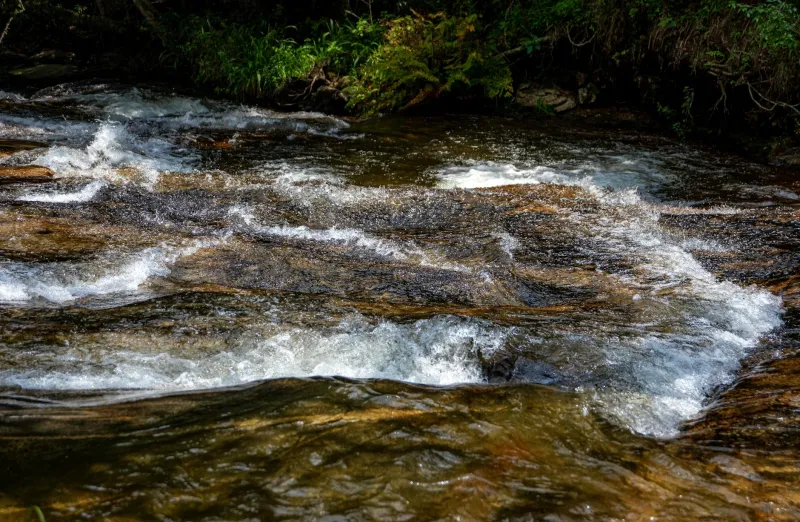
Deep in the Hampshire countryside, where ancient chalk bedrock meets the surface world, something extraordinary occurs. Spring water, filtered through millennia of geological layers, emerges as streams so pure they appear almost ethereal—crystal-clear channels that support life forms found nowhere else on Earth. These are England's chalk streams, and they represent one of our planet's rarest freshwater ecosystems.
Whilst conservation campaigns mobilise global attention for Amazon rainforests and coral reefs, a parallel ecological crisis unfolds quietly across the English countryside. England hosts an astonishing 85% of the world's chalk streams, yet these waterways remain largely invisible to public consciousness—a tragic oversight considering their extraordinary ecological significance.
Nature's Masterpiece in Miniature
Chalk streams possess characteristics that make them uniquely precious. Unlike typical rivers, these waterways maintain remarkably stable temperatures year-round, rarely fluctuating beyond 8-12°C. This thermal consistency, combined with their exceptional clarity and mineral-rich composition, creates conditions that support biodiversity densities comparable to tropical ecosystems.
The invertebrate communities within these streams read like nature's most exclusive guest list. Mayflies, caddisflies, and freshwater shrimp create intricate food webs that support native brown trout populations—fish so perfectly adapted to these conditions that they've evolved distinct genetic characteristics. Water crowfoot carpets the stream beds in flowing underwater meadows, whilst watercress grows wild along the margins, its presence indicating the exceptional water quality these systems demand.
Professor Sarah Mitchell from the Freshwater Biological Association describes chalk streams as "living laboratories where evolution has fine-tuned species assemblages over thousands of years." The endemic nature of many species found within these systems means their loss would represent irreversible global extinctions.
The Perfect Storm of Threats
Yet these irreplaceable ecosystems face mounting pressures that threaten their very survival. Agricultural intensification across catchment areas has fundamentally altered the chemical composition of groundwater feeding these streams. Nitrogen and phosphorus from fertilisers create algal blooms that smother the delicate plant communities, whilst pesticide residues accumulate in sediments.
Water abstraction presents perhaps the most immediate threat. Southern England's growing population and agricultural demands have led to extensive groundwater extraction, reducing the spring flows that maintain these ecosystems. Some historic chalk streams now flow only intermittently, their crystal-clear channels reduced to dry valleys during summer months.
Climate change compounds these pressures through increasingly erratic precipitation patterns. Extended drought periods, becoming more frequent across southern England, stress groundwater reserves that require decades to replenish. Meanwhile, intense rainfall events flush agricultural pollutants directly into stream systems faster than natural filtration processes can cope.
Beyond Beauty: Ecosystem Services Worth Billions
The value of chalk streams extends far beyond their aesthetic appeal or biodiversity significance. These systems function as natural water treatment plants, filtering groundwater through chalk aquifers that remove contaminants and regulate flow patterns. The economic value of this ecosystem service alone runs into hundreds of millions of pounds annually—equivalent to constructing and maintaining numerous water treatment facilities.
Chalk streams also provide crucial flood management services. Their stable flows and extensive riparian vegetation help regulate downstream water levels, reducing flood risks for communities across river catchments. During dry periods, they maintain base flows that support larger river systems, preventing ecological collapse across entire watersheds.
The carbon sequestration potential of healthy chalk stream ecosystems rivals that of woodland habitats. Extensive plant communities and rich organic sediments lock away atmospheric carbon for decades, contributing meaningfully to national climate targets.
A Conservation Imperative
Protecting England's remaining chalk streams requires urgent, coordinated action across multiple sectors. Agricultural practices within catchment areas must transition towards sustainable methods that minimise nutrient runoff whilst maintaining productive farming systems. This transition demands both regulatory frameworks and financial incentives that make environmental stewardship economically viable for farmers.
Water abstraction policies need fundamental review, prioritising ecosystem health alongside human consumption. Innovative water management strategies, including rainwater harvesting and greywater recycling, could reduce pressure on groundwater resources whilst maintaining water security for growing populations.
Public awareness campaigns must elevate chalk streams to their rightful position within national conservation priorities. These ecosystems deserve recognition equivalent to our most celebrated natural heritage sites—protection status that reflects their global rarity and irreplaceable ecological functions.
Racing Against Time
The window for effective chalk stream conservation narrows with each passing season. Once degraded, these systems require decades to recover—if recovery remains possible at all. The loss of endemic species represents permanent global extinctions that no amount of future investment can reverse.
England's chalk streams embody everything our planet's future depends upon: clean water, biodiversity conservation, and sustainable ecosystem management. Their protection represents not just environmental stewardship, but recognition that some natural treasures exist nowhere else on Earth. In our rush to save distant rainforests, we must not overlook the irreplaceable wonders flowing quietly through our own countryside—crystal-clear streams that connect us directly to the geological deep time that shaped our island home.
The choice remains ours: act decisively now, or watch these aquatic jewels disappear forever into the annals of ecological history.