The Invisible Destroyer
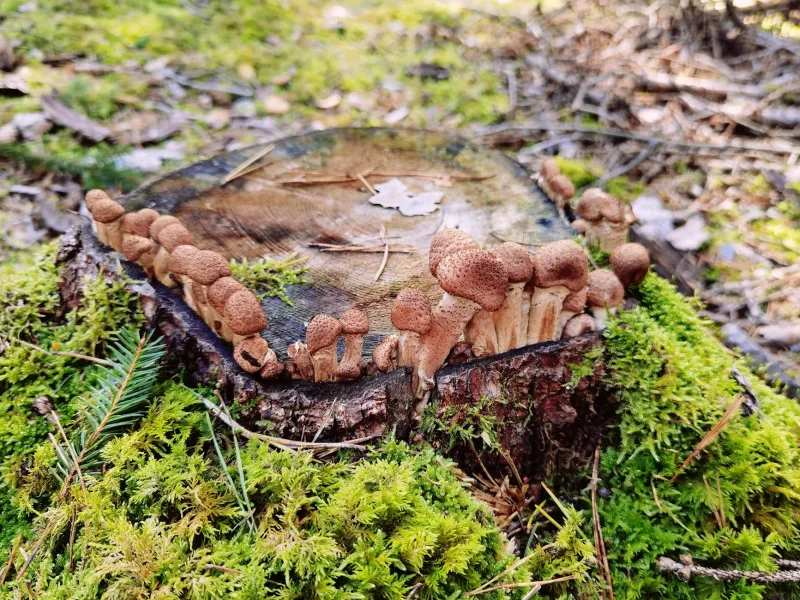
Across Britain's ancient woodlands, a silent catastrophe unfolds beneath our very noses. Hymenoscyphus fraxineus, a fungal pathogen no larger than a pinhead, is systematically dismantling one of our most cherished native ecosystems. This microscopic destroyer, responsible for ash dieback disease, represents perhaps the gravest threat to British woodland biodiversity since the arrival of Dutch elm disease five decades ago.
The scale of destruction defies comprehension. Conservative estimates suggest that 80 million ash trees—representing nearly 5% of Britain's total woodland cover—face near-certain death within the coming decades. Yet unlike previous ecological disasters, this crisis has emerged with devastating stealth, its true magnitude only now becoming apparent to scientists and conservationists.
A Cascade of Ecological Collapse
The ash tree's ecological significance extends far beyond its graceful canopy and distinctive compound leaves. These woodland giants support an extraordinary diversity of life, hosting over 1,000 species of fungi, lichens, bryophytes, and invertebrates. Many of these organisms exist nowhere else, having evolved intricate relationships with ash trees over millennia.
Rare epiphytic lichens, such as Graphis scripta and Thelotrema lepadinum, depend entirely upon the unique bark chemistry of mature ash trees. As these ancient specimens succumb to dieback, entire lichen communities face local extinction. Similarly, the bullfinch, already experiencing precipitous population declines, relies heavily on ash seeds during critical winter months when alternative food sources become scarce.
Perhaps most concerning is the fate of Britain's ancient ash woodlands, particularly those found across limestone landscapes in the Yorkshire Dales and Derbyshire's White Peak. These ecosystems, some of which have remained relatively unchanged for centuries, face complete transformation as their dominant canopy species disappears.
The Government's Inadequate Response
Criticism of the governmental response to ash dieback has been swift and unforgiving. Despite first detection of the pathogen in British woodlands in 2012, coordinated action remained frustratingly limited. The Department for Environment, Food and Rural Affairs (DEFRA) initially adopted a containment strategy that scientists now acknowledge was fundamentally flawed—the disease had already achieved widespread distribution before official recognition.
"We're fighting a war with yesterday's weapons," observes Dr Sarah Richardson, a forest pathologist at the Centre for Ecology and Hydrology. "By the time we recognised the true scope of this crisis, Hymenoscyphus fraxineus had already established itself across virtually every ash population in Britain."
The economic implications alone are staggering. Initial government estimates suggested ash dieback could cost the UK economy £15 billion over the next century, encompassing everything from timber losses to increased flood risk as ash-dominated riparian woodlands deteriorate.
Racing Against Time: The Search for Resistance
Amidst this ecological catastrophe, a dedicated cadre of researchers pursues what may represent our last hope: identifying and propagating disease-resistant ash varieties. The Living Ash Project, a collaborative initiative involving Forest Research and multiple universities, has identified promising genetic markers associated with tolerance to Hymenoscyphus fraxineus.
Dr James Clark, leading the resistance breeding programme at Forest Research's Alice Holt research station, remains cautiously optimistic. "We've documented clear evidence that approximately 1-5% of ash trees demonstrate significant resistance to dieback," he explains. "The challenge lies in scaling up propagation of these resistant genotypes whilst maintaining sufficient genetic diversity to ensure long-term population viability."
Early trials suggest that selective breeding programmes could produce ash populations with substantially enhanced disease tolerance within two decades. However, this timeline assumes continued funding and political commitment—both of which remain uncertain given competing environmental priorities.
Beyond Resistance: Ecosystem Adaptation
While researchers pursue genetic solutions, land managers across Britain grapple with immediate practical challenges. Traditional woodland management approaches prove inadequate when confronting such rapid and comprehensive species loss. Many estates have begun diversifying their tree portfolios, introducing native species such as field maple, wild cherry, and small-leaved lime to fill ecological niches previously occupied by ash.
The National Trust, managing extensive ash woodlands across its 250,000-hectare estate, has adopted an adaptive management strategy that acknowledges the inevitability of significant ash mortality whilst attempting to preserve woodland ecosystem function. "We're essentially redesigning centuries-old landscapes in real-time," notes Trust ecologist Dr Rebecca Johnson. "It's unprecedented in its scope and complexity."
The Climate Connection
Ash dieback's devastating impact has been exacerbated by Britain's changing climate patterns. Increasingly warm, wet summers create optimal conditions for Hymenoscyphus fraxineus spore production and dispersal, whilst stress from drought and extreme weather events weakens ash trees' natural defence mechanisms.
Climate modelling suggests that even if resistant ash varieties prove successful, future woodland composition will differ dramatically from historical norms. This reality forces uncomfortable questions about conservation philosophy: should we prioritise preserving existing ecosystems or facilitating adaptation to novel environmental conditions?
A Landscape Forever Changed
The ash dieback crisis represents more than simple tree mortality—it embodies the fragility of ecological relationships forged over millennia. As we witness the potential elimination of a keystone species, we confront fundamental questions about our capacity to protect Britain's natural heritage in an era of accelerating environmental change.
Whether through resistant breeding programmes, ecosystem adaptation strategies, or some combination of both, Britain's response to ash dieback will establish crucial precedents for managing future biological invasions. The stakes could not be higher: the very character of our countryside hangs in the balance, dependent upon decisions made in laboratories, government offices, and woodland clearings across the nation.
The emerald apocalypse has begun. How we respond will determine whether future generations inherit impoverished landscapes or resilient ecosystems capable of withstanding an uncertain environmental future.