The Vanishing Edge of Britain
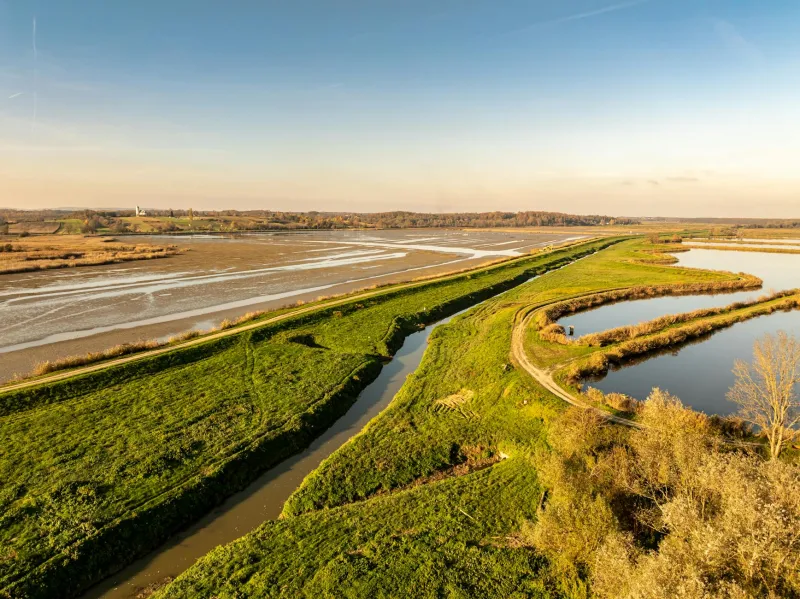
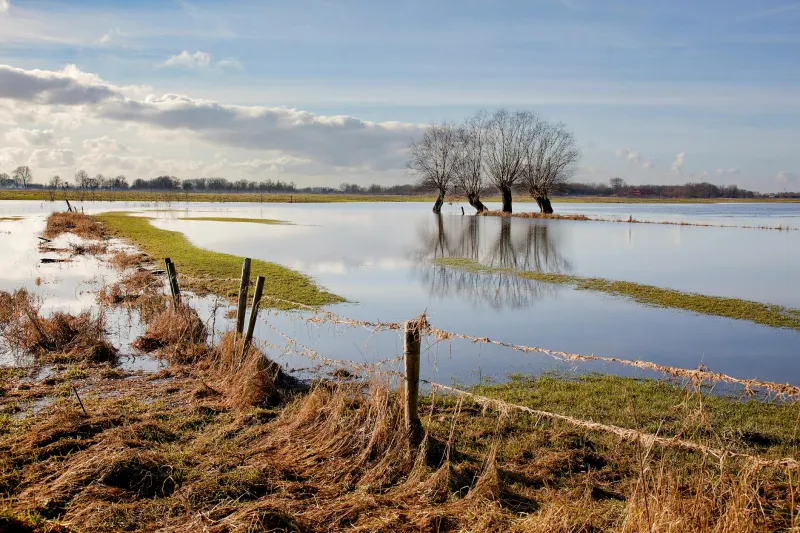
Along the eastern shores of England, where land meets sea in a delicate dance of salt and soil, Britain's coastal grazing marshes face an unprecedented existential crisis. These remarkable ecosystems, sculpted by centuries of careful human management and tidal influence, now stand condemned by the very climate policies designed to protect our future. As sea levels rise relentlessly and storm surges intensify, government strategies increasingly favour deliberate retreat over defence, consigning these irreplaceable habitats to drowning beneath advancing waves.
The numbers tell a stark story of calculated loss. Across Kent, Essex, and Norfolk, approximately 45,000 hectares of coastal grazing marsh remain – a mere fragment of the vast wetland complex that once fringed Britain's eastern coast. Current projections suggest that managed retreat policies will sacrifice a further 15,000 hectares by 2050, representing the largest deliberate habitat loss in modern British conservation history.
This strategic abandonment reflects a brutal calculus imposed by climate reality. Defending every metre of coastline against accelerating sea level rise and intensifying storms would cost billions whilst providing only temporary respite. Instead, planners increasingly embrace 'managed realignment' – allowing selected coastal defences to fail whilst creating new habitats inland. Yet this seemingly rational approach masks a profound ecological tragedy unfolding in slow motion.
Biodiversity Hotspots Under Siege
Coastal grazing marshes represent some of Britain's most productive wildlife habitats, supporting species assemblages found nowhere else in our landscape. These brackish grasslands, shaped by millennia of grazing and periodic flooding, create unique ecological niches that harbour extraordinary biodiversity within their seemingly simple appearance.
The avian communities alone justify urgent conservation attention. Lapwing, redshank, and snipe depend upon these marshes for breeding, their ground nests perfectly adapted to the short, tussocky sward maintained by traditional grazing regimes. The distinctive 'drumming' of snipe over spring marshes and the plaintive calls of curlew have provided the soundtrack to these landscapes for generations, yet both species face precipitous declines as their habitat shrinks.
Wintering bird populations reveal the international significance of these threatened ecosystems. Tens of thousands of dark-bellied brent geese, fresh from Arctic breeding grounds, depend upon marsh grasses for winter survival. Wigeon, teal, and pintail gather in spectacular concentrations, their feeding activities helping maintain the delicate balance between fresh and saltwater vegetation that defines these transitional habitats.
Beneath the surface, invertebrate communities of staggering complexity support the entire food web. Specialist beetles, spiders, and flies have evolved to exploit the unique conditions created by periodic inundation and grazing pressure. Many species occur nowhere else in Britain, their distributions confined to the narrow band where terrestrial and marine environments intersect.
The Retreat Dilemma
Managed retreat policies emerged from hard-won recognition that defending every inch of coastline represents both economic impossibility and ecological futility. Traditional sea walls and flood barriers require constant reinforcement against ever-increasing storm intensity, whilst providing rigid barriers that prevent natural adaptation to changing conditions.
The alternative approach – allowing controlled flooding whilst creating compensatory habitats inland – appears superficially logical. Salt marshes and mudflats can theoretically migrate landward as sea levels rise, maintaining ecosystem functions whilst reducing flood risk to human communities. This 'coastal squeeze' solution promises win-win outcomes that balance human safety with environmental protection.
However, the practical implementation of managed retreat reveals fundamental flaws in this optimistic scenario. Coastal grazing marshes cannot simply relocate inland like nomadic communities. Their unique character derives from specific topographical, hydrological, and soil conditions accumulated over centuries of environmental interaction. The subtle gradients, drainage patterns, and salinity levels that define these habitats prove impossible to replicate through artificial creation.
Compensatory habitat schemes, whilst well-intentioned, consistently fail to match the biodiversity value of lost marshes. Created wetlands lack the complex microtopography, established plant communities, and intricate food webs that characterise ancient grazing marshes. Studies consistently demonstrate that artificial replacements support significantly reduced species diversity and abundance compared to their natural predecessors.
Agricultural Heritage in Peril
The cultural dimension of this crisis extends beyond ecological concerns into the heart of British agricultural heritage. Coastal grazing marshes represent living museums of traditional farming practice, where ancient techniques continue to shape contemporary landscapes. The distinctive breeds – Marsh sheep, Kerry cattle, and hardy ponies – that graze these challenging environments embody centuries of selective breeding for salt tolerance and seasonal flooding adaptation.
Local farming communities, many with ancestral connections spanning generations, face forced displacement as retreat policies advance. The loss extends beyond individual livelihoods into collective memory and cultural identity. Traditional knowledge about seasonal grazing patterns, flood management, and livestock husbandry accumulated over centuries risks disappearing alongside the physical landscapes that sustained it.
The economic implications ripple far beyond immediate agricultural losses. Coastal grazing marshes support rural tourism, recreational activities, and artisanal food production that contribute millions annually to local economies. The distinctive character of Romney Marsh lamb or Maldon sea salt depends entirely upon these threatened environments, their premium value reflecting unique terroir that cannot be replicated elsewhere.
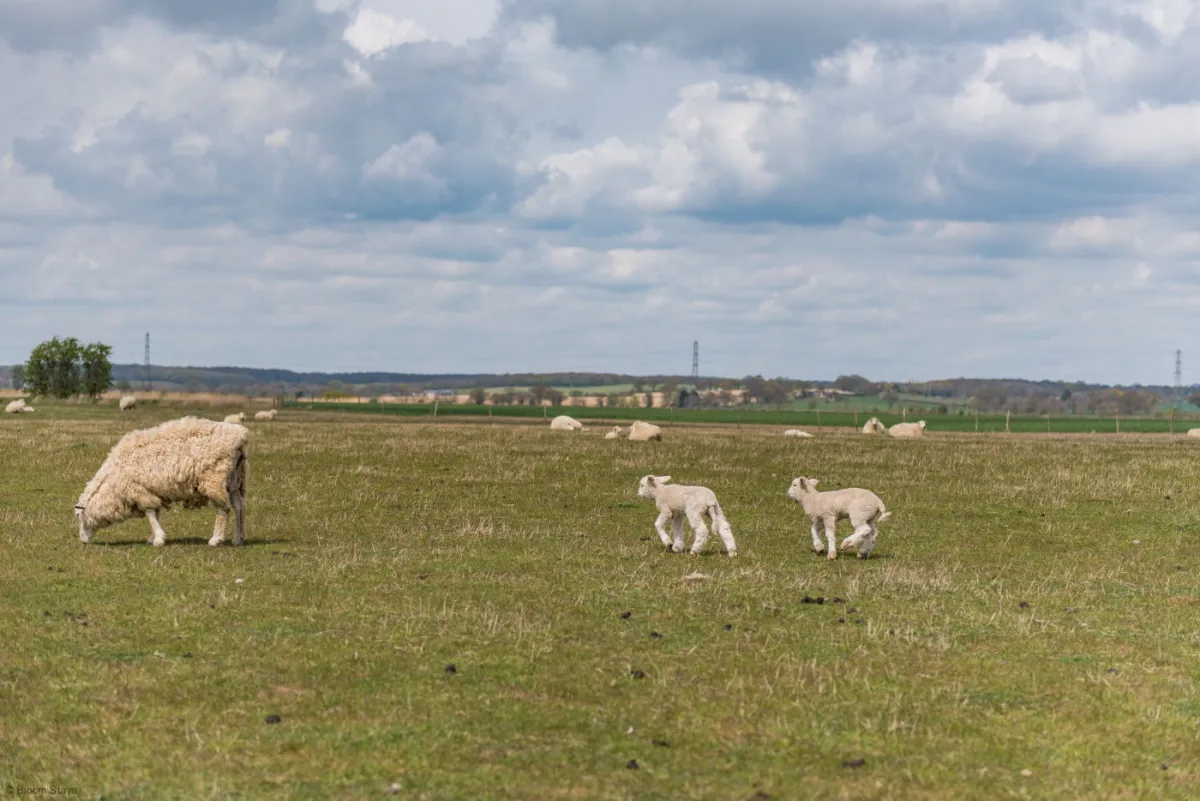 Photo: Romney Marsh, via romneymarshshepherdshuts.co.uk
Scientific Frontiers in Crisis Management
Advanced research initiatives now explore innovative approaches to reconciling climate adaptation with biodiversity conservation. Pioneering projects investigate whether modified grazing marshes can provide enhanced flood storage whilst maintaining ecological value. Temporary flooding regimes might create new habitat types that support different but equally valuable species assemblages.
Genetic studies of marsh plant communities reveal remarkable adaptive potential that could inform conservation strategies. Some grass species demonstrate rapid evolutionary responses to increasing salinity, suggesting that assisted migration or selective breeding might help existing vegetation communities adapt to changing conditions rather than simply retreating.
Remote sensing technology enables unprecedented monitoring of habitat changes across vast coastal areas. Satellite imagery tracks vegetation shifts, soil salinity changes, and flooding patterns with precision impossible through ground-based surveys alone. This data provides crucial insights for optimising the timing and location of managed retreat whilst maximising conservation outcomes.
Choosing Our Climate Future
The fate of Britain's coastal grazing marshes ultimately reflects broader choices about our relationship with environmental change. Accepting their loss as inevitable climate adaptation represents one philosophical approach – pragmatic, economically rational, but fundamentally resigned to ecological diminishment.
Alternative pathways demand greater ambition and investment. Innovative engineering solutions might enable selective habitat preservation through adaptive flood management systems. Mobile barriers, seasonal flooding regimes, and amphibious agriculture could maintain ecosystem functions whilst accommodating rising seas.
The window for such interventions narrows rapidly as physical and economic pressures intensify. Every winter brings new storms that erode defences and alter drainage patterns. Every spring reveals further saltwater penetration into previously fresh habitats. The inexorable advance of climate change allows no pause for extended deliberation.
Britain's coastal grazing marshes stand at the intersection of past and future, their survival dependent upon our collective willingness to fight for irreplaceable heritage against overwhelming odds. Their loss would impoverish not merely our natural environment, but our understanding of what makes Britain's landscapes uniquely valuable. In choosing their fate, we define the kind of climate future we consider acceptable – and the price we are prepared to pay for adaptation.