The Disappearing Darkness
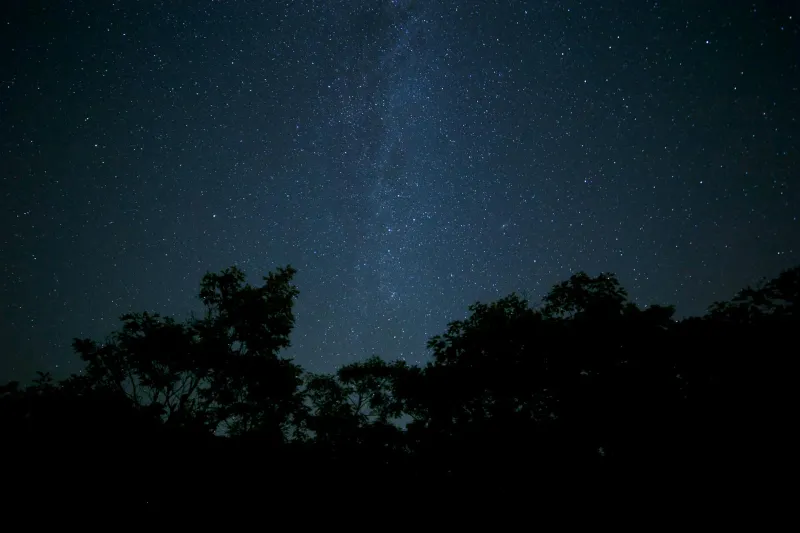
Across Britain's increasingly illuminated landscape, a profound transformation is occurring that extends far beyond the visible spectrum. Where once our ancestors navigated by constellations and marked seasons by celestial movements, today's generations grow up beneath a perpetual orange glow that obscures 80% of the night sky visible to previous centuries.
This isn't merely an aesthetic loss. The systematic erasure of natural darkness represents one of the most pervasive yet underacknowledged environmental changes of our time, with implications that stretch from individual wellbeing to entire ecosystem health.
Dr Sarah Mitchell, an astronomer at the Royal Observatory Edinburgh, describes the shift as "cultural amputation." She explains: "We're witnessing the first generation in human history to grow up disconnected from the cosmic context that has informed philosophy, navigation, agriculture, and spiritual practices for thousands of years."
The Scale of Britain's Light Pollution Crisis
Recent satellite imagery reveals that over 99% of the UK population now lives under light-polluted skies. The Campaign to Protect Rural England's mapping data shows that only 21.7% of England experiences truly dark nights, with Scotland and Wales faring marginally better at 76.8% and 56.8% respectively.
This artificial brightening has accelerated dramatically since the 1990s, coinciding with the widespread adoption of LED street lighting and the expansion of 24-hour commercial districts. While these developments serve legitimate safety and economic purposes, their cumulative effect has been to create what researchers term "skyglow"—a dome of scattered light that can be detected hundreds of kilometres from major population centres.
The phenomenon is particularly acute around London, Manchester, and Birmingham, where light pollution extends well beyond metropolitan boundaries, affecting rural communities that once enjoyed pristine night skies.
Beyond Stargazing: The Ecological Imperative
While the cultural and psychological impacts of losing our connection to the cosmos are significant, the ecological consequences of artificial lighting present an even more urgent conservation challenge. Britain's nocturnal wildlife has evolved over millions of years in predictable cycles of light and darkness, and this sudden illumination is disrupting fundamental biological processes.
Migratory birds, which navigate using celestial cues, are increasingly disoriented by urban lighting. The British Trust for Ornithology estimates that artificial illumination contributes to millions of bird collisions annually, with species such as thrushes and warblers particularly vulnerable during their autumn and spring migrations.
Insect populations, already under severe pressure from habitat loss and climate change, face additional stress from light pollution. Nocturnal pollinators, including many moth species crucial to Britain's plant communities, are drawn away from their natural foraging patterns by artificial lights, disrupting pollination networks that have sustained our ecosystems for millennia.
Dr Emma Thompson from the Centre for Ecology & Hydrology emphasises the interconnected nature of these disruptions: "When we interfere with natural light cycles, we're not just affecting individual species—we're destabilising entire food webs that depend on the precise timing of nocturnal activities."
The Dark Sky Revolution
Recognising the urgency of this conservation challenge, a growing movement across Britain is working to preserve and restore natural darkness. The International Dark-Sky Association has designated several UK locations as Dark Sky Reserves, including Exmoor National Park and Galloway Forest Park, where strict lighting controls protect some of our last remaining pristine night environments.
These reserves serve as both refuges for nocturnal wildlife and laboratories for understanding the benefits of darkness preservation. Visitor surveys from Exmoor consistently show that experiencing truly dark skies has profound psychological effects, with many reporting a renewed sense of connection to the natural world and a deeper appreciation for environmental conservation.
Local authorities are increasingly recognising their role in this effort. The South Downs National Park Authority has implemented comprehensive lighting guidelines that balance safety requirements with ecological protection, while several Scottish councils have pioneered "part-night lighting" schemes that reduce illumination during peak wildlife activity periods.
Innovation in Darkness Preservation
Technological advances are providing new tools for the Dark Sky movement. Adaptive LED systems can now adjust brightness and colour temperature based on time and usage patterns, while improved shield designs direct light downward rather than allowing it to scatter into the atmosphere.
The Royal Commission on Environmental Pollution has recommended a national framework for lighting policy that would require environmental impact assessments for major illumination projects, similar to those required for other forms of development.
Dr James Harrison, who leads the UK's Dark Sky Discovery initiative, argues that this represents a fundamental shift in how we conceptualise environmental protection: "We're beginning to understand that darkness is a natural resource that requires active conservation, just like clean air or fresh water."
Reclaiming Our Cosmic Inheritance
As Britain faces unprecedented environmental challenges, the preservation of natural darkness offers a unique opportunity to address multiple conservation goals simultaneously. Protecting night skies supports biodiversity, reduces energy consumption, and maintains cultural connections that have sustained human communities throughout history.
The growing network of Dark Sky communities across Britain demonstrates that this vision is achievable. From the Yorkshire Dales to the Isle of Coll, communities are proving that it's possible to maintain modern standards of safety and convenience while preserving the cosmic heritage that connects us to both our past and our planetary home.
The choice before us is clear: we can continue to illuminate our way toward an increasingly disconnected future, or we can embrace the radical act of conservation through darkness—protecting not just the stars above, but the intricate web of life that depends on the ancient rhythm of day and night.