The Hidden Web Beneath Britain's Landscapes
In the ancient woodlands of the New Forest and beneath the sprawling grasslands of the Yorkshire Dales, an extraordinary communication system operates in complete silence. This underground network, composed of microscopic fungal threads called mycorrhizae, connects individual plants across vast distances, facilitating the exchange of nutrients, water, and even warning signals about environmental threats. Yet this remarkable biological infrastructure—which has sustained British ecosystems for millennia—faces an unprecedented crisis that threatens to fundamentally alter the character of our native landscapes.
Recent research conducted by soil ecologists at the University of Edinburgh reveals that Britain's mycorrhizal networks are disappearing at an alarming rate. Dr Sarah Mitchell, who leads the university's soil biodiversity programme, describes the situation as "ecological vandalism on a microscopic scale." Her team's five-year study across 200 sites throughout England, Scotland, and Wales found that fungal diversity in agricultural soils has declined by 78% compared to undisturbed woodland sites, with some intensive farming areas showing complete mycorrhizal collapse.
The Science of Soil Intelligence
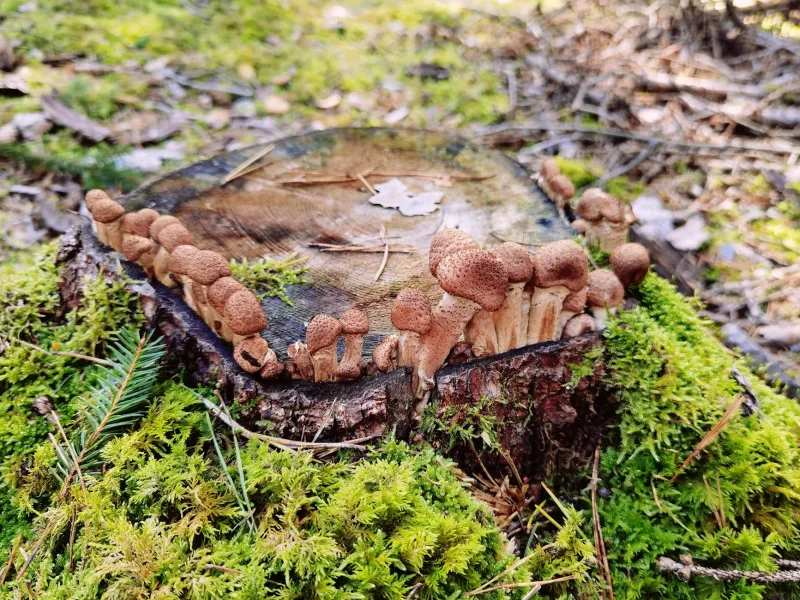
These fungal networks operate as nature's original internet, predating human communication systems by approximately 400 million years. Individual fungal threads, finer than spider silk, form symbiotic relationships with plant roots, creating what researchers term the "wood wide web." Through this system, a mature oak tree can be connected to hundreds of other plants across several hectares, sharing carbon compounds, phosphorus, and nitrogen in a complex economy that sustains entire forest communities.
The sophistication of these networks challenges conventional understanding of plant behaviour. Research at Rothamsted Research in Hertfordshire has demonstrated that mycorrhizal fungi can transmit chemical alarm signals between plants, warning neighbouring species of insect attacks or drought conditions. When researchers artificially damaged leaves on connected plants, they observed defensive chemical responses in undamaged plants up to 30 metres away—evidence of a communication system that operates below the threshold of human perception.
Professor James Thornton, who directs the Centre for Soil Science at Imperial College London, explains the broader implications: "We're beginning to understand that what we've traditionally viewed as individual plants competing for resources are actually participants in a collaborative network. The mycorrhizal web doesn't just connect plants—it creates resilience, enabling ecosystems to respond collectively to environmental stress."
The Agricultural Assault on Underground Networks
Modern farming practices have proven catastrophic for these delicate fungal communities. Heavy machinery compacts soil, crushing the fragile hyphal networks that can take decades to establish. Chemical fertilisers flood soils with synthetic nutrients, reducing plants' dependence on mycorrhizal partnerships and ultimately causing the fungi to withdraw from symbiotic relationships.
Perhaps most damaging are fungicides, which target all fungal life indiscriminately. A single application of common agricultural fungicides can eliminate 90% of soil fungi within weeks, according to research published in the Journal of Applied Ecology. The study, which examined farmland across East Anglia, found that even organic farms using copper-based fungicides showed significant mycorrhizal depletion compared to unmanaged grasslands.
The consequences extend far beyond individual farm boundaries. Fragmented mycorrhizal networks lose their capacity to support plant communities during environmental stress. Without fungal partners, native wildflowers struggle to establish in degraded soils, leading to the simplified, species-poor landscapes that characterise much of Britain's agricultural regions.
Carbon Storage and Climate Implications
The destruction of mycorrhizal networks carries profound implications for Britain's climate commitments. These fungi represent one of nature's most effective carbon sequestration systems, storing carbon in soil organic matter and in their own biomass. Research conducted by the Centre for Ecology and Hydrology estimates that healthy mycorrhizal networks in British soils store approximately 2.5 billion tonnes of carbon—equivalent to 25 years of the UK's current annual emissions.
When these networks collapse, stored carbon is released back to the atmosphere as carbon dioxide. Dr Mitchell's research suggests that mycorrhizal loss from agricultural intensification may be responsible for up to 15% of soil carbon emissions from British farmland, a figure that undermines national carbon accounting and climate targets.
The fungi also enhance soil structure, creating stable aggregates that resist erosion and improve water retention. Without mycorrhizal binding, soils become vulnerable to degradation, reducing their capacity to support both agricultural productivity and natural vegetation recovery.
Restoration and the Path Forward
Despite the scale of destruction, emerging research offers hope for mycorrhizal network restoration. Pioneering work at the Royal Botanic Gardens, Kew, has developed techniques for cultivating native fungal spores and reintroducing them to degraded soils. Early trials in former agricultural land have shown promising results, with mycorrhizal diversity recovering to 60% of woodland levels within three years when combined with reduced tillage and eliminated fungicide use.
Several British farms are experimenting with mycorrhizal-friendly practices, including cover cropping, reduced chemical inputs, and the establishment of fungal corridors connecting fragmented habitats. The Pasture-Fed Livestock Association reports that member farms using regenerative practices show significantly higher soil fungal diversity and improved drought resilience compared to conventional operations.
Rethinking Britain's Relationship with Soil
The crisis facing Britain's mycorrhizal networks demands a fundamental shift in how society perceives and manages soil ecosystems. Rather than viewing soil as an inert growing medium, we must recognise it as a living, intelligent system capable of supporting complex ecological relationships that sustain life above ground.
This recognition carries practical implications for land management, urban planning, and conservation policy. Protecting existing mycorrhizal networks requires designated soil protection zones, restrictions on chemical inputs near sensitive habitats, and integration of soil health assessments into environmental impact evaluations.
The underground internet that has sustained Britain's landscapes for millions of years represents both an irreplaceable natural heritage and a critical tool for addressing climate change. Whether future generations inherit degraded soils or thriving fungal communities depends on decisions made today about how we value and protect the invisible life beneath our feet.
As we face an uncertain environmental future, the wisdom embedded in these ancient networks offers a blueprint for resilience—if we choose to listen to the silent conversations happening in the soil beneath our boots.