The Great Vanishing Act
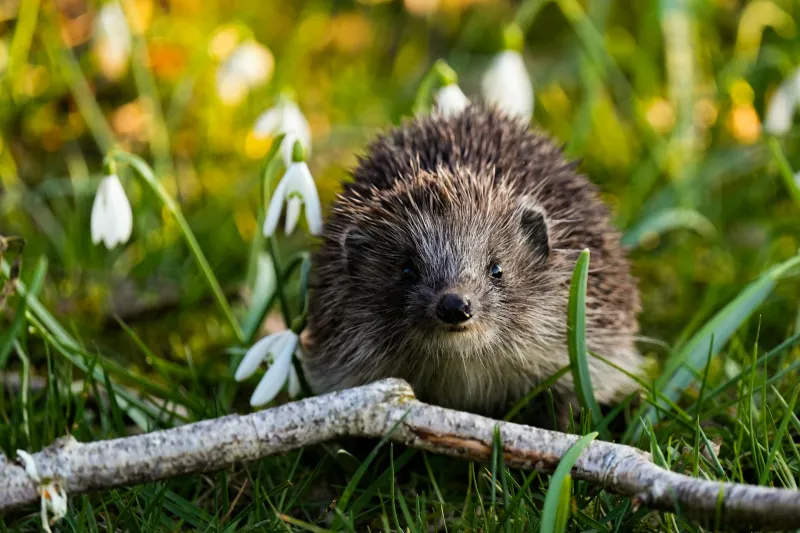
Across Britain's suburbs and countryside, a quiet catastrophe unfolds each twilight. Where once the distinctive snuffling of hedgehogs marked the beginning of evening garden activity, an eerie silence now prevails. These spiny ambassadors of British wildlife—creatures that have wandered our landscapes for over 15 million years—are disappearing at an alarming rate.
Recent comprehensive surveys reveal a staggering truth: hedgehog populations have contracted by more than 50% since the millennium's turn, with some regions witnessing declines approaching 75%. This precipitous fall represents one of the most dramatic mammalian population crashes in modern British conservation history, elevating the humble hedgehog from garden curiosity to conservation priority.
The Architecture of Decline
The hedgehog crisis stems from multiple, interconnected environmental pressures that reflect broader challenges facing Britain's wildlife. Habitat fragmentation stands as perhaps the most significant driver, with urban expansion and intensive agriculture creating isolated pockets of suitable terrain. Unlike their continental cousins, British hedgehogs require extensive territories—up to 90 hectares for males—making them particularly vulnerable to landscape subdivision.
Modern farming practices have fundamentally altered the countryside hedgehogs once called home. The widespread adoption of pesticides has created what researchers term 'ecological deserts'—landscapes devoid of the beetles, caterpillars, and slugs that form the cornerstone of hedgehog diets. A single hedgehog can consume up to 200 beetles per night during peak season, making them extraordinarily sensitive to invertebrate population crashes.
Urban environments present their own lethal challenges. Road mortality accounts for an estimated 100,000 hedgehog deaths annually, whilst garden boundaries—increasingly defined by solid fencing rather than traditional hedgerows—fragment urban habitats as effectively as motorways fragment rural ones.
The Ripple Effect of Loss
The hedgehog's decline signals broader ecosystem dysfunction with implications extending far beyond a single species. As voracious consumers of garden pests, hedgehogs provide what ecologists term 'ecosystem services'—natural pest control worth millions annually to British horticulture and agriculture.
Research indicates that areas with healthy hedgehog populations experience significantly reduced slug and snail damage to crops and ornamental plants. The loss of this natural pest control mechanism forces increased reliance on chemical interventions, creating a vicious cycle that further degrades invertebrate communities and accelerates hedgehog decline.
Citizen Science and Community Action
Britain's response to the hedgehog crisis exemplifies the power of community-driven conservation. The Hedgehog Street initiative, coordinated by the People's Trust for Endangered Species and the British Hedgehog Preservation Society, has mobilised thousands of citizens in creating 'hedgehog highways'—networks of garden connections enabling movement across fragmented urban landscapes.
This citizen science programme has generated unprecedented insights into hedgehog behaviour and habitat preferences. Participants create 13cm gaps in garden boundaries and monitor hedgehog activity using footprint tunnels and wildlife cameras. The resulting data reveals that connected gardens support hedgehog populations up to three times higher than isolated patches.
Evidence-Based Recovery Strategies
Successful hedgehog conservation requires coordinated action across multiple scales, from individual gardens to national policy frameworks. At the household level, evidence strongly supports several key interventions.
Creating wildlife corridors through garden boundaries represents the most impactful single action. Research demonstrates that even small gaps—equivalent to a CD case—enable hedgehog movement whilst maintaining privacy and security. These connections prove particularly crucial in suburban areas where garden density offers the potential for extensive habitat networks.
Rewilding portions of domestic gardens provides essential foraging habitat. Allowing grass areas to grow longer, maintaining brush piles, and creating compost heaps generates the invertebrate-rich environments hedgehogs require. Studies show that gardens with 'wild corners' support invertebrate populations up to five times higher than intensively managed spaces.
The Path Forward
The hedgehog's plight reflects broader challenges facing Britain's wildlife in an era of rapid environmental change. Climate shifts, habitat loss, and chemical pollution create cumulative pressures that no single species can withstand alone.
Yet the hedgehog crisis also demonstrates conservation's potential for success through coordinated community action. Areas where Hedgehog Street initiatives operate show stabilising or even recovering populations, proving that targeted interventions can reverse decline.
Local authorities across Britain are beginning to incorporate hedgehog-friendly policies into urban planning frameworks. From mandating wildlife corridors in new developments to reducing pesticide use in public spaces, these systemic changes complement individual conservation efforts.
A Test Case for Conservation
The hedgehog's fate serves as a litmus test for Britain's commitment to biodiversity preservation. These creatures' requirements—connected habitats, diverse food webs, and reduced chemical inputs—mirror the needs of countless other species facing similar pressures.
Success in hedgehog conservation would signal broader ecosystem recovery, whilst failure would confirm the continued degradation of Britain's natural heritage. The choice, increasingly, lies with individual landowners and communities willing to transform their relationship with the natural world.
As twilight descends across British gardens tonight, the presence or absence of hedgehogs tells a story about our environmental stewardship. In their survival lies not just the continuation of a beloved species, but a measure of our capacity to share landscapes with the wildlife that makes them truly alive.