The Underwater Graveyard
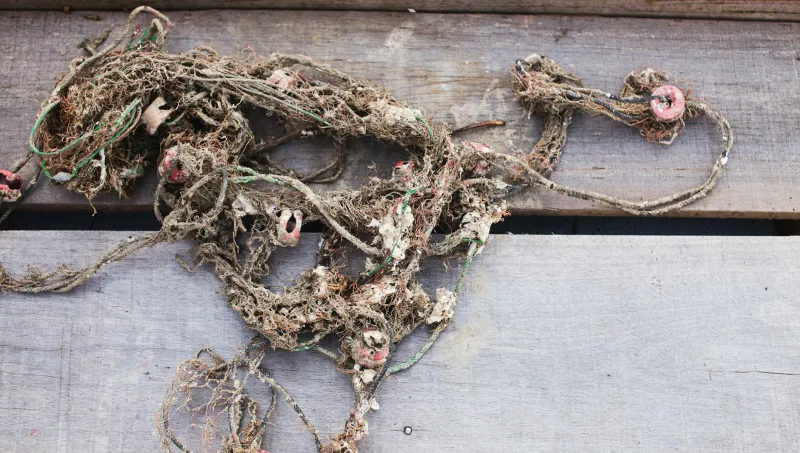
Beneath the surface of Britain's seemingly pristine coastal waters lies a macabre collection of abandoned fishing equipment that continues to kill with mechanical precision. Ghost nets, lost lobster pots, and discarded longlines drift through our marine ecosystems like spectral predators, ensnaring everything from juvenile cod to migrating dolphins in an endless cycle of ecological destruction.
Recent surveys by the Marine Conservation Society reveal that British waters harbour an estimated 640,000 tonnes of abandoned fishing gear—equivalent to the weight of four Royal Navy aircraft carriers scattered across our seabed. This phantom fleet operates with devastating efficiency, transforming what should be thriving marine habitats into underwater killing fields.
The Scale of Britain's Hidden Crisis
The phenomenon of ghost fishing represents one of marine conservation's most insidious challenges. Unlike oil spills or plastic pollution, abandoned fishing equipment continues its original function indefinitely, creating self-baiting traps that can operate for decades. A single lost crab pot can kill continuously for up to seven years, whilst synthetic gill nets may persist for centuries in cold British waters.
Dr Sarah Mitchell, marine ecologist at Plymouth Marine Laboratory, describes the scale as "staggering yet invisible." Her research indicates that ghost fishing may account for up to 30% of all fishing-related marine mortality in British waters—a figure that dwarfs many headline-grabbing conservation issues whilst receiving a fraction of the attention.
The Celtic Sea, North Sea, and waters surrounding Scotland's Western Isles emerge as particular hotspots. Here, centuries of intensive fishing activity have created underwater graveyards where modern trawl nets tangle with Victorian-era crab pots in a deadly archaeological record of Britain's maritime heritage.
Victims of the Phantom Fleet
Britain's marine mammals bear the heaviest toll from this invisible crisis. Grey seals, increasingly common around British coasts due to successful conservation efforts, frequently become entangled in ghost nets whilst hunting for fish. The Scottish Marine Animal Stranding Scheme records over 200 seal deaths annually from abandoned fishing gear—likely representing only a fraction of actual casualties.
Harbour porpoises, Britain's smallest cetacean, prove particularly vulnerable to ghost nets designed to catch fish of similar size. These intelligent mammals, already facing pressure from shipping noise and habitat degradation, encounter abandoned gill nets as invisible barriers that can trap entire pods during feeding or migration.
Seabirds face equally devastating impacts. Gannets diving for fish become entangled in subsurface nets, whilst cormorants investigating lobster pots become trapped in wire mesh designed to prevent escape. The RSPB estimates that abandoned fishing gear kills more seabirds annually than oil pollution, though receives significantly less public attention.
Even Britain's largest marine visitors suffer consequences. Basking sharks, gentle giants that cruise British waters each summer, frequently arrive bearing scars from encounters with ghost nets. Marine biologists document increasing numbers of these protected sharks with fishing rope embedded in their fins—testament to the pervasive nature of this underwater threat.
Pioneering Recovery Efforts
Across Britain's coastline, a dedicated network of divers, fishermen, and conservationists battles this phantom fleet through innovative recovery programmes. Ghost Fishing UK, established by technical divers, has retrieved over 40 tonnes of abandoned gear from British waters since 2009, working with local fishing communities to identify and recover dangerous equipment.
The organisation's founder, Rich Stevenson, describes their work as "underwater archaeology with an urgent conservation purpose." His teams use advanced diving techniques to locate and safely remove nets from sensitive habitats, often working in challenging conditions where commercial salvage operations prove uneconomical.
Scottish fishermen have pioneered particularly innovative approaches. The Fishing for Litter scheme, supported by the Scottish Government, pays fishing vessels to retrieve abandoned gear encountered during normal operations. This grassroots initiative has removed over 800 tonnes of ghost fishing equipment whilst fostering collaboration between conservation groups and fishing communities.
Cornish harbour authorities have implemented gear-marking schemes that enable lost equipment to be traced to its owners, creating financial incentives for recovery whilst reducing abandonment rates. These local initiatives demonstrate how targeted policy interventions can address ghost fishing at its source.
Technological Solutions and Future Innovations
British marine technology companies are developing revolutionary solutions to prevent future ghost fishing incidents. Smart buoys equipped with GPS tracking and satellite communication ensure that lost gear can be rapidly located and recovered before beginning its deadly harvest.
Biodegradable fishing equipment represents perhaps the most promising long-term solution. Companies like Orkney-based NetTech are developing crab pots and gill nets manufactured from materials that decompose harmlessly within months of abandonment, effectively eliminating the ghost fishing phenomenon.
These innovations face significant regulatory hurdles, however. Current fishing quotas and licensing systems fail to account for ghost fishing impacts, whilst international waters governance creates enforcement challenges for abandoned equipment that drifts across maritime boundaries.
Policy Gaps and Regulatory Failures
Despite overwhelming scientific evidence of ghost fishing's ecological impact, British policy frameworks remain inadequate to address this crisis effectively. The Marine and Coastal Access Act 2009 provides limited mechanisms for gear recovery, whilst fishing industry regulations focus on active rather than abandoned equipment.
European Union regulations require fishing vessels to report lost gear, but enforcement remains sporadic and penalties insufficient to deter abandonment. Brexit provides an opportunity for Britain to develop more comprehensive ghost fishing policies, though early indications suggest that this opportunity may be overlooked.
Marine Protected Areas, designed to safeguard Britain's most sensitive habitats, often contain significant quantities of abandoned fishing equipment that continues killing protected species within supposedly safe havens. This regulatory paradox highlights the urgent need for integrated policy approaches that address both active and passive fishing impacts.
Charting a Course Forward
Britain's ghost fishing crisis demands immediate, coordinated action across government, industry, and conservation sectors. Mandatory gear marking, enhanced recovery incentives, and accelerated development of biodegradable equipment could significantly reduce future impacts whilst addressing existing underwater threats.
The phantom fleet haunting Britain's waters represents more than an environmental crisis—it embodies the hidden costs of our maritime heritage and the urgent need for sustainable fishing practices. Only through acknowledging this invisible threat can we begin to restore the health of our marine ecosystems and protect the incredible diversity of life that calls British waters home.
As Dr Mitchell observes: "Every piece of ghost gear we remove saves hundreds of marine lives. The question isn't whether we can afford to act—it's whether we can afford not to."