The Vanishing Water Towers of Britain
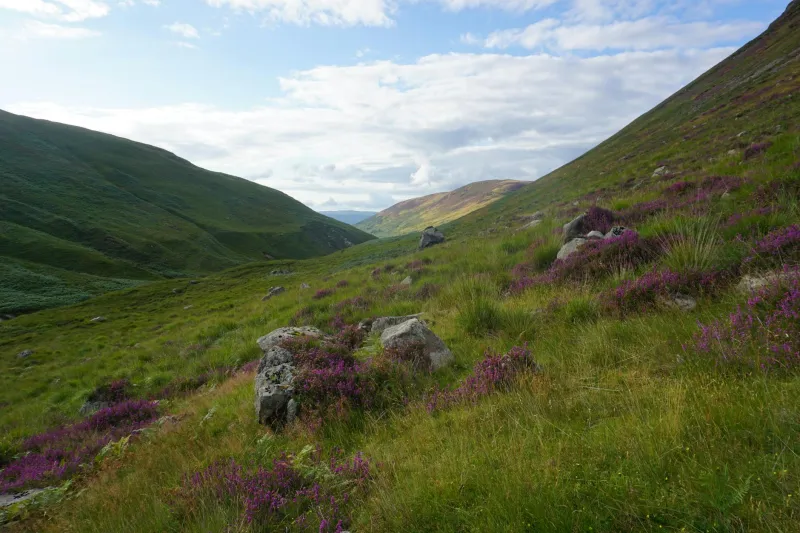
Perched across the wind-swept peaks of the Pennines, the sodden moorlands of the Scottish Highlands, and the mist-shrouded hills of Wales, Britain's blanket bogs represent one of our most undervalued natural infrastructures. These vast carpets of sphagnum moss and waterlogged peat, evolved over millennia, function as enormous sponges capable of absorbing rainfall equivalent to twenty times their dry weight. Yet across approximately 2.5 million hectares of British uplands, this critical hydrological system is collapsing—and the consequences are cascading into valley communities with devastating regularity.
The 2015 floods that submerged Cumbrian towns, the 2019 deluge across Yorkshire, and the repeated inundations of Scottish border communities share a common thread: the failure of degraded upland landscapes to perform their ancestral role as nature's storm drains. What was once Britain's most effective flood defence system has become, in many areas, a liability that amplifies rather than mitigates extreme weather events.
From Sponge to Concrete: The Science of Bog Degradation
Healthy blanket bog systems operate through an intricate hydrological mechanism that climate scientists are only beginning to fully appreciate. Living sphagnum moss, with its unique cellular structure, can absorb water at rates that exceed 90% of its volume within minutes of rainfall. The underlying peat matrix, accumulated over thousands of years, creates a three-dimensional storage network capable of holding water for weeks or months before gradually releasing it into river systems.
Dr Sarah Mitchell, a hydrologist at the University of Edinburgh's School of GeoSciences, explains the transformation occurring across British uplands: "When blanket bogs degrade, we witness a complete reversal of their hydrological function. Instead of acting as enormous reservoirs that moderate water flow, they become impermeable surfaces that shed rainfall immediately into river systems."
This transformation occurs through multiple interconnected processes. Decades of intensive sheep grazing have stripped away the protective moss layer, exposing bare peat to erosion. Historical drainage ditching, implemented to improve grazing quality, has artificially lowered water tables across vast areas. Meanwhile, the practice of managed burning—once considered essential for grouse moor management—has repeatedly damaged the bog's capacity for water retention.
The result is a landscape where rainfall, instead of being absorbed and slowly released, rushes directly into river catchments. Peak flow rates in streams draining degraded bog areas can be 300% higher than those from healthy bog systems during storm events.
The Downstream Catastrophe
The hydrological consequences of blanket bog degradation extend far beyond the uplands themselves. Communities throughout the Pennine valleys, from Hebden Bridge to Appleby-in-Westmorland, have experienced increasingly frequent and severe flooding as their natural upstream protection disappears.
Environment Agency data reveals a stark correlation between the extent of bog degradation in catchments and flood frequency in downstream settlements. Areas where more than 60% of upland bog coverage shows signs of degradation experience flood events at twice the historical frequency, even when rainfall totals remain within normal parameters.
The economic implications are staggering. The Committee on Climate Change estimates that blanket bog restoration could prevent flood damages worth £570 million annually across affected catchments. Yet current restoration efforts address less than 3% of degraded bog area each year—a rate that would require over three centuries to restore Britain's upland water security.
Racing Against Climate Chaos
Climate projections for Britain indicate that extreme rainfall events will become both more frequent and more intense over the coming decades. The Met Office's latest climate scenarios suggest that winter precipitation could increase by up to 35% in upland areas by 2070, whilst summer droughts become more severe. This combination places unprecedented demands on landscape-scale water management systems.
Against this backdrop, pioneering restoration projects are demonstrating remarkable success in rebuilding bog functionality. The Yorkshire Peat Partnership, working across 30,000 hectares of degraded moorland, has achieved water retention improvements of up to 400% in restored areas through strategic dam construction, drain blocking, and sphagnum replanting.
Similarly, the Flow Country restoration project in Caithness and Sutherland has restored hydrological function across 4,000 hectares of previously drained blanket bog. Monitoring data shows that restored areas now absorb peak rainfall flows that would have caused flooding in downstream communities within the Thurso and Halladale catchments.
The Blueprint for Flood-Resilient Uplands
Successful bog restoration requires sophisticated understanding of both hydrological science and landscape ecology. The most effective interventions combine immediate structural measures—such as plastic piling dams to block drainage ditches—with longer-term biological restoration through sphagnum propagation and native vegetation establishment.
Dr James Henderson, who leads the International Union for Conservation of Nature's UK Peatland Programme, emphasises the urgency of scaling up restoration efforts: "We have perhaps a decade to restore sufficient blanket bog area to maintain flood defence capacity as climate change intensifies. Beyond that window, the costs of engineered flood defences will exceed the economic capacity of many upland communities."
The challenge extends beyond technical restoration to encompass fundamental changes in upland land management. Reducing sheep stocking densities, eliminating managed burning, and transitioning from intensive agriculture to ecosystem service provision requires new economic models that reward landowners for maintaining hydrological function rather than maximising short-term productivity.
Restoring Britain's Natural Flood Defences
As extreme weather events become the new normal across Britain, the restoration of blanket bog systems represents our most cost-effective strategy for protecting vulnerable communities whilst simultaneously addressing climate change through carbon sequestration. These ancient ecosystems, evolved over millennia to moderate water flows across our upland landscapes, offer a blueprint for climate adaptation that works with natural processes rather than against them.
The choice facing Britain is stark: invest in restoring our upland sponges now, or accept that valley communities will face increasingly frequent and devastating floods as our mountain watersheds continue to fail. The science is clear, the technology exists, and the economic case is overwhelming. What remains is the political will to implement landscape-scale restoration before climate chaos makes such efforts impossible to achieve.