The Vanishing Voice of Spring
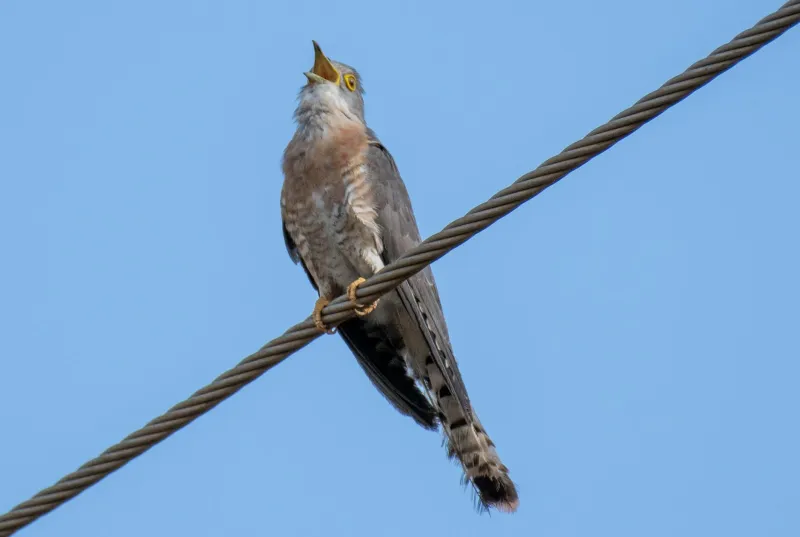
For centuries, the cuckoo's unmistakable call has marked the arrival of spring across Britain's countryside, inspiring poets from Wordsworth to folk songs passed down through generations. Yet today, this iconic sound has become increasingly rare, with the species experiencing one of the most dramatic population collapses of any British bird. Since the 1980s, cuckoo numbers have plummeted by 65%, transforming once-familiar landscapes into silent testimonies of ecological breakdown.
The British Trust for Ornithology's latest monitoring data reveals a stark reality: entire counties that once echoed with cuckoo calls now record zero breeding pairs. This isn't merely the loss of a single species—it represents the unravelling of complex ecological networks that have sustained British wildlife for millennia.
A Migration Under Siege
Cutting-edge satellite tracking technology has revolutionised our understanding of the cuckoo's plight, revealing the extraordinary challenges these birds face during their epic 6,000-mile journey to sub-Saharan Africa. Dr Sarah Henderson from the British Trust for Ornithology explains: "We're witnessing a perfect storm of environmental pressures across two continents that's proving catastrophic for cuckoo populations."
The birds' traditional wintering grounds in West Africa are experiencing unprecedented drought and habitat destruction. Climate change has shifted rainfall patterns across the Sahel, transforming once-lush feeding areas into barren landscapes unable to support the insect populations that cuckoos depend upon. Simultaneously, expanding agriculture and urbanisation have fragmented critical stopover sites along migration routes.
The Insect Apocalypse Connection
Perhaps nowhere is the interconnected nature of ecological collapse more evident than in the relationship between declining cuckoo populations and Britain's insect crisis. Cuckoos are specialist feeders, with caterpillars—particularly the hairy species that other birds avoid—comprising up to 90% of their diet. The intensification of British agriculture has decimated these prey species through pesticide use and habitat simplification.
Professor James Wright from Lancaster University's Centre for Ecology and Hydrology notes: "We're seeing a 60% decline in flying insect biomass across British farmland since 1970. For a species like the cuckoo that requires abundant caterpillars to fuel both breeding and pre-migration fattening, this represents an existential threat."
The loss of traditional hedgerows—reduced by 50% since World War II—has eliminated crucial habitat corridors where both cuckoos and their insect prey once thrived. Modern farming practices have created vast monocultures that cannot support the biodiversity necessary for healthy cuckoo populations.
Cultural Echoes of Ecological Loss
The cuckoo occupies a unique position in British cultural consciousness, embedded in everything from the cuckoo clock to the phrase "cuckoo in the nest." This cultural significance makes their decline particularly poignant, representing not just ecological loss but the erosion of our connection to the natural world.
Folk traditions across Britain have long associated the first cuckoo call with prosperity and renewal. In Wales, hearing a cuckoo whilst carrying money was considered especially fortuitous, whilst Scottish folklore suggested the number of calls predicted how many years one would live. These traditions reflect humanity's deep relationship with seasonal rhythms that climate change is now disrupting.
The Broader Ecosystem Collapse
The cuckoo's decline serves as a powerful indicator of wider ecosystem health. As a species that relies on complex ecological relationships—from host birds for their eggs to specific insect populations for food—cuckoos act as an early warning system for environmental degradation.
Their parasitic breeding strategy, whilst often viewed negatively, actually indicates healthy bird communities. Cuckoos have co-evolved with species like reed warblers, meadow pipits, and dunnocks over millions of years. The breakdown of these relationships signals fundamental disruption to ecological processes.
Climate Science and Migration Timing
Emerging research reveals how climate change is creating a temporal mismatch between cuckoo arrival and peak insect abundance. Warmer springs cause insects to emerge earlier, whilst cuckoos, following ancient migration cues, arrive at their traditional times to find food sources already depleted.
This phenological mismatch extends beyond immediate feeding concerns. Female cuckoos require abundant food to produce the large, energy-rich eggs necessary for their parasitic strategy. Without adequate nutrition, breeding success plummets, creating a cascade effect that compounds population decline.
Conservation in Action
Despite these challenges, innovative conservation efforts offer hope. The RSPB's "Operation Cuckoo" combines satellite tracking with habitat restoration, creating insect-rich corridors along traditional migration routes. Farmers participating in environmental stewardship schemes are establishing beetle banks and wildflower margins that support caterpillar populations.
Rewilding projects across Britain are recreating the mosaic landscapes that cuckoos require—combining woodland edges, wetlands, and grasslands that support diverse insect communities. These efforts recognise that single-species conservation cannot succeed without addressing broader ecosystem health.
A Call for Integrated Action
The cuckoo's plight demands recognition that environmental challenges cannot be addressed in isolation. Effective conservation requires international cooperation, connecting British habitat restoration with African conservation initiatives. It necessitates agricultural reform that prioritises biodiversity alongside food production.
Most critically, it requires acknowledging that the silence spreading across Britain's countryside represents more than the loss of a single species—it signals the breakdown of ecological relationships that have sustained life for millennia. The cuckoo's vanishing call serves as both warning and opportunity: a chance to rebuild the complex, interconnected systems that make vibrant ecosystems possible.
Without urgent, coordinated action spanning continents and sectors, future generations may know the cuckoo only through cultural memory—a ghostly echo of Britain's once-rich natural heritage.