The Comeback of a Keystone Species
Across the misty valleys of Devon and the ancient forests of Scotland, an extraordinary ecological experiment unfolds as Britain's most industrious mammals reclaim their ancestral territories. European beavers (Castor fiber), absent from British landscapes for four centuries, have returned to engineer dramatic transformations that challenge our fundamental understanding of river management and landscape restoration.
The scale of their impact defies their modest numbers. Fewer than 1,500 beavers now inhabit British waterways, yet their influence ripples across thousands of hectares through sophisticated dam-building, canal excavation, and woodland management that would challenge human engineering teams. These 'ecosystem engineers' demonstrate nature's capacity for self-restoration when given opportunity, creating complex wetland mosaics that support extraordinary biodiversity whilst providing crucial flood management services.
Pioneering reintroduction programmes have transformed scientific understanding of beaver ecology and landscape influence. The Devon Beaver Project, launched in 2015, has generated compelling evidence that beaver activities reduce downstream flooding by up to 60 per cent whilst creating habitat for over 100 species previously absent from degraded river corridors. Similar results emerge from Scottish populations, where beavers have naturally recolonised the Tay catchment and established thriving communities across Knapdale Forest.
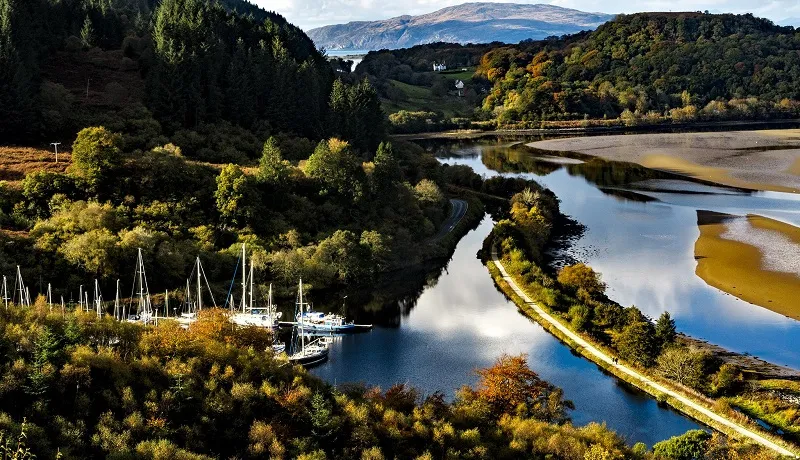 Photo: Knapdale Forest, via greatbritishcoast.com
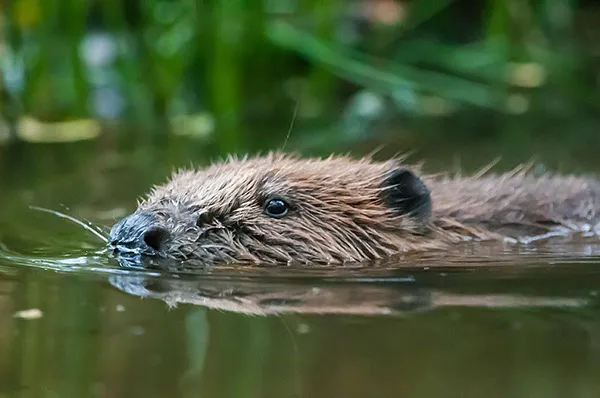 Photo: Devon Beaver Project, via mir-s3-cdn-cf.behance.net
Engineering Wetland Renaissance
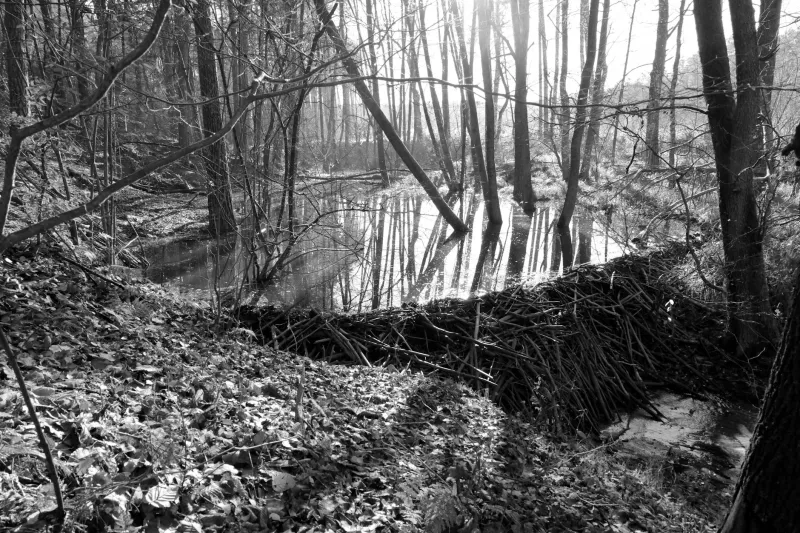
Beaver dams represent masterpieces of instinctive hydraulic engineering that surpass many human flood management schemes in both effectiveness and environmental integration. These structures, built from precisely positioned logs, stones, and vegetation, create stepped water retention systems that slow flood peaks, recharge groundwater, and maintain baseflows during drought periods.
The hydrological benefits extend far beyond immediate flood reduction. Beaver ponds trap sediment that would otherwise degrade downstream habitats, whilst their overflow channels create meandering watercourses that enhance natural flood storage capacity. Water quality improvements prove equally dramatic, with beaver wetlands removing up to 80 per cent of nitrogen pollution and significantly reducing phosphate levels through enhanced biological processing.
These artificial wetlands rapidly develop into biodiversity hotspots that rival the most successful conservation projects. Dragonflies, amphibians, and aquatic invertebrates colonise new ponds within months, whilst fish populations benefit from enhanced spawning habitat and temperature regulation provided by deeper water bodies. The structural complexity created by beaver engineering provides niche opportunities that support species assemblages impossible in simplified, channelised waterways.
Woodland Sculptors and Habitat Creators
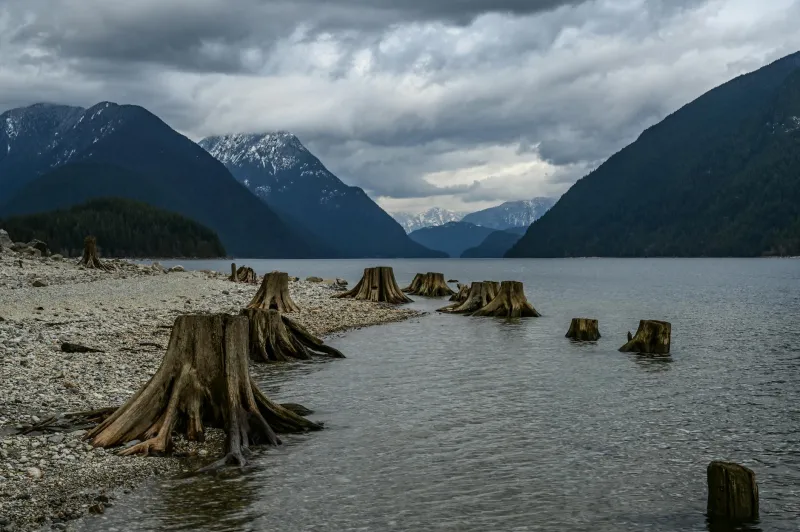
Beyond their aquatic engineering, beavers function as woodland managers whose selective tree felling creates dynamic habitat mosaics beneficial to numerous species. Their preference for fast-growing species like willow, aspen, and poplar promotes woodland regeneration whilst creating clearings that support wildflower meadows and scrubland communities.
This 'natural coppicing' proves particularly valuable for declining bird species. Willow warblers, woodcock, and various thrush species benefit from the varied habitat structure created by beaver activities, whilst their abandoned lodges provide nesting sites for waterfowl and small mammals. Dead wood left in ponds supports invertebrate communities that form crucial links in aquatic food webs.
The regenerative capacity of beaver-modified woodlands challenges conventional forestry assumptions about tree management and succession. Coppiced stumps produce vigorous regrowth that provides enhanced browse for deer whilst maintaining canopy cover. This sustainable harvesting system operated across prehistoric Britain, shaping woodland composition for millennia before human intervention disrupted natural cycles.
Agricultural Tensions and Landscape Conflicts
Despite compelling ecological benefits, beaver reintroduction faces mounting opposition from agricultural communities experiencing direct impacts from wetland expansion. Waterlogged fields, blocked drainage systems, and crop damage generate legitimate grievances that threaten public support for rewilding initiatives.
The economic implications prove particularly acute in intensively farmed landscapes where every hectare represents significant investment in drainage, soil improvement, and infrastructure. Beaver dams can raise water tables across extensive areas, making mechanised farming impossible and reducing land values substantially. Compensation schemes struggle to address these complex impacts, particularly where flooding affects multiple landowners downstream of beaver activities.
Traditional farming communities express deeper concerns about loss of landscape control and agricultural heritage. Generations of drainage, field improvement, and flood management represent substantial collective investment in landscape modification. Beaver activities appear to reverse this progress, returning productive farmland to 'natural' wetland states that contradict agricultural objectives.
The conflict reflects fundamental philosophical differences about appropriate landscape management in densely populated Britain. Conservationists celebrate beaver activities as ecological restoration that corrects centuries of environmental damage. Farmers view the same processes as destructive interference with legitimate land use that threatens rural livelihoods and food production.
Policy Frameworks and Management Challenges
Current beaver management operates within complex legal frameworks that struggle to balance conservation objectives with agricultural concerns. Scottish policies recognise beavers as protected native species whilst allowing lethal control where serious agricultural damage occurs. English approaches remain more cautious, with strictly licensed trials proceeding alongside extensive monitoring and stakeholder consultation.
Licensing systems attempt to regulate beaver impacts through population management and habitat modification. Dam removal, beaver relocation, and protective fencing provide management tools, yet their effectiveness depends upon sustained monitoring and rapid response capabilities that stretch conservation resources.
The development of 'beaver management agreements' represents innovative approaches to landscape-scale planning that accommodate both ecological restoration and agricultural viability. These voluntary schemes provide compensation for flooded land whilst establishing buffer zones around sensitive farming operations. Success requires unprecedented cooperation between conservation organisations, government agencies, and farming communities.
Climate Adaptation Through Natural Solutions
Beaver wetlands provide crucial climate adaptation services that become increasingly valuable as extreme weather intensifies. Their flood storage capacity offers cost-effective alternatives to expensive hard engineering solutions, whilst carbon sequestration in beaver-created peat deposits contributes to climate mitigation goals.
Drought resilience proves equally significant as climate change brings more frequent dry periods. Beaver ponds maintain water supplies for livestock and wildlife whilst supporting fire-resistant vegetation that reduces wildfire risks in vulnerable landscapes. These multifunctional benefits justify substantial investment in beaver conservation as natural climate adaptation infrastructure.
The economic case for beaver restoration strengthens as conventional flood management costs escalate. Recent storms demonstrate the vulnerability of hard defences to extreme weather, whilst beaver-engineered systems prove remarkably resilient to flood events that overwhelm artificial structures.
The Future of British Rewilding
Beaver reintroduction represents a crucial test case for rewilding ambitions across Britain. Success requires fundamental shifts in landscape governance that accommodate dynamic ecosystem processes whilst respecting legitimate human interests. The outcome will determine whether large-scale ecological restoration remains viable in our crowded island environment.
Emerging technologies offer new possibilities for managing human-beaver conflicts through precision monitoring and targeted interventions. Acoustic deterrents, selective barriers, and early warning systems might enable coexistence whilst maintaining ecological benefits.
The beaver revolution ultimately challenges Britain to reimagine our relationship with natural processes and landscape change. Their return forces recognition that ecological restoration demands not merely species reintroduction, but fundamental acceptance of environmental dynamism in human-dominated landscapes. Whether we possess the collective wisdom and political courage to embrace such transformation will define the future character of British countryside for generations to come.