Graves Beneath the Waves
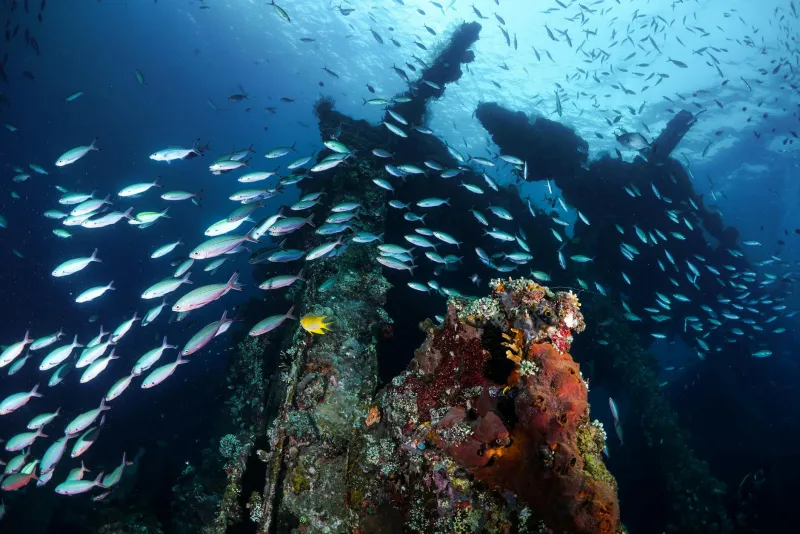
Eighty metres below the surface of the North Sea, the HMS Pathfinder rests where German U-boats sent her in September 1914—the first British warship lost to submarine torpedo attack. Today, her hull bristles with an extraordinary profusion of life that would have astonished her crew. Cold-water corals encrust her superstructure in brilliant orange and white colonies, while schools of pollack and coalfish patrol her decks in numbers that have vanished from the surrounding seabed.
 Photo: North Sea, via cdn.pixabay.com
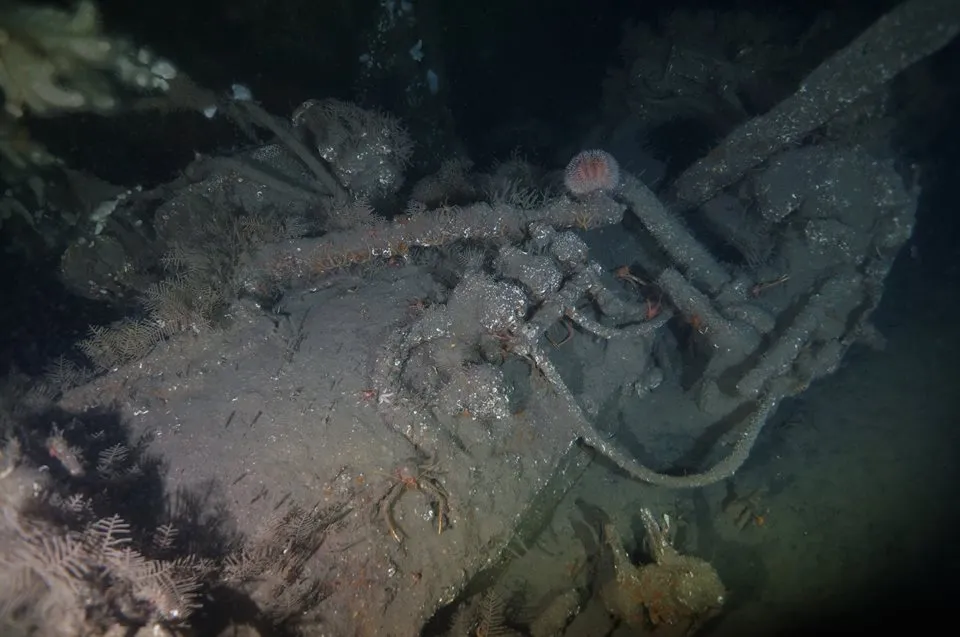 Photo: HMS Pathfinder, via www.scottishshipwrecks.com
The Pathfinder represents one of over 5,000 documented shipwrecks scattered across British coastal waters, many of them casualties of two world wars that transformed our seas into graveyards. Yet eight decades after the guns fell silent, marine biologists are discovering that these accidental monuments have become something extraordinary: thriving artificial reefs that harbour marine biodiversity found virtually nowhere else in Britain's impoverished waters.
Accidental Ecosystems
The transformation of wartime wrecks into marine oases reflects a remarkable ecological phenomenon. When ships sink, their steel hulls create complex three-dimensional structures in otherwise flat seabed environments. These surfaces provide attachment points for filter-feeding organisms—barnacles, mussels, and sea anemones—that struggle to colonise muddy or sandy bottoms.
Dr James Mortimer, a marine ecologist at Plymouth Marine Laboratory, has spent the past decade documenting the biodiversity associated with British wreck sites. His findings challenge conventional assumptions about our coastal waters: "These wrecks function as stepping stones for marine life across otherwise barren seabeds. Species that have virtually disappeared from natural reefs are thriving on artificial structures created by wartime tragedies."
Recent surveys of the SS Moldavia, sunk by U-boats off Start Point in 1918, revealed colonies of pink sea fans—a coral species that has declined by 95% across its natural range in British waters. The wreck's superstructure hosts what may be the largest remaining population of these creatures in the English Channel, their delicate fronds filtering plankton from currents that sweep across the ship's remains.
Underwater Time Capsules
Each wreck represents a unique experiment in marine colonisation, with the vessel's design, depth, and local conditions determining which species can establish themselves. The destroyer HMS Sturdy, lost off the Scottish coast in 1940, lies in relatively shallow water that receives sufficient sunlight to support kelp forests across her hull. These underwater meadows provide nursery habitat for juvenile cod and haddock—species whose populations have crashed across the North Sea.
Deeper wrecks host different communities. The merchant vessel SS Politician, immortalised in the novel "Whisky Galore" after running aground in the Hebrides, now supports spectacular displays of cold-water corals and sea pens. Her cargo holds, once filled with whisky bottles, have become caves where conger eels and lobsters find refuge from trawling nets that scour the surrounding seabed.
"Every wreck tells a different ecological story," explains Dr Sarah Fleming, who leads underwater surveys for the Marine Conservation Society. "The HMS Hampshire, which sank with Lord Kitchener aboard in 1916, hosts species assemblages we simply don't see elsewhere. These ships have become arks preserving marine life that's vanishing from the rest of our coastal waters."
Trawling's Unintended Consequences
The ecological significance of wreck communities becomes stark when compared to the surrounding seabed. Bottom trawling has transformed vast areas of British coastal waters into underwater deserts, repeatedly scraping away the complex seafloor communities that once supported rich marine ecosystems. Fishing vessels avoid wreck sites to prevent net damage, creating de facto marine protected areas around these underwater monuments.
This accidental protection has allowed wreck communities to develop over decades without disturbance. The battlecruiser HMS Indefatigable, lost at Jutland in 1916, now supports marine life that represents what much of the North Sea might have looked like before intensive fishing began. Her gun turrets host massive colonies of horse mussels, while her deck plates provide attachment surfaces for sea squirts and hydroids that filter nutrients from the water column.
The contrast with adjacent trawled areas is sobering. Seafloor surveys reveal that biodiversity around wreck sites can be ten times higher than on nearby mudflats that experience regular fishing pressure. These artificial reefs have become refuges for species that once characterised British coastal waters but now survive only in scattered protected areas.
Lessons for Marine Restoration
The success of accidental artificial reefs is informing deliberate marine restoration efforts across Britain. The Lyme Bay artificial reef project, which deployed concrete modules and quarry stone off the Devon coast, drew inspiration from observations of wreck communities. Within five years, these purpose-built structures were supporting diverse fish assemblages and commercially valuable shellfish populations.
Similar projects are expanding across British waters. Off the Sussex coast, decommissioned vessels are being deliberately sunk as artificial reefs, while in Scottish waters, concrete reef balls are providing settlement surfaces for cold-water corals displaced by climate change. These interventions represent attempts to recreate the ecological benefits that wartime wrecks have provided accidentally.
"Wrecks have taught us that marine life is remarkably resilient if given appropriate habitat," argues Dr Mortimer. "The challenge is scaling up these lessons to restore degraded seabed communities across wider areas. We're essentially trying to replicate what happened naturally around shipwrecks."
Balancing Heritage and Ecology
The dual identity of wrecks as war graves and marine habitats creates complex management challenges. Many vessels contain human remains and are protected as maritime heritage sites, limiting scientific access and research opportunities. The HMS Royal Oak, torpedoed in Scapa Flow with the loss of 833 lives, remains a designated war grave where diving is prohibited despite its potential ecological significance.
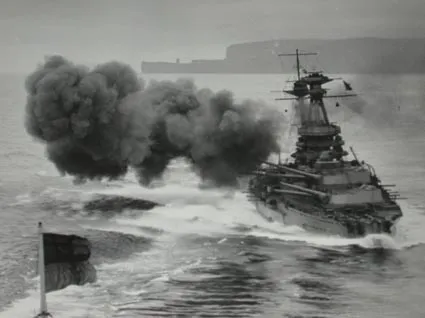 Photo: HMS Royal Oak, via www.hmsroyaloak.co.uk
Conservationists argue for careful protocols that respect wartime sacrifices while enabling scientific study of these unique ecosystems. "These wrecks represent both our maritime heritage and our marine future," suggests Dr Fleming. "Understanding how they support marine life could be crucial for restoring our depleted coastal waters."
Underwater Memorials
As climate change and fishing pressure continue degrading British marine ecosystems, the ecological value of wartime wrecks is likely to increase. These accidental reefs may become increasingly important refuges for species struggling to survive in rapidly changing seas. Their transformation from symbols of destruction into havens for marine life offers an unexpected legacy of conflicts that ravaged the surface world above.
The HMS Pathfinder's crew could never have imagined that their ship's final resting place would become a sanctuary for creatures they never knew existed. Yet in the darkness of the North Sea, their vessel continues serving—not as an instrument of war, but as a foundation for life in waters that have forgotten what abundance once looked like.
In protecting these underwater memorials, we honour both human sacrifice and natural resilience—twin legacies that remind us how life persists even in the depths of tragedy.